
For industrial furnaces, burners, and thermal processing equipment, components must withstand extreme temperatures, thermal cycling, and corrosive combustion atmospheres without failing. Investment casting can be considered when complex geometry, thin sections and reduced machining are important.
Why Use Investment Casting for High Temperature Components?
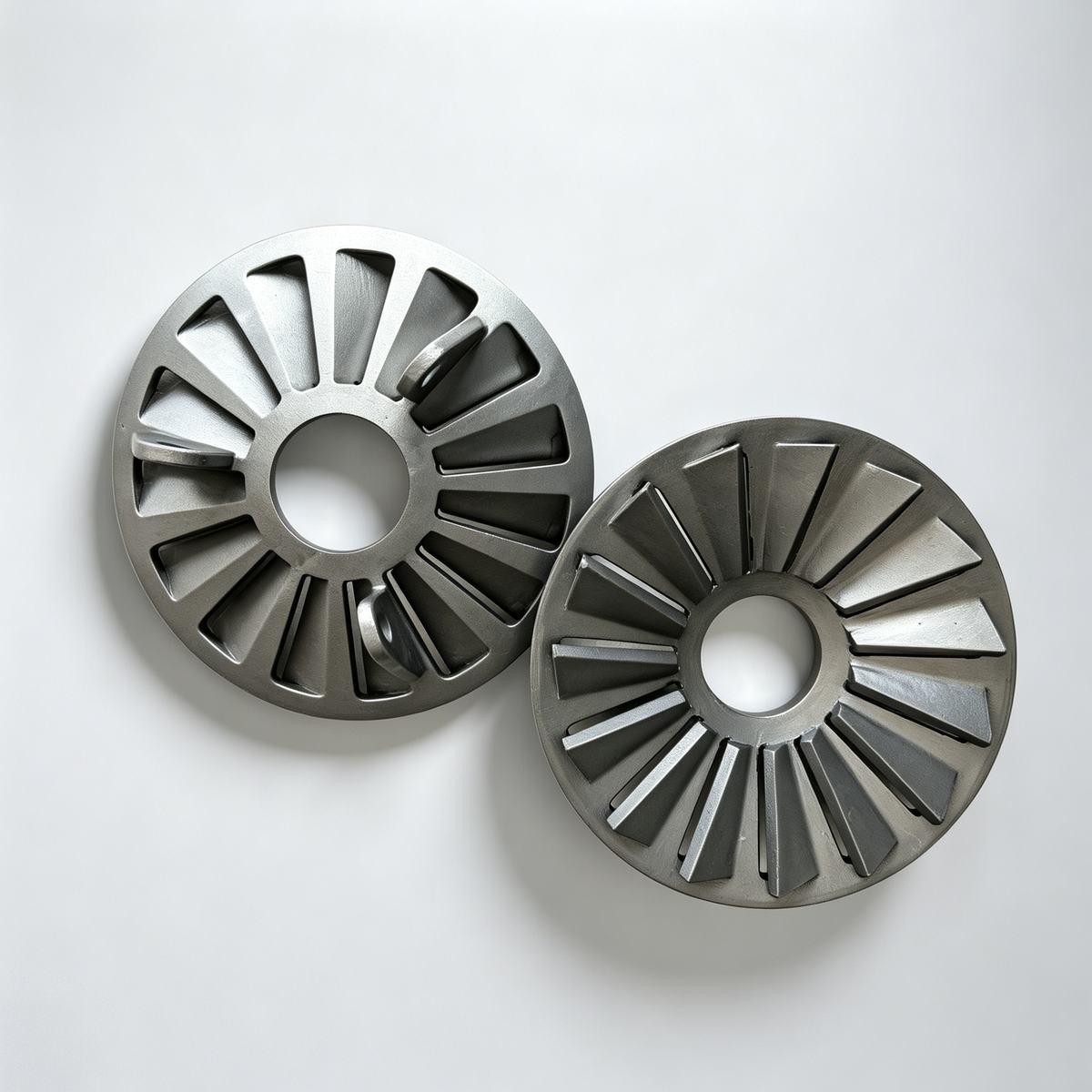
High-temperature furnace parts such as impellers, burners, rollers and fixtures may contain complex vanes or thin sections. Investment casting, or lost-wax casting, can be considered when the geometry suits a near-net-shape process:
- Can support dimensional control and required surface finish
- Can reproduce complex vane shapes when the process and tooling are suitable
- May reduce machining time and material waste compared with solid-bar machining
- Repeatable process planning for the approved geometry
Common Heat Resistant Materials for Furnace Castings
The choice of material depends on operating temperature, atmosphere, and required service life. Three commonly discussed grades for heat resistant investment castings are:
1. HK (25Cr-20Ni)
A 25Cr-20Ni-type heat-resistant alloy often considered for furnace fixtures, trays and structural components. Final chemistry and service temperature should be selected against the actual atmosphere, load and drawing requirements.
2. HK40 (25Cr-20Ni Modified)
A modified 25Cr-20Ni-type grade often discussed for radiant tubes, furnace rollers and high-temperature impellers. The exact grade, heat treatment and inspection requirements should be confirmed from the project specification.
3. 310S (25Cr-20Ni Low Carbon)
A low-carbon 25Cr-20Ni-type grade often considered for burner components, heat-treatment baskets and parts exposed to thermal cycling. Selection should account for atmosphere, cycling frequency, load and welding requirements.
Typical Applications for Heat Resistant Castings
Common applications for heat resistant investment castings include:
- Furnace recirculation impellers – Moving hot gases evenly through heat treatment furnaces and kilns
- Burner components – Flame holders, mixer plates, and gas nozzle parts for industrial burners
- Radiant tubes and retorts – Delivering heat in gas-fired furnaces with internal burners
- Furnace fixtures and trays – Supporting workpieces during heat treatment cycles
- Thermal oxidizer parts – Components for waste gas treatment systems operating at high temperatures
- Petrochemical furnace parts – Heater components in refineries and chemical processing plants
Key Quality Considerations for Heat Resistant Castings
Heat resistant components may operate under stress and thermal cycling. When preparing drawings and purchase requirements, consider these inspection and documentation points:
- Material documentation – Request the required certificate and chemistry basis before production.
- Dimensional inspection – Define critical fit surfaces, vane profiles and required tolerance records.
- Surface or NDT requirements – Specify whether penetrant, ultrasonic or another method is required by the drawing.
- Rotating parts – Define the required balancing grade and test speed rather than assuming a universal standard.
Why Choose Huayong for Your Heat Resistant Casting Project?
Send drawings or samples with the target alloy, operating condition, required machining notes and inspection expectations. Huayong can review feasibility, casting process notes and documentation requirements; final material certificate, machining scope and inspection method should be confirmed per order.
Ready to Discuss Your Casting Project?
Send us your drawings or requirements for a quotation. Material, geometry, machining note and quantity help our team prepare a practical response. OEM/ODM welcome.
Get a Free Quote View Our Products