
Pump Impeller Casting: Materials, Process & Quality Control
The impeller is the heart of any pump. This guide covers material selection, the casting process, hydraulic balancing and the quality checks that keep your pumps running reliably.
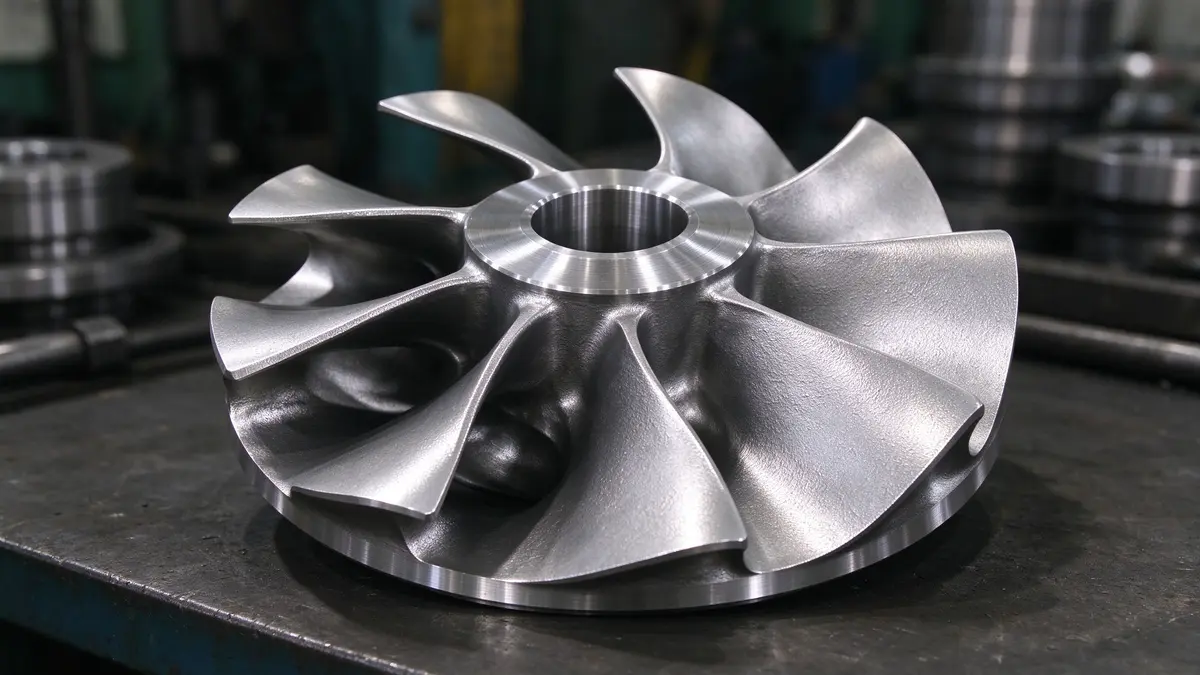
Why the Impeller Is the Heart of a Pump
The impeller converts rotational energy into fluid flow. Its blade geometry, surface finish and dimensional accuracy directly determine pump efficiency, flow rate, head and service life. Even small casting defects can cause cavitation, vibration and premature failure.
That is why more pump manufacturers choose investment casting for impellers: it reproduces complex 3D blade shapes accurately, delivers a smooth surface finish, and works with the corrosion-resistant alloys that pumps need.
Choosing the Right Impeller Material
| Application | Recommended Material | Key Properties |
|---|---|---|
| Clean water / general service | CF8 (304) / CF8M (316) | Corrosion resistance, cost-effective |
| Seawater / marine pumps | CF8M (316L), Duplex 2205 | Chloride resistance, high strength |
| Chemical / aggressive media | Hastelloy C276, CW2M | Superior chemical resistance |
| Sanitary / food pumps | CF8M (316L), CF3M | Cleanability, low carbon |
| Wastewater / abrasive media | High-chrome alloy, Duplex | Wear + erosion resistance |
| Marine propellers / fittings | Bronze, Copper-nickel | Biofouling resistance |
Tip: For seawater service, 316L or duplex 2205 is strongly recommended over 304 — pitting and crevice corrosion in chloride environments are the most common failure modes.
The Investment Casting Process for Impellers
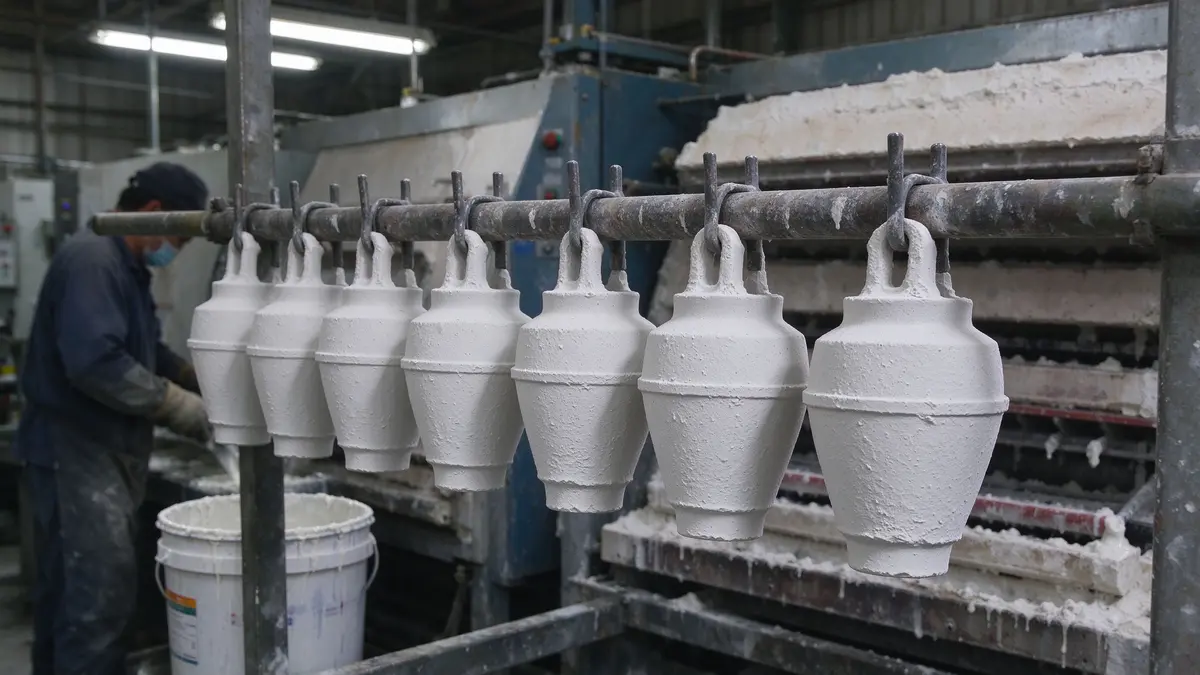
- Wax pattern injection — Impeller blades are molded in wax using precision tooling, often with a CNC-machined core for the eye and hub.
- Assembly — Patterns are gated onto a sprue to form a tree.
- Shell building — 6-8 ceramic coats are applied to create a refractory shell.
- Dewaxing — The wax is melted out, leaving a precise cavity.
- Pouring — Molten alloy fills the shell; for complex impellers, vacuum-assisted pouring reduces turbulence.
- Shell removal & cutoff — Shells are knocked off and parts cut from the sprue.
- Heat treatment — Solution annealing or quench & temper develops mechanical properties.
- Machining & balancing — Bore, faces and keyways are CNC machined, then dynamically balanced.
Why Hydraulic Balancing Matters
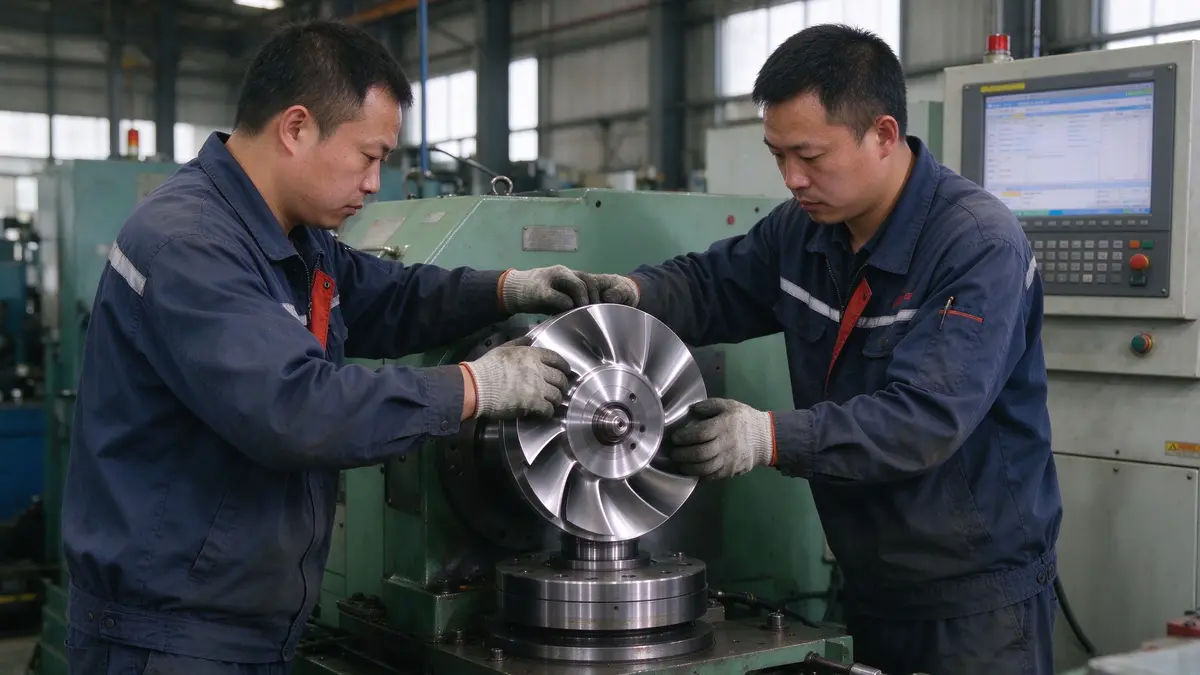
An unbalanced impeller causes vibration, noise, bearing wear and seal leakage. After casting and machining, every impeller should pass dynamic balancing to the specified grade (typically ISO 1940 G2.5 or G6.3, depending on pump speed).
Investment casting helps here too: uniform wall sections and consistent material density reduce the amount of corrective machining needed to achieve balance.
Quality Control Checklist for Impeller Castings
- Chemical composition — Spectrometer verification of alloy chemistry per heat.
- Dimensional inspection — CMM verification of critical hydraulic dimensions.
- Radiographic testing (RT) — X-ray inspection for internal porosity and inclusions.
- Dye penetrant testing (PT) — Surface crack detection on blade edges and hub.
- Surface finish — Ra measurement; typical as-cast Ra 3.2-6.3 μm, machined surfaces Ra 0.8-1.6 μm.
- Hardness test — Brinell or Rockwell verification.
- Mechanical tests — Tensile and impact properties when specified.
- Dynamic balancing — Final rotating balance check.
Common Impeller Casting Defects to Watch For
| Defect | Cause | Prevention |
|---|---|---|
| Misrun / cold shut | Low pouring temperature | Proper superheat, vacuum assist |
| Porosity | Gas entrapment, shrinkage | Venting, gating design, hot isostatic pressing |
| Surface defects | Shell inclusions | Shell quality, pouring control |
| Dimensional drift | Wax pattern shrinkage | Tooling compensation, process control |
How to Specify an Impeller Casting
- Provide the 3D model and 2D drawing with critical dimensions and tolerances.
- Specify the material grade and standard (e.g., ASTM A351 CF8M).
- Define balancing grade (ISO 1940 G2.5 / G6.3) and test speed.
- List required inspection levels (RT, PT, dimensional report).
- State the service environment (media, temperature, pressure) so the foundry can recommend the best alloy.
Need a Pump Impeller Quote?
Send us your impeller drawing or sample. We'll recommend the best alloy and deliver a competitive quotation within 48 hours.
Get a Free Impeller Quote →