
The 30-Second Summary
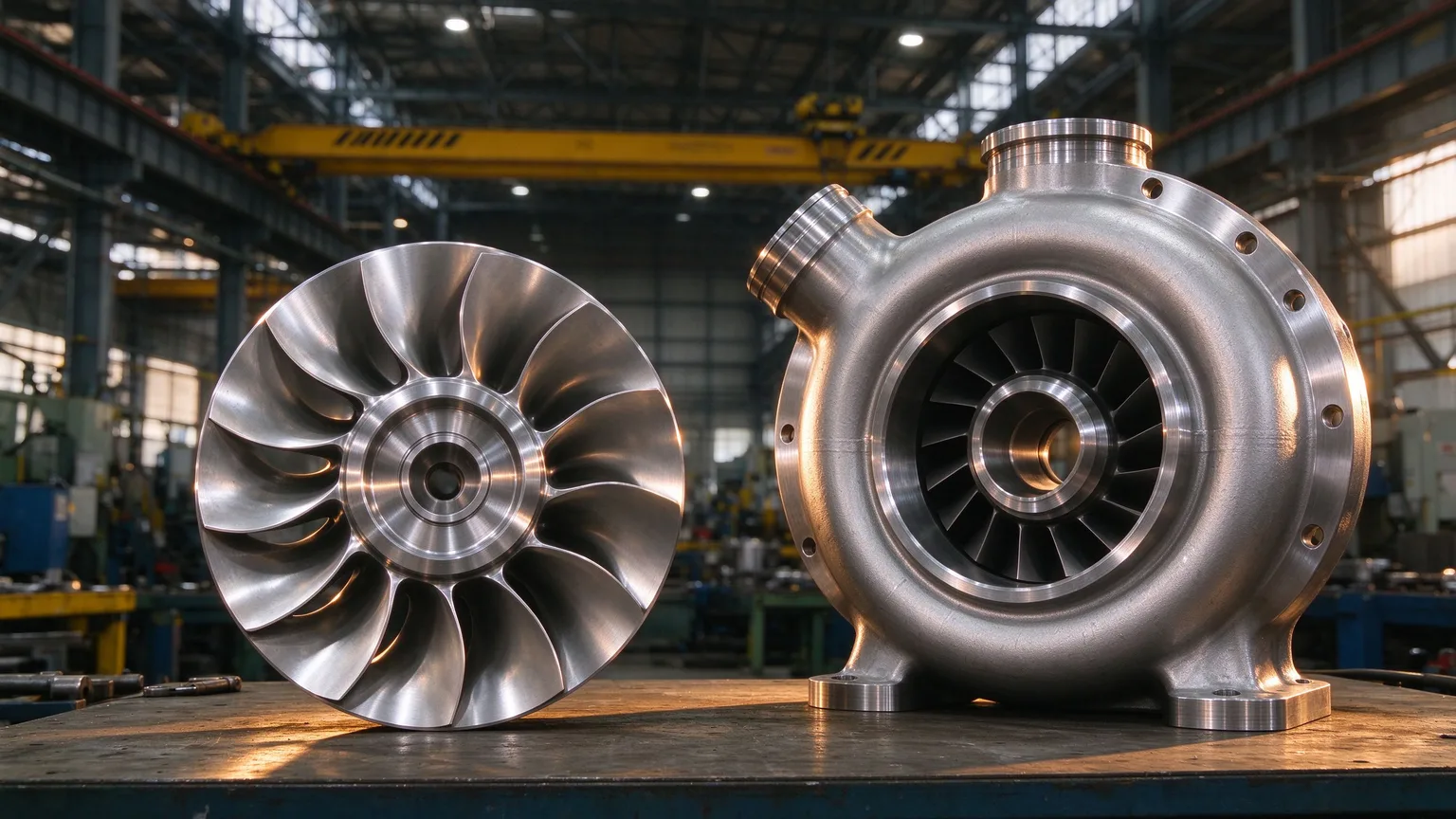
Investment casting (lost-wax) is the preferred process for pump wetted parts because it can reproduce complex hydraulic geometries with smooth as-cast surfaces — impeller blades, volute flow channels, diffuser vanes — in stainless steel, duplex and high alloys. The result: better hydraulic efficiency, less machining, longer seal life and lower total cost on precision pump components.
Which Pump Parts Are Investment Cast?
| Pump Part | Function | Why Investment Casting |
|---|---|---|
| Pump Impeller | Converts shaft energy into fluid flow | Complex vane geometry, smooth flow surfaces, tight balance diameters |
| Pump Casing / Volute | Collects discharge fluid and builds pressure | Screw-section flow channels, flange faces, pressure containment |
| Diffuser / Bowl | Recovers velocity head in multistage pumps | Integral guide vanes, internal passages impossible to machine |
| Wear Ring / Stuffing Box | Maintains running clearance | Precise bores and wear-resistant grades |
| Bracket / Bearing Housing | Supports shaft and bearing assembly | Rigidity, integrated oil passages, corrosion resistance |
Why Pumps Use Lost-Wax Casting
Pump internals are hydraulic components — their shape is engineered, not approximate. The impeller blade angles, the volute's expanding cross-section and the diffuser vane spacing all directly affect pump efficiency, NPSH and cavitation behavior.
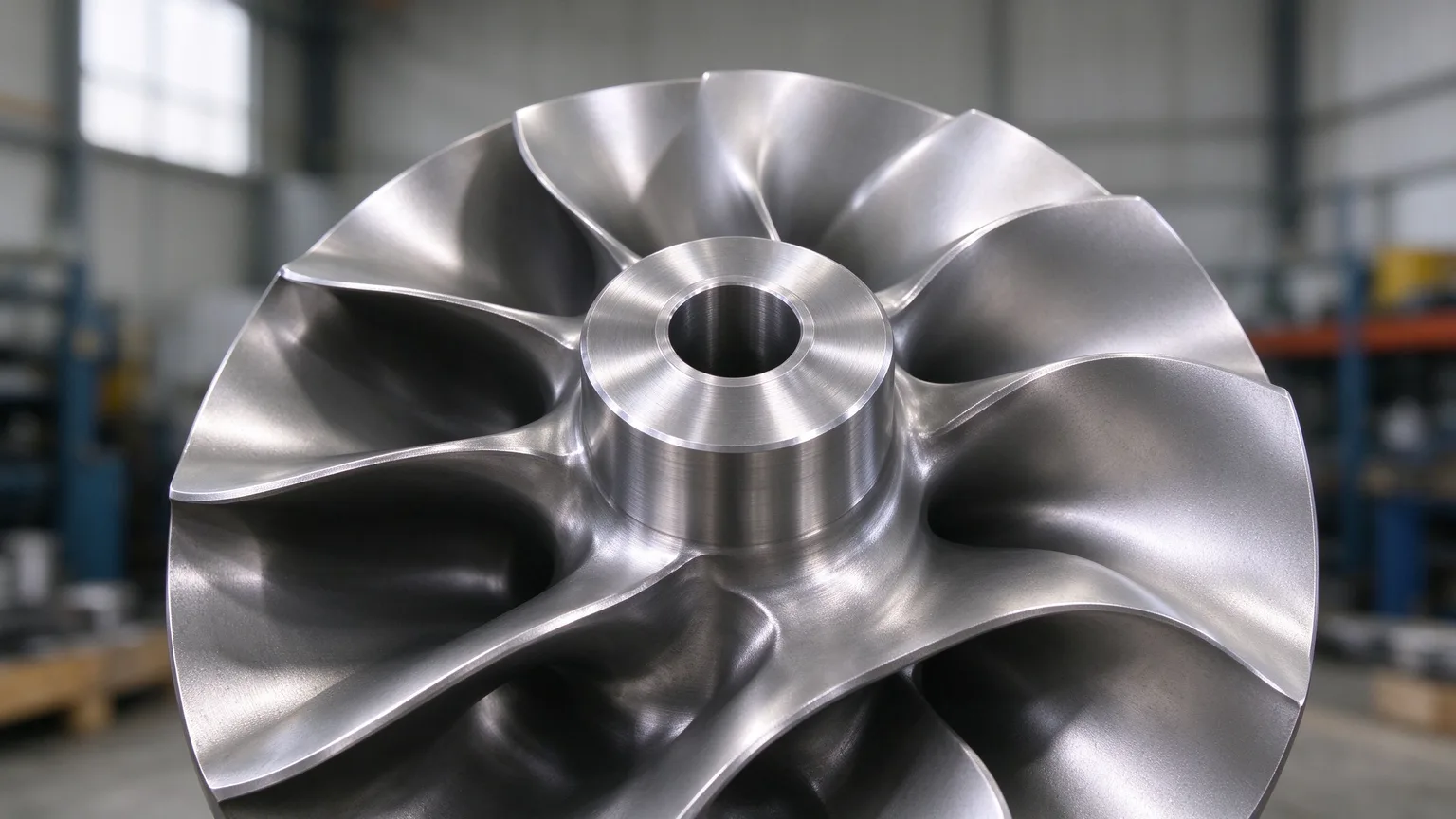
- Complex internal geometry — wax patterns reproduce vane passages and flow channels that would be costly or impossible to machine
- Smooth as-cast surface — Ra 1.6–6.3 µm improves hydraulic efficiency and reduces cavitation damage
- Near-net shape — only critical surfaces (flange faces, bores, seal areas) usually need machining, which may reduce later lead time and cost
- Pressure containment — required test pressure, medium and acceptance basis should be defined on the drawing or purchase order when pressure testing is requested
- Material versatility — a single process handles 304, 316L, duplex 2205, bronze and even Hastelloy wetted parts
Material Selection: 316L vs Duplex 2205
The most common question we receive on pump castings: which material? The honest answer depends on the pumped fluid and environment.
| Material | Equivalent Cast Grade | Best For |
|---|---|---|
| 304 / CF8 | CF8 | Clean water, mild environments, cost-sensitive |
| 316 / CF8M | CF8M | Water treatment, food & beverage, mild chemicals |
| 316L / CF3M | CF3M (low carbon) | Welded assemblies, better intergranular corrosion resistance |
| Duplex 2205 | CD4MCu / 4A | Seawater, brine, chloride environments, desalination |
| Nickel-Al Bronze | C95800 | Marine impellers, resistance to biofouling |
Rule of thumb: If the pump handles seawater, chloride-rich brine or aggressive chemicals, pay the premium for duplex 2205 (CD4MCu) — its pitting resistance equivalent (PREN ~35) is roughly double that of 316L. For clean water or HVAC systems, 316L is the cost-effective choice.
The Pump Casing / Volute Specifically
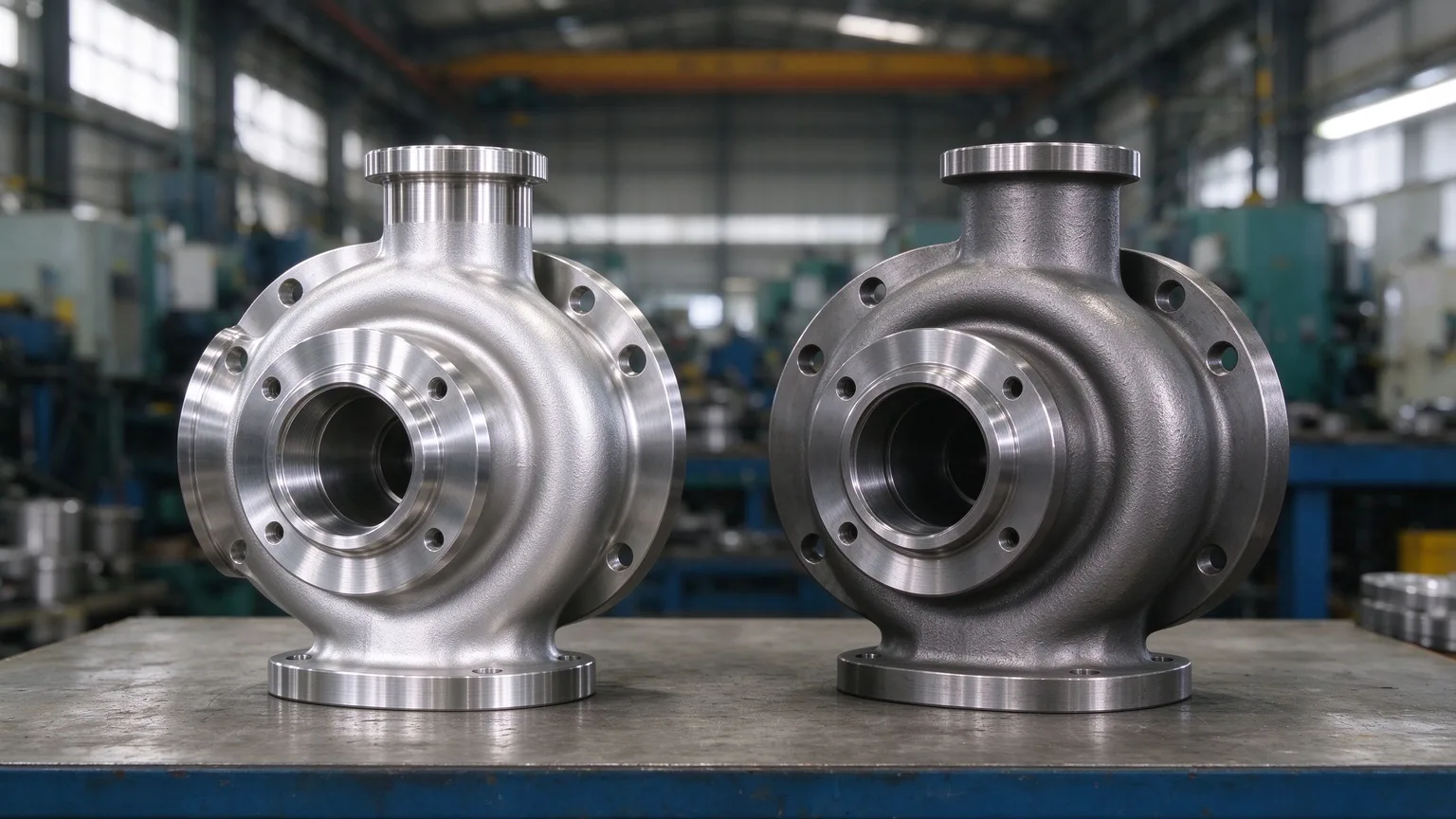
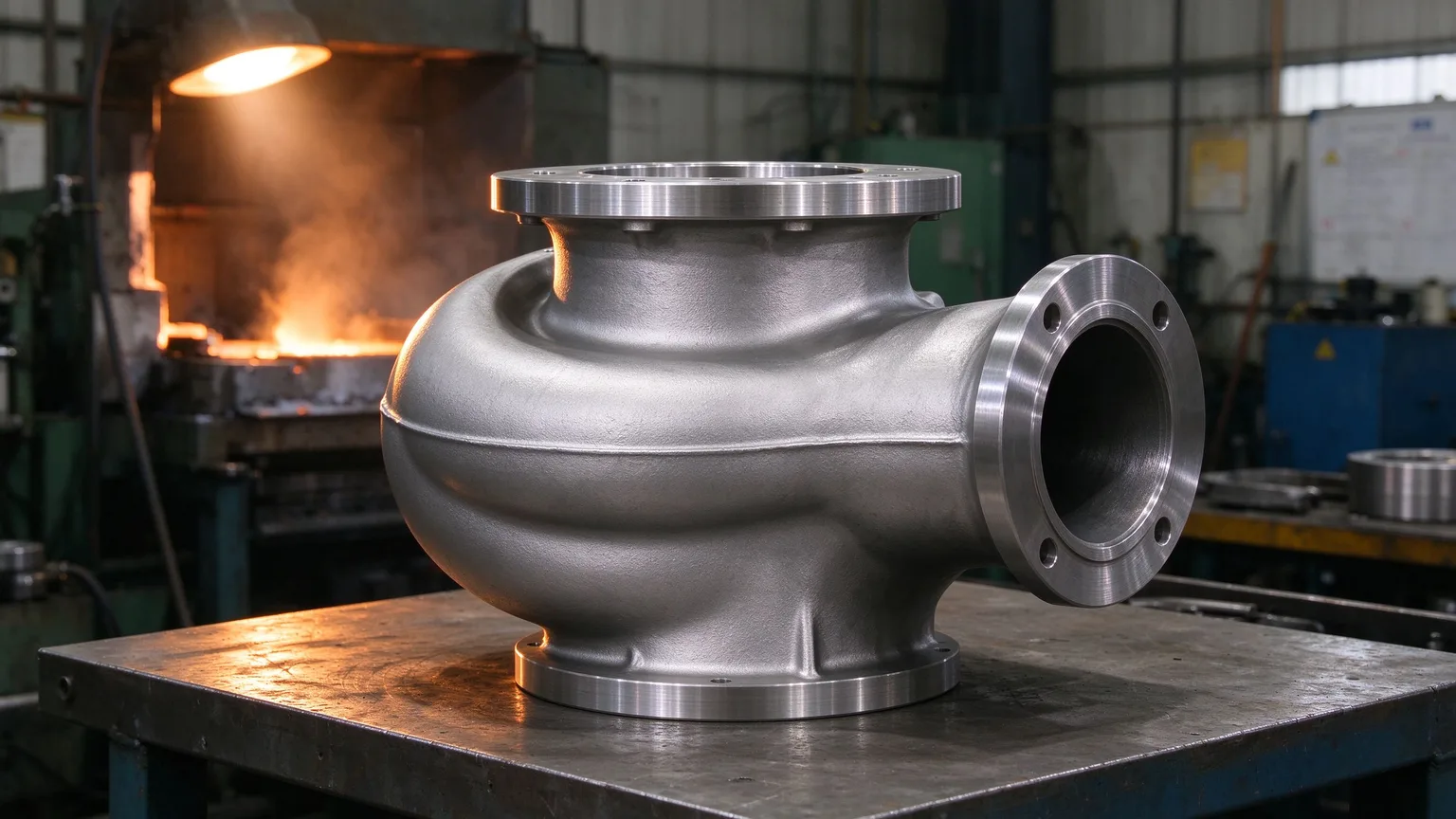
The casing is the pressure boundary — it must contain discharge pressure, connect to the piping flanges and hold the bearing frame. Investment cast water pump casings typically feature cast inlet and discharge flanges with bolt holes, an integral volute flow channel, and machined gasket and seal faces. We cast these in CF8M/316L or duplex 2205 for end-suction, inline and centrifugal pumps in water treatment, flood control and cooling water service.
Design Tips for Better Cast Pump Parts
- Maintain wall thickness 3–6 mm — thin sections risk incomplete filling, thick sections create shrinkage
- Design for the wax pattern — avoid undercuts that prevent pattern withdrawal; allow 2–3 mm machining allowance on mating faces
- Keep hydraulic surfaces as-cast — specify Ra 3.2 or better on flow paths; reserve machining for flanges, bores and seal areas
- Mark balance planes on the drawing — specify balancing grade and acceptance basis if dynamic balancing is required
- Specify pressure test points — define required test pressure, medium and acceptance basis when pressure testing is requested
Common Applications
- Water & wastewater treatment — centrifugal and submersible pump internals
- Desalination & seawater — duplex 2205 casings and impellers
- HVAC & cooling water — 316L pumps for building systems and power plants
- Fire protection and water service — CF8M components where corrosion resistance and pressure integrity are required; certification requirements should be verified separately
- Chemical processing — alloy and high-alloy wetted parts
- Marine & offshore — nickel-al bronze impellers, duplex casings
Ready to Discuss Your Casting Project?
Send us your drawings or requirements for a quotation. Material, geometry, machining note and quantity help our team prepare a practical response. OEM/ODM welcome.
Get a Free Quote View Our Products