
Stainless Steel Pump Casing Housing Investment Casting
Custom CF8M / CF8 / 316L / 304 stainless steel centrifugal pump volute casings with precision CNC machining. API 610 compliant, single-stage and multi-stage designs.
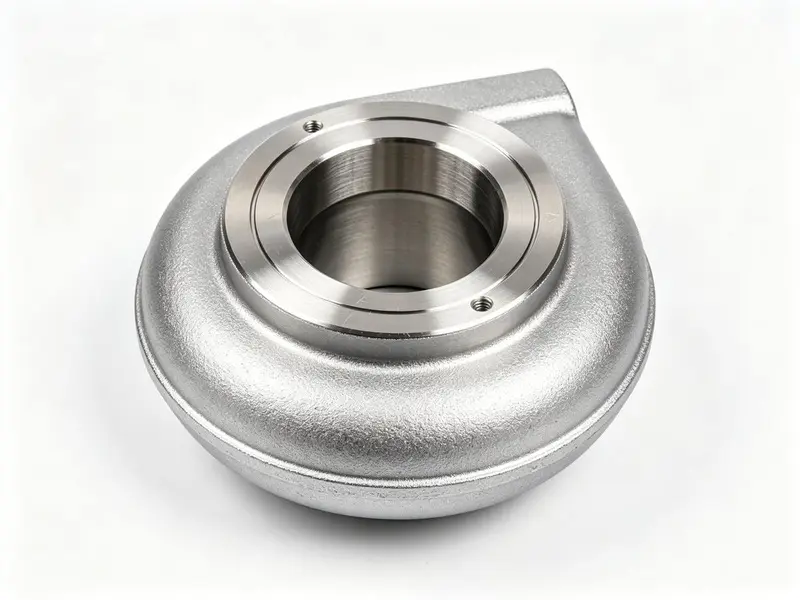
Pump Casing Housing
Our precision investment cast stainless steel pump casings (volute housings) are manufactured to API 610 and ISO 9905 standards. The volute design converts kinetic energy from the impeller into pressure energy with minimal hydraulic loss. Investment casting provides smooth internal flow passages for optimal pump efficiency and reduced cavitation risk.
Product Specifications
| Material Grades | CF8M, CF8, SS316, SS316L, SS304, SS304L, Duplex 2205 (CD4MCu), CD4MCuN |
|---|---|
| Pump Size Range | DN25 - DN300 (1" - 12") discharge |
| Casing Type | Single-stage volute, multi-stage, split case, end suction, vertical inline |
| Pressure Rating | PN16, PN25, PN40, PN64 / Class 150, Class 300, Class 600 |
| Design Standard | API 610, ISO 9905, ISO 2858, ASME B73.1 |
| End Connections | Flanged (RF/RTJ), Threaded, Grooved |
| Casting Process | Investment Casting (Lost-Wax), Sand Casting for large sizes |
| Machining | CNC Machining, Boring, Facing, Drilling, Tapping, Seal Chamber Machining |
| Surface Finish | As-cast, Sandblasted, Polished, Epoxy Coated |
| Certification | ISO 9001, API Q1, Material Test Certificate (EN 10204 3.1/3.2) |
| Minimum Order | 30 pcs (negotiable for prototypes) |
| Lead Time | 35-50 days for production, 15-20 days for samples |
Need a Custom Pump Casing?
Send us your drawings or specifications for a free quotation within 48 hours.
Get a Free Quote WhatsApp UsProduct Overview
The pump casing (volute housing) is the stationary component that houses the impeller and directs fluid flow from the suction inlet to the discharge outlet. Our investment casting process ensures exceptional dimensional accuracy, superior internal surface finish, and excellent mechanical properties. The carefully designed volute profile gradually expands the flow area, converting velocity energy into pressure with minimal hydraulic loss.
All our pump casings are custom manufactured based on customer drawings or samples. We work closely with pump manufacturers to optimize casing designs for castability and hydraulic performance. Investment casting is particularly advantageous for pump casings due to its ability to produce complex internal geometries with smooth flow passages that would be difficult or impossible to achieve with sand casting.
Material Options & Chemical Composition
We offer a wide range of stainless steel and specialty alloy materials for pump casing castings:
| Material Grade | Equivalent Standards | Key Properties | Typical Applications |
|---|---|---|---|
| CF8M | AISI 316, EN 1.4408 | Excellent corrosion resistance, good mechanical properties | Chemical processing, marine, food & beverage pumps |
| CF8 | AISI 304, EN 1.4308 | Good corrosion resistance, excellent formability | Water treatment, general industrial pumps, HVAC |
| CF3M | AISI 316L, EN 1.4409 | Low carbon, improved weldability, intergranular corrosion resistance | Welded assemblies, corrosive environments |
| CD4MCu | Duplex 2205, EN 1.4470 | High strength, excellent pitting/crevice corrosion resistance | Oil & gas, chemical, marine, desalination pumps |
| CN7M | Alloy 20, EN 2.4660 | Superior acid resistance, especially sulfuric acid | Chemical processing, acid handling pumps |
| CW-12MW | Hastelloy C276, EN 2.4819 | Exceptional corrosion resistance in harsh environments | Chemical, petrochemical, flue gas desulfurization pumps |
| WCB | ASTM A216 WCB, EN 1.0619 | Good mechanical properties, weldability, general purpose | Water, oil, gas, general industrial service |
Manufacturing Process
1. Pattern Making
We produce high-precision wax patterns using injection molding. The wax patterns are exact replicas of the final pump casing, including all internal volute passages and external features. Special core-making techniques are used to create the complex internal flow passages.
2. Shell Building
The pattern tree is repeatedly dipped into ceramic slurry and coated with refractory sand. For pump casings with complex internal geometries, we use fine-grain slurries to achieve excellent surface finish on hydraulic surfaces. This process is repeated 7-9 times to build a strong shell.
3. Dewaxing & Preheating
The ceramic shell is placed in an autoclave where steam melts the wax, which drains out. The empty shell is then preheated to 1000-1100°C to remove residual moisture and strengthen the mold before pouring.
4. Melting & Pouring
Stainless steel is melted in induction furnaces under carefully controlled conditions. The molten metal is poured into the preheated ceramic shells. For critical pump casing applications, we use vacuum pouring to minimize porosity and inclusions.
5. Shell Removal & Cutting
After solidification and cooling, the ceramic shell is removed by mechanical vibration and blasting. The individual pump casings are then cut from the sprue using band saws or grinding wheels.
6. Heat Treatment
All stainless steel castings undergo solution annealing heat treatment to achieve optimal mechanical properties and corrosion resistance. Typical heat treatment for CF8M/CF8 is 1050-1100°C solution treatment followed by rapid quenching.
7. CNC Machining
The cast pump casings are precision machined on CNC lathes and machining centers. Machining operations include flange facing, bore machining, seal chamber machining, drilling, and tapping. We maintain tight tolerances on critical dimensions to ensure proper impeller fit and alignment.
8. Surface Treatment & Testing
Finished pump casings undergo surface treatment (sandblasting, painting, or coating) and comprehensive quality testing including dimensional inspection, hydrostatic pressure testing, chemical analysis, and non-destructive testing (NDT).
Quality Control & Testing
We maintain rigorous quality control at every stage of production to ensure that every pump casing meets or exceeds customer specifications:
- Chemical Analysis: Spectrometer analysis of every heat, with full material test certificates (EN 10204 3.1/3.2)
- Mechanical Testing: Tensile strength, yield strength, elongation, and hardness testing per ASTM A370
- Dimensional Inspection: CMM (Coordinate Measuring Machine) inspection of critical dimensions and alignment
- Hydrostatic Pressure Testing: Shell pressure testing at 1.5x rated pressure per API 610
- Non-Destructive Testing (NDT): Radiographic testing (X-ray), liquid penetrant testing, ultrasonic testing as required
- Surface Finish Inspection: Surface roughness measurement on internal flow passages to ensure optimal efficiency
- Performance Testing: Optional pump performance testing on test bench for flow, head, and efficiency verification
Applications
Our stainless steel pump casings are used in a wide range of industries and applications:
- Chemical Processing: Chemical transfer pumps, acid pumps, reactor circulation pumps
- Water Treatment: Water supply pumps, wastewater pumps, desalination pumps
- Oil & Gas: Offshore pumps, refinery pumps, pipeline booster pumps
- Food & Beverage: Sanitary pumps, CIP pumps, beverage transfer pumps
- Pharmaceutical: Drug manufacturing pumps, sterile processing pumps
- Marine: Shipboard pumps, offshore platform pumps, desalination pumps
- Power Generation: Cooling water pumps, boiler feed pumps, condensate pumps
- Pulp & Paper: Stock pumps, chemical pumps, white liquor pumps
- Mining: Slurry pumps, dewatering pumps, mineral processing pumps
- HVAC: Chilled water pumps, cooling tower pumps, heating pumps
Why Choose Huayong for Your Pump Casing Castings?
- Complete In-House Capability: From wax pattern to final CNC machining â?all under one roof for better quality control
- Complex Geometry Expertise: Investment casting produces complex internal volute passages with smooth surfaces
- Material Expertise: Experienced in stainless steel, duplex steel, and specialty alloys
- ISO 9001 & API Q1 Certified: Rigorous quality management system with full traceability
- Custom Manufacturing: All casings made to your exact drawings and specifications
- Competitive Pricing: Factory-direct pricing with no middleman markup
- Fast Response: Quotations within 48 hours, technical support 24/7
- Global Export Experience: Serving clients in Europe, North America, Middle East, and Southeast Asia
Share this article
Ready to Start Your Project?
Send us your 2D/3D drawings, samples, or part requirements for a free custom quotation within 48 hours.
Request a Quote View All ProductsEngineering Design Tips for Pump Component Castings
1. Impeller Blade Design
For investment cast impellers, maintain blade thickness between 3-8mm for optimal castability. Avoid undercuts that prevent wax pattern withdrawal. Use smooth blade transitions with minimum 2mm fillet radii.
2. Pump Casing Volute Design
Design volute profiles with consistent cross-sectional area progression. Ensure adequate wall thickness (minimum 4mm) to withstand operating pressures and allow for machining.
3. Shaft Hub and Keyway Design
For impeller hubs, design with sufficient bore diameter for shaft fit. Keyways are typically machined post-casting. Allow 2-3mm machining allowance on all mating surfaces.
4. Surface Finish for Flow Efficiency
Investment casting provides Ra 1.6-3.2μm as-cast surface finish, which improves hydraulic efficiency. For critical pump applications, electropolishing or machining of flow paths can further enhance performance.
Frequently Asked Questions
Q: What types of pump components can you cast?
A: We cast impellers (closed, semi-open, open), pump casings/volutes, diffusers, pump bowls, shaft sleeves, wear rings, brackets, and custom pump components.
Q: Can you produce dynamically balanced impellers?
A: Yes, we can perform dynamic balancing on impellers up to specified ISO 1940 grades. Balancing is typically done after machining as a post-casting operation.
Q: What materials are best for corrosive pump applications?
A: For corrosive environments, we recommend CD4MCu (Duplex 2205), Alloy 20, Hastelloy C276, or CF8M (316L). Material selection depends on the specific chemical environment and operating temperature.
Q: Can you cast large pump casings?
A: Our investment casting capacity covers pump components up to approximately 100kg per piece. For larger casings, we may recommend alternative casting methods in partnership with our associated foundries.
Related Products
Request a Quote for Stainless Steel Pump Casing Housing Investment Casting
Send us your requirements — we respond within 48 hours with a competitive quote.