
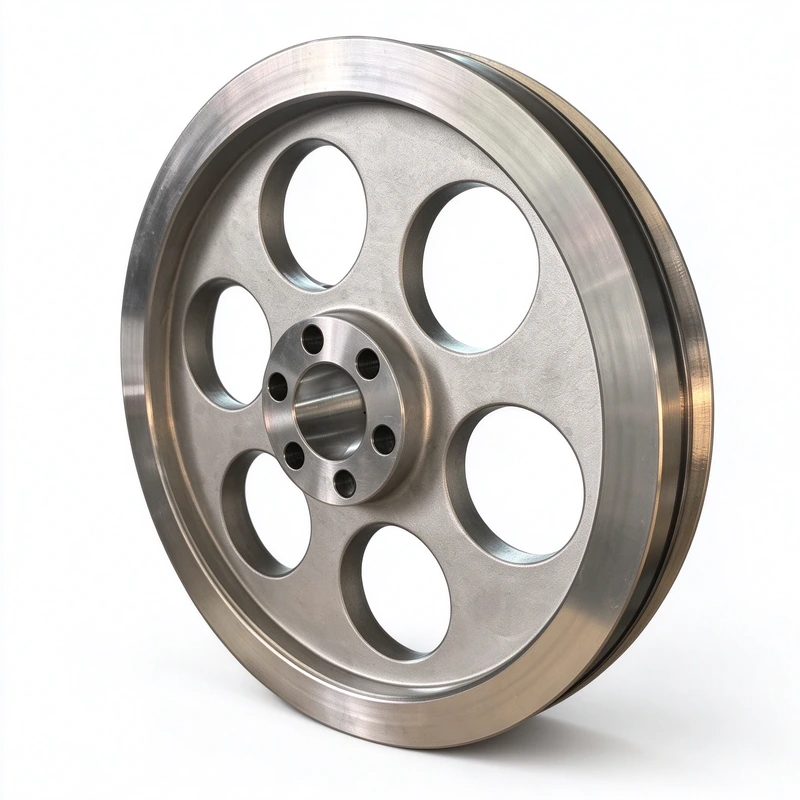
SS304 / SS316 Stainless Steel Butterfly Valve Disc Investment Casting
Custom 304 and 316 stainless steel butterfly valve discs and valve plates for wafer, lug-type and flanged butterfly valves; lost-wax investment cast to drawing, then machined on stem bore, pin holes and sealing surfaces.
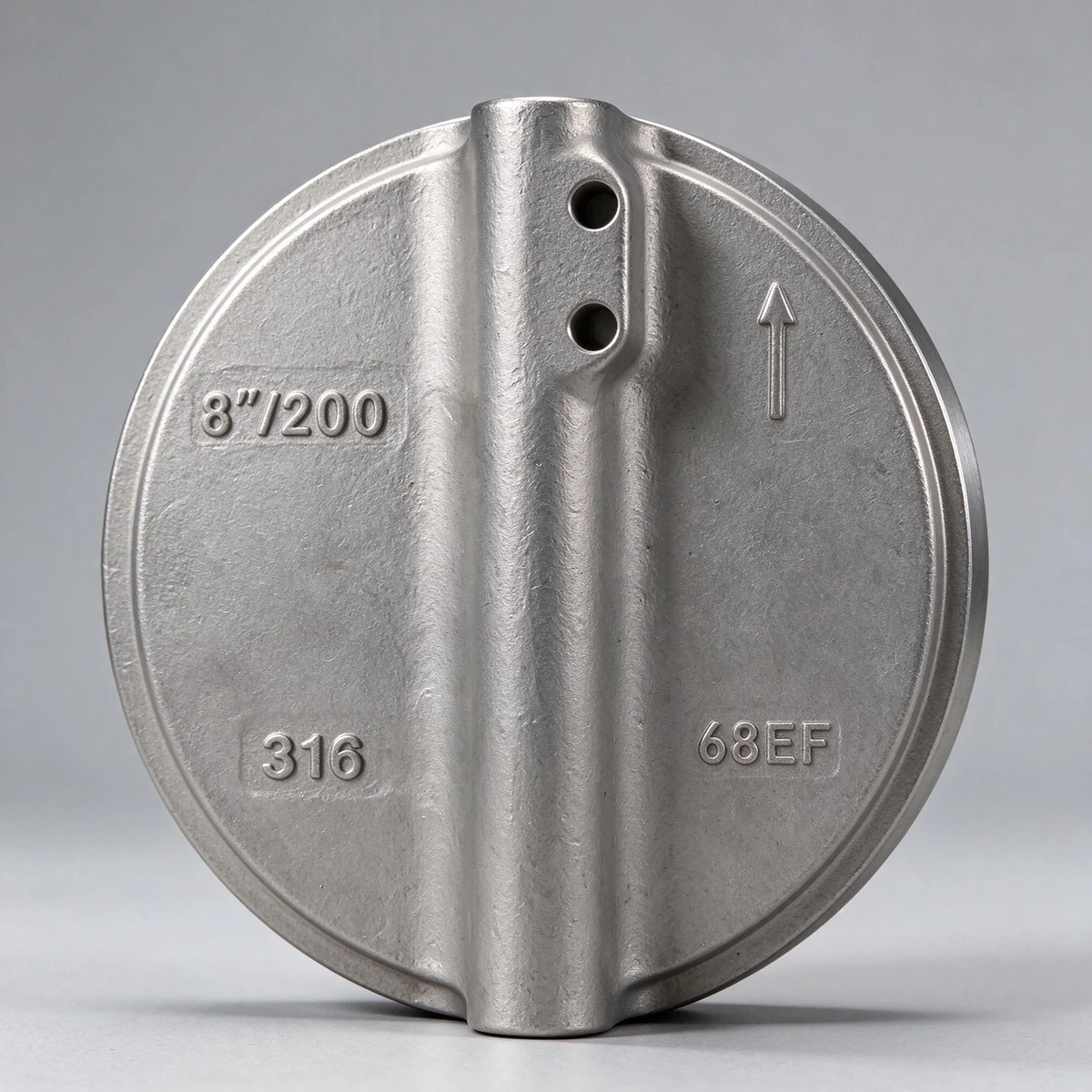
Butterfly Valve Disc
A butterfly valve disc, also called valve plate or shutter, rotates with the valve stem to control and shut off fluid flow. Our custom discs combine corrosion-resistant stainless steel investment castings with precision finish machining on stem bore, pin holes, hinge connection and flow-contact surfaces, helping OEM valve makers achieve reliable sealing, low flow resistance and long service life.
Product Specifications
| Material Grades | SS304/CF8, SS316/CF8M, SS316L/CF3M, SS304L/CF3; optional 2205 duplex stainless steel |
|---|---|
| Valve Types | Wafer, lug-type, flanged, high-performance and control butterfly valves |
| Size Range | Custom sizes per customer drawing, commonly DN25–DN600; size markings can be cast or machined as required |
| Manufacturing Process | Lost-wax investment casting (precision casting) + machining support + cleaning and inspection |
| Machining Features | Stem bore, pin holes, stem slot, sealing face, flow channel, bolt holes and lightening features |
| Dimensional Control | As-cast tolerance controlled by shelling and gating; critical machined features finished to drawing tolerance |
| Surface Finish | Cleaned as-cast surface; sealing face and bearing surfaces precision machined; optional shot blasting or electropolishing |
| Key Performance | Corrosion resistance, pressure-cycle durability, balanced disc profile and accurate sealing contact |
| Certification | ISO 9001 quality system; chemistry records can be supplied where required |
| Order Quantity & Lead Time | Quantity reviewed after drawing; sample and production schedules confirmed in quotation |
Need a Custom Butterfly Valve Disc?
Send us drawings, samples or valve parameters for a quotation after drawing or requirement review.
Get a Free Quote WhatsApp UsProduct Overview
The butterfly valve disc is the rotating closure member located between the valve stem and seat. As the stem turns, the disc rotates between open and closed positions to regulate or shut off liquid, gas or slurry flow. A reliable valve disc requires accurate disc thickness, a true sealing face, consistent stem connection, adequate corrosion resistance and a flow-optimized profile to minimize pressure drop and turbulence.
Wuxi Huayong Metal Technology Co., Ltd. supplies custom stainless steel butterfly valve discs and valve plates by precision lost-wax investment casting. After casting, critical features are machined for stem bore fit, pin holes, stem slots and sealing surfaces. We work directly with valve OEMs, system integrators and maintenance suppliers to optimize casting design, reduce machining allowance and supply repeatable components with chemical analysis and dimensional records.
Material Options & Corrosion Resistance
For valve discs, material selection depends on media, temperature, chloride content, pressure rating and cleaning requirements. Common investment casting grades include:
| Material Grade | Casting Grade | Key Properties | Typical Service |
|---|---|---|---|
| SS304 | CF8 / CF3 (304L) | Good general corrosion resistance, ductile, good surface finish and cost performance | Water, air, HVAC, mild chemicals and non-corrosive general service |
| SS316 | CF8M | Molybdenum-bearing stainless steel with better pitting and crevice corrosion resistance | Chemical processing, seawater-side hardware, chloride-containing and marine service |
| SS316L | CF3M | Low-carbon version for good weldability and intergranular corrosion resistance | Sanitary, food, pharmaceutical and welded valve assemblies |
| SS304L | CF3 | Low-carbon austenitic stainless steel for improved weld performance | General welded components and moderate corrosion environments |
| 2205 Duplex (Optional) | 2205 / 4A / CD4MCU options | High strength and good chloride stress-corrosion resistance | Seawater, brine, sour gas and demanding offshore service |
Manufacturing Process
1. Wax Pattern Making
We produce precision wax patterns for each butterfly valve disc according to customer drawings, controlling disc profile, stem feature position and machining allowance before shell building.
2. Wax Tree Assembly
Patterns are assembled on a central sprue with support runners to feed molten metal smoothly, reduce shrinkage defects and maintain consistent dimensional repeatability across production lots.
3. Ceramic Shell Building
The wax tree is repeatedly dipped into refractory slurries and stuccoed with sand to build a rigid ceramic shell. Shell thickness and drying time are controlled for smooth as-cast surfaces and sound internal structure.
4. Dewaxing & Shell Preheating
Wax is removed in the autoclave, leaving a hollow ceramic mold. The shell is preheated to stabilize strength and prepare for pouring while residual moisture is removed.
5. Melting & Pouring
The selected stainless steel charge is melted under controlled chemistry and poured into the preheated shell. Heat chemistry can be recorded for documentation when required.
6. Knockout, Gate Removal & Grinding
Ceramic shell material is removed, gates and risers are cut away, and as-cast surfaces are cleaned and ground to remove fins, flash and excess material before final machining.
7. Machining Support
Machining support may cover stem bore, pin holes, stem slot, hinge connection, sealing face and precision datum surfaces. Tolerances follow the customer drawing.
8. Cleaning, Inspection & Protection
Finished discs are degreased, cleaned and visually inspected. Dimensional checks, chemical reports, hardness or NDT results can be supplied according to criticality and order requirements. Parts are protected before packing.
Quality Control & Testing
We apply process controls to ensure every butterfly valve disc meets drawing requirements and valve assembly standards:
- Chemical Analysis: Spectrometer analysis of each heat with composition records for CF8, CF8M, CF3M and other approved grades
- Dimensional Inspection: gauge inspection of stem bore diameter, stem slot, disc diameter, thickness and sealing face reference dimensions
- Sealing Surface Check: Machining finish, flatness and edge condition reviewed against agreed acceptance criteria for the intended service
- Material Hardness: Hardness verification when specified by the valve manufacturer or application standard
- Non-Destructive Testing: Liquid penetrant testing, ultrasonic testing or radiographic inspection can be applied on demand for critical service parts
- Surface and Visual Inspection: No cracks, cold shuts, sand inclusions, loose fins or casting flaws on functional flow and sealing surfaces
- Packaging Control: Anti-corrosion wrapping and sturdy packing to protect machined bores and sealing faces during international transport
Applications
Our butterfly valve disc castings are supplied to multiple valve industries and process systems:
- Water & Wastewater: Potable water distribution, pump stations, treatment plants and desalination systems
- Chemical Processing: Mild acids, alkalis, process chemicals, transfer lines and filtration stations
- Marine & Offshore: Seawater piping, shipboard valves, ballast systems and cooling loops with chloride resistance
- Power & HVAC: Power plant cooling circuits, district heating, ventilation and building hydronic systems
- Food & Beverage / Pharmaceutical: Washable and corrosion-resistant valves using CF8M or CF3M where sanitary finish is required
- Fire Protection & Municipal: Fire pump piping, water treatment, irrigation and municipal distribution valves
- OEM Valve Manufacturing: Wafer, lug, flanged, high-performance and control butterfly valve producers worldwide
Why Choose Huayong for Butterfly Valve Discs?
- Valve Component Experience: Focused experience in valve bodies, discs, seats, bonnets and other fluid-control components
- Stainless Steel Expertise: CF8, CF8M, CF3M, CF3 and optional duplex grades with documented chemistry
- Casting-to-Machining Capability: Lost-wax casting plus finish-machining support for stem bore, pin holes and sealing faces
- Custom Design Support: Drawing review, gating advice, machining allowance optimization and manufacturability suggestions
- Traceable Quality: ISO 9001 system, heat records, dimensional reports and optional material records by agreement certificates
- Factory-Direct Supply: Direct pricing from the foundry with no trading-company markup or unnecessary middlemen
- Fast Commercial Response: Technical quotation is prepared after drawing review based on drawings, samples or valve data sheets.
Ready to Start Your Valve Disc Project?
Send us 2D drawings, 3D models, samples or valve parameters for a free custom quotation after drawing or requirement review.
Request a Quote View All ProductsEngineering Design Tips for Precision Castings
1. Wall Thickness Design
Maintain uniform wall thickness throughout the casting to minimize shrinkage porosity and thermal stress during solidification. Avoid abrupt section changes; use gradual transitions with fillet radii of at least 2-3mm. Minimum wall thickness for investment casting is typically 2mm for small parts and 3mm for larger components.
2. Draft Angles
Design with minimum 1° draft angle for external surfaces and 1.5° for internal surfaces to facilitate wax pattern removal from the die and ceramic shell breakdown. Deeper features may require additional draft.
3. Fillet Radii
Always use generous fillet radii at internal corners (minimum R2-3mm) to reduce stress concentration and improve castability. Sharp corners are prone to cracking and porosity during solidification.
4. Machining Allowance
Allow 2-3mm machining allowance per surface for machining operations. Critical sealing surfaces and precision bores may require additional allowance. Machining tolerance requirements should be reviewed against approved drawings; as-cast allowance is confirmed by drawing and casting complexity.
5. Surface Finish Considerations
Investment casting provides Ra 1.6-3.2μm as-cast surface finish. For applications requiring smoother surfaces, specify polishing, electropolishing, or machining in the drawing requirements.
Frequently Asked Questions
Q: What materials can you cast?
A: We work mainly with SS304/CF8, SS316/CF8M, SS316L/CF3M, SS304L/CF3 and optional 2205 duplex stainless steel. Custom material grades can be selected according to your drawing and service conditions.
Q: What is the typical lead time?
A: Lead time is confirmed after drawing review and scheduling; sample and production timing are evaluated separately.
Q: Can you provide material test certificates?
A: Every heat can be reviewed with spectrometer analysis. Material records, certificates and inspection items are arranged according to the drawing, code or order requirement; third-party inspection can be requested where applicable.
Q: What is the minimum order quantity?
A: Order quantity, tooling cost and pricing are reviewed after drawing and quantity confirmation.
Q: Do you offer machining support services?
A: Yes, post-machining support can include turning, milling, drilling, tapping and grinding; finished component readiness is confirmed per drawing and order requirements.
Related Products
Request a Quote for SS304/SS316 Stainless Steel Butterfly Valve Disc
Send us your requirements — we review the inquiry and prepare a quotation after drawing or requirement review.