
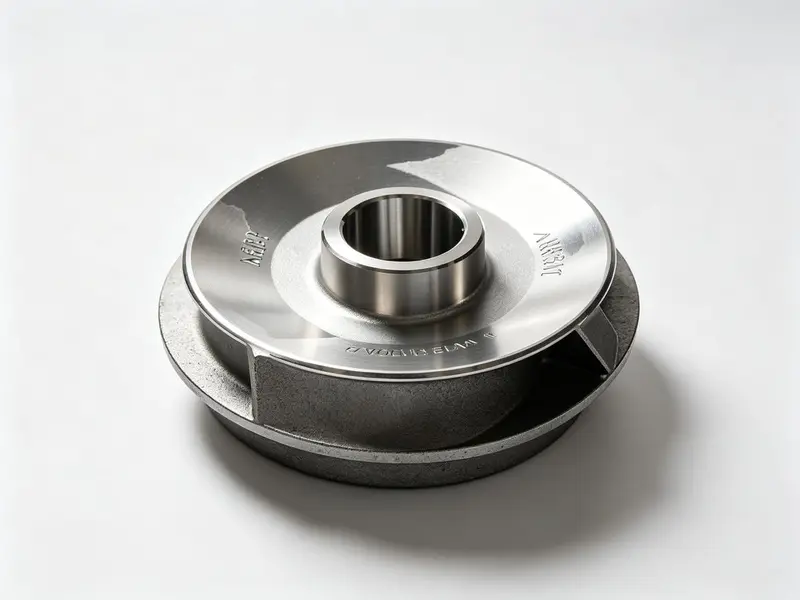
Stainless Steel Belt Wheel Investment Casting
Custom SS304 / SS316 / SS316L stainless steel belt wheels for mechanical equipment with precision machining support. Balanced design with precise bore and keyway for smooth power transmission.
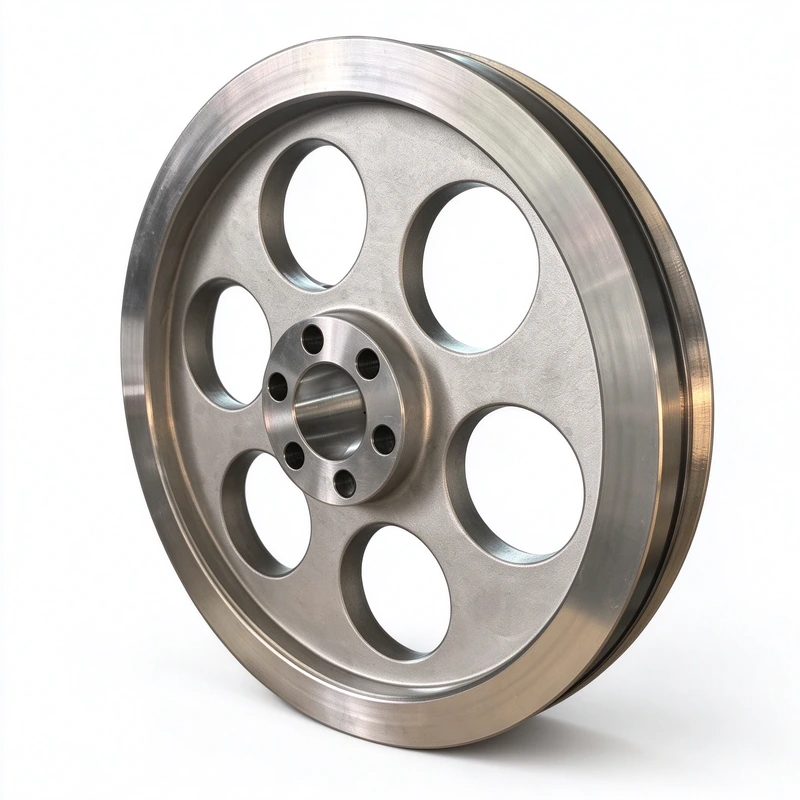
Steel Belt Wheel
Our precision investment cast stainless steel belt wheels (SS304 / SS316 / SS316L) are manufactured for mechanical equipment and power transmission systems. Available in various diameters, hub designs and bore configurations. Quality control includes chemistry and dimensional review; selected inspection methods can be arranged for critical requirements.
Product Specifications
| Material Grades | SS304, SS316, SS316L |
|---|---|
| Outer Diameter | 80 - 1200 mm |
| Belt Type | V-Belt (A/B/C/SPB/SPC), Timing Belt, Flat Belt, Multi-Groove |
| Machining Tolerance | Confirmed against approved drawings; dynamic balancing support available |
| Hub Type | Straight Hub, Tapered Hub, Split Hub |
| Bore Options | Finished Bore, Keyway, Tapped Holes, Custom Bore |
| Casting Process | Investment Casting (Lost-Wax), Sand Casting for large sizes |
| Machining Support | Machining support: Drilling, Tapping, Milling, Seat Pocket Machining; operations arranged to approved drawings |
| Surface Finish | As-cast, sandblasted; finishing options discussed by drawing and order requirements |
| Certification | ISO 9001; material records can be arranged by agreement |
| Order Quantity | Reviewed after drawing and quantity confirmation |
| Lead Time | Confirmed after drawing review and scheduling; sample timing evaluated separately |
Need a Custom Steel Belt Wheel?
Send us your drawings or specifications for a free quotation after drawing or requirement review.
Get a Free Quote WhatsApp UsProduct Overview
Stainless steel belt wheels are essential components in mechanical equipment for power transmission. Investment casting can produce near-net-shape components; finish and mechanical condition are reviewed against approved requirements. The belt wheel features precisely machined grooves and balanced structure, making it ideal for conveyor systems, pumps, compressors and industrial machinery.
All our belt wheels are custom manufactured based on customer drawings or samples. We work closely with our clients' engineering teams to optimize designs for castability, reviewing designs for practical manufacturability and fit for purpose. We offer both investment casting for small-to-medium sizes and sand casting for large-diameter wheels.
Material Options & Chemical Composition
We offer belt wheel castings in stainless steel grades SS304, SS316 and SS316L, plus duplex stainless steel 2205:
| Material Grade | Equivalent Standards | Key Properties | Typical Applications |
|---|---|---|---|
| SS304 (CF8) | ASTM A351 CF8, EN 1.4308 | Good corrosion resistance, weldability, general purpose | Water, food processing, general industrial service |
| SS316 (CF8M) | ASTM A351 CF8M, EN 1.4408 | Good corrosion resistance, good mechanical properties | Chemical, marine, petrochemical service |
| SS316L (CF3M) | ASTM A351 CF3M, EN 1.4409 | Low carbon, good weldability, corrosion resistance | Chemical processing, food & beverage, pharmaceutical |
| Duplex 2205 | ASTM A890 4A/5A, EN 1.4462 | High strength, good pitting resistance | Offshore, seawater, chemical processing |
Manufacturing Process
1. Pattern Making
We produce high-precision wax patterns using injection molding. The wax patterns are exact replicas of the final valve body, including all internal passages and external features. Multiple patterns are assembled onto a central sprue to form a pattern tree.
2. Shell Building
The pattern tree is repeatedly dipped into ceramic slurry and coated with refractory sand. This process is repeated 6-8 times to build a strong, heat-resistant ceramic shell. Each layer is carefully dried to ensure shell integrity.
3. Dewaxing & Preheating
The ceramic shell is placed in an autoclave where steam melts the wax, which drains out —hence the term "lost-wax casting." The empty shell is then preheated to 1000-1100°C to remove residual moisture and strengthen the mold.
4. Melting & Pouring
Stainless steel is melted in induction furnaces under carefully controlled conditions. The molten metal is poured into the preheated ceramic shells. We use both gravity pouring and vacuum pouring depending on the alloy and part complexity.
5. Shell Removal & Cutting
After solidification and cooling, the ceramic shell is removed by mechanical vibration and blasting. The individual valve bodies are then cut from the sprue using band saws or grinding wheels.
6. Heat Treatment
All stainless steel castings undergo proper heat treatment to achieve optimal mechanical properties. Typical heat treatment for SS304/SS316/SS316L includes solution annealing at 1040-1150°C followed by rapid water cooling. Duplex 2205 is solution annealed at 1020-1100°C.
7. Machining Support
Machining support can be arranged according to approved drawings. Machining operations include flange facing, seat pocket machining, threading, drilling, and tapping. Critical dimensions are checked against approved drawings.
8. Surface Treatment & Testing
Finished valve bodies undergo surface treatment (sandblasting, painting, or coating) and dimensional inspection, pressure testing and chemistry review; selected inspection methods can be arranged when required.
Quality Control & Testing
Quality review follows the agreed order process; final condition is checked against approved drawings and specifications:
- Chemical Analysis: Spectrometer analysis of every heat; material test records can be arranged by order requirement or agreement.
- Mechanical Testing: Mechanical or impact checks can be arranged when specified on the order
- Dimensional Inspection: Critical dimensions checked against approved drawings
- Pressure Testing: Hydrostatic shell testing and seat leakage testing per API 598
- Inspection Support: Selected penetrant, radiographic, magnetic-particle or ultrasonic methods can be arranged according to drawing, code or customer requirement
- Microstructure Examination: Metallographic review can be arranged when specified on the order
- Hardness Testing: Brinell or Rockwell hardness verification per material specification
Applications
Our stainless steel belt wheels are used in a wide range of industries and applications:
- Conveyor Systems: Material handling, belt conveyors, bucket elevators
- Pumps & Compressors: Power transmission for pumps, blowers and compressors
- Machine Tools: Spindle drives, feed mechanisms, precision machinery
- Agricultural Machinery: Harvesters, tractors, irrigation equipment
- Mining Equipment: Crushers, vibrating screens, mineral processing
- Food Processing: Mixers, conveyors, packaging lines
- Textile Machinery: Spinning, weaving, winding equipment
- HVAC & Ventilation: Fans, blowers, air handling units
- Packaging Machinery: Bottling lines, labeling machines, cartoners
- General Mechanical: Custom machinery, transmission systems, industrial equipment
Why Choose Huayong for Your Belt Wheel Castings?
- Process Coverage: Investment casting support with machining, inspection and finishing coordination
- Material Expertise: Experienced in carbon steel, alloy steel, and specialty alloys
- ISO 9001 Quality System: Documentation and inspection records can be managed according to order requirements
- Custom Manufacturing: All parts made to your exact drawings and specifications
- Competitive Pricing: Factory-direct pricing with no middleman markup
- Fast Response: Quotation and technical support are arranged after requirement review.
- Application Support: Components reviewed for industrial, fluid, machinery and process-equipment applications.
- Order Review: Prototype and production quantities reviewed after drawing review
Share this article
Ready to Start Your Project?
Send us your 2D/3D drawings, samples, or part requirements for a free custom quotation after drawing or requirement review.
Request a Quote View All ProductsEngineering Design Tips for Valve Body Castings
1. Wall Thickness Uniformity
Maintain uniform wall thickness throughout the valve body to minimize shrinkage porosity and thermal stress during solidification. Avoid abrupt section changes; use gradual transitions with fillet radii of at least 3mm.
2. Draft Angles
Design with minimum 1° draft angle for external surfaces and 1.5° for internal surfaces to facilitate wax pattern removal from the die and ceramic shell breakdown.
3. Port and Seat Pocket Design
Ensure adequate material around seat pockets and threaded ports for machining allowance. Recommended machining allowance: 2-3mm per surface for machining operations.
4. Flange Face Flatness
Flange faces should be designed with sufficient thickness to allow for facing operations while maintaining pressure rating integrity. Consider post-cast heat treatment before machining.
Frequently Asked Questions
Q: What materials are available for valve body castings?
A: We offer CF8M (316), CF8 (304), CF3M (316L), CF3 (304L), CD4MCu (Duplex 2205), Alloy 20, Hastelloy C276, and carbon steel WCB. Custom alloys available per specification.
Q: Can you cast valve bodies with internal passages?
A: Yes, investment casting excels at complex internal geometries. We can produce multi-port valves, control valve bodies, and valve bodies with intricate internal flow paths.
Q: What pressure ratings can you achieve?
A: Our cast valve bodies can be rated up to Class 2500 / PN400 depending on size, material, and design. All pressure-containing parts undergo hydrostatic testing.
Q: Do you provide material test certificates?
A: Every heat can be reviewed with spectrometer analysis. Material records, certificates and inspection items are arranged according to the drawing, code or order requirement; third-party inspection can be requested where applicable.
Related Products
Request a Quote for Stainless Steel Belt Wheel Investment Casting
Send us your requirements — we review the inquiry and prepare a quotation after drawing or requirement review.