
Stainless Steel Centrifugal Pump Impeller Investment Casting
Custom CF8M / CF8 / 316L / 304 stainless steel pump impellers with precision machining support. Closed, semi-open, and open designs. Dynamically balanced for smooth operation.
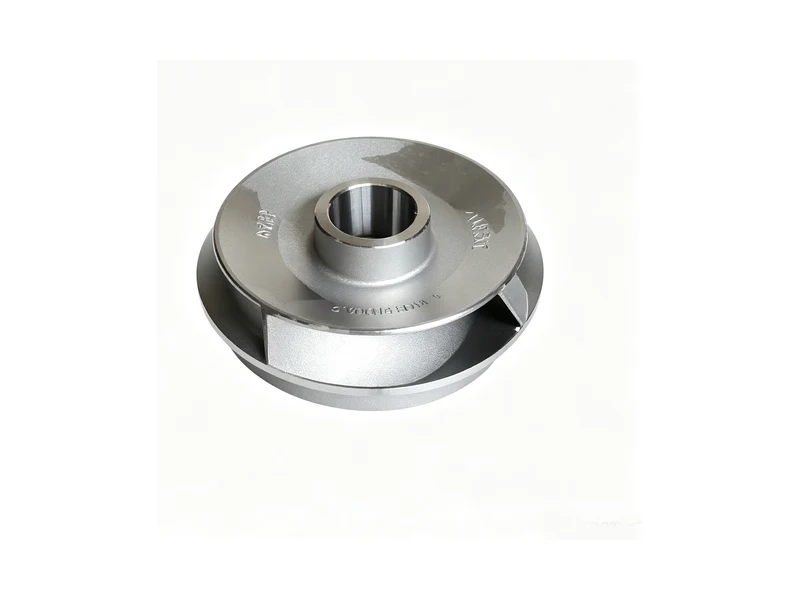
Centrifugal Pump Impeller
Our precision investment cast stainless steel centrifugal pump impellers are manufactured to the highest industry standards. Available in closed, semi-open, and open designs with various vane configurations. All impellers undergo dynamic balancing to ensure smooth, vibration-free operation at high rotational speeds. Investment casting provides good hydraulic surface finish for optimal pump efficiency. For CF8 / CF8M closed impellers supplied for chemical, clean water and booster pumps, see our CF8 / CF8M centrifugal pump impeller.
Product Specifications
| Material Grades | CF8M, CF8, SS316, SS316L, SS304, SS304L, Duplex 2205 (CD4MCu), CD4MCuN |
|---|---|
| Diameter Range | 50mm - 500mm (2" - 20") |
| Impeller Type | Closed, Semi-Open, Open, Vortex, Multi-stage |
| Vane Count | 3, 4, 5, 6, 7, 8, 9 vanes (custom available) |
| Application | Centrifugal pumps, chemical pumps, water pumps, sewage pumps |
| Casting Process | Investment Casting (Lost-Wax) |
| Machining Support | Machining support: Boring, Turning, Milling, Keyway Cutting; operations arranged to approved drawings |
| Balancing | Dynamic balancing support; balance grade confirmed against customer specification |
| Surface Finish | As-cast, Sandblasted, Polished, Electropolished |
| Certification | ISO 9001; material records can be arranged by agreement |
| Order Quantity | Reviewed after drawing and quantity confirmation |
| Lead Time | Confirmed after drawing review and scheduling; sample timing evaluated separately |
Need a Custom Pump Impeller?
Send us your drawings or specifications for a free quotation after drawing or requirement review.
Get a Free Quote WhatsApp UsProduct Overview
Centrifugal pump impellers are the rotating components that transfer energy from the motor to the fluid being pumped. Investment casting can produce near-net-shape geometry; hydraulic finish and mechanical condition are reviewed against approved requirements. The smooth vane surfaces achieved through investment casting result in higher pump efficiency and reduced cavitation compared to sand cast impellers.
All our pump impellers are custom manufactured based on customer drawings or samples. We work closely with pump manufacturers to optimize impeller designs for castability and hydraulic performance. Every impeller undergoes precision machining support and dynamic balancing to ensure reliable, vibration-free operation.
Material Options & Chemical Composition
We offer a wide range of stainless steel and specialty alloy materials for pump impeller castings:
Impeller grade guide: stainless and duplex grades are covered on this page — CF8 / CF8M, 304 / 316L, and duplex 2205 / CD4MCu — in closed, semi-open and open designs. Copper-alloy impellers for seawater and marine duty: C95800 nickel aluminum bronze impeller and C95500 aluminum bronze closed impeller. The single-grade 316L closed design: 316L closed pump impeller.
| Material Grade | Equivalent Standards | Key Properties | Typical Applications |
|---|---|---|---|
| CF8M | AISI 316, EN 1.4408 | Good corrosion resistance, good mechanical properties | Chemical processing, marine, food & beverage pumps |
| CF8 | AISI 304, EN 1.4308 | Good corrosion resistance, good formability | Water treatment, general industrial pumps, HVAC |
| CF3M | AISI 316L, EN 1.4409 | Low carbon, improved weldability, intergranular corrosion resistance | Welded assemblies, corrosive environments |
| CD4MCu | Duplex 2205, EN 1.4470 | High strength, good pitting/crevice corrosion resistance | Oil & gas, chemical, marine, desalination pumps |
| CD3MN | Duplex 2205 (low carbon), EN 1.4469 | Good corrosion resistance, high strength | Severe corrosive pumping applications |
| CN7M | Alloy 20, EN 2.4660 | Good acid resistance, especially sulfuric acid | Chemical processing, acid handling pumps |
| CW-12MW | Hastelloy C276, EN 2.4819 | Good corrosion resistance for harsh environments when alloy and service conditions are reviewed | Chemical, petrochemical, flue gas desulfurization pumps |
Manufacturing Process
1. Pattern Making
We produce high-precision wax patterns using injection molding. The wax patterns are exact replicas of the final impeller, including all vane profiles and hydraulic surfaces. Special care is taken to ensure smooth vane surfaces for optimal hydraulic performance.
2. Shell Building
The pattern tree is repeatedly dipped into ceramic slurry and coated with refractory sand. For impellers with complex vane geometry, we use fine-grain slurries to achieve good surface finish on hydraulic surfaces. This process is repeated 7-9 times to build a strong shell.
3. Dewaxing & Preheating
The ceramic shell is placed in an autoclave where steam melts the wax, which drains out. The empty shell is then preheated to 1000-1100°C to remove residual moisture and strengthen the mold before pouring.
4. Melting & Pouring
Stainless steel is melted in induction furnaces under carefully controlled conditions. The molten metal is poured into the preheated ceramic shells. For critical impeller applications, we use vacuum pouring to minimize porosity and inclusions.
5. Shell Removal & Cutting
After solidification and cooling, the ceramic shell is removed by mechanical vibration and blasting. The individual impellers are then cut from the sprue using band saws or grinding wheels.
6. Heat Treatment
All stainless steel castings undergo solution annealing heat treatment to achieve optimal mechanical properties and corrosion resistance. Typical heat treatment for CF8M/CF8 is 1050-1100°C solution treatment followed by rapid quenching.
7. Machining Support
Machining support can be arranged according to approved drawings. Machining operations include bore machining, hub facing, keyway cutting, and back shroud machining. Critical dimensions are checked against approved drawings.
8. Dynamic Balancing & Testing
Finished impellers can be reviewed for dynamic balancing according to customer-specified balance requirements. We also perform dimensional inspection, chemical analysis, and selected inspection review as required.
Quality Control & Testing
Quality review follows the agreed order process; final condition is checked against approved drawings and specifications:
- Chemical Analysis: Spectrometer analysis of every heat; material test records can be arranged by order requirement or agreement.
- Mechanical Testing: Mechanical or hardness checks can be arranged when specified on the order
- Dimensional Inspection: Critical dimensions and vane profiles checked against approved drawings
- Dynamic Balancing: Two-plane dynamic balancing support where required by specification
- Inspection Support: Selected penetrant, radiographic or ultrasonic methods can be arranged according to drawing, code or customer requirement
- Hydraulic Performance: Optional performance testing on pump test bench for flow, head, and efficiency verification
- Surface Finish Inspection: Surface roughness measurement on hydraulic surfaces to ensure optimal efficiency
Applications
Our stainless steel pump impellers are used in a wide range of industries and applications:
- Chemical Processing: Chemical transfer pumps, acid pumps, reactor circulation pumps
- Water Treatment: Water supply pumps, wastewater pumps, desalination pumps
- Oil & Gas: Offshore pumps, refinery pumps, pipeline booster pumps
- Food & Beverage: Sanitary pumps, CIP pumps, beverage transfer pumps
- Pharmaceutical: Drug manufacturing pumps, sterile processing pumps
- Marine: Shipboard pumps, offshore platform pumps, desalination pumps
- Power Generation: Cooling water pumps, boiler feed pumps, condensate pumps
- Pulp & Paper: Stock pumps, chemical pumps, white liquor pumps
- Mining: Slurry pumps, dewatering pumps, mineral processing pumps
- HVAC: Chilled water pumps, cooling tower pumps, heating pumps
Why Choose Huayong for Your Pump Impeller Castings?
- Process Coverage: Investment casting support with machining, inspection and finishing coordination
- Hydraulic Surface Expertise: Investment casting provides good vane surface finish for higher pump efficiency
- Material Expertise: Experienced in stainless steel, duplex steel, and specialty alloys
- ISO 9001 Quality System: Documentation and inspection records managed according to order requirements
- Dynamic Balancing: Precision two-plane balancing for smooth, vibration-free operation
- Custom Manufacturing: All impellers made to your exact drawings and specifications
- Competitive Pricing: Factory-direct pricing with no middleman markup
- Fast Response: Quotation and technical support are arranged after requirement review.
Share this article
Ready to Start Your Project?
Send us your 2D/3D drawings, samples, or part requirements for a free custom quotation after drawing or requirement review.
Request a Quote View All ProductsEngineering Design Tips for Pump Component Castings
1. Impeller Blade Design
For investment cast impellers, maintain blade thickness between 3-8mm for optimal castability. Avoid undercuts that prevent wax pattern withdrawal. Use smooth blade transitions with minimum 2mm fillet radii.
2. Pump Casing Volute Design
Design volute profiles with consistent cross-sectional area progression. Ensure adequate wall thickness (minimum 4mm) to withstand operating pressures and allow for machining.
3. Shaft Hub and Keyway Design
For impeller hubs, design with sufficient bore diameter for shaft fit. Keyways are typically machined post-casting. Allow 2-3mm machining allowance on all mating surfaces.
4. Surface Finish for Flow Efficiency
Investment casting provides Ra 1.6-3.2μm as-cast surface finish, which improves hydraulic efficiency. For critical pump applications, electropolishing or machining of flow paths can further enhance performance.
Frequently Asked Questions
Q: What types of pump components can you cast?
A: We cast impellers (closed, semi-open, open), pump casings/volutes, diffusers, pump bowls, shaft sleeves, wear rings, brackets, and custom pump components.
Q: Can you produce dynamically balanced impellers?
A: Dynamic balancing requirements can be reviewed against the customer-specified balance grade. Balancing is discussed after machining planning.
Q: What materials are best for corrosive pump applications?
A: For corrosive environments, we recommend CD4MCu (Duplex 2205), Alloy 20, Hastelloy C276, or CF8M (316L). Material selection depends on the specific chemical environment and operating temperature.
Q: Can you cast large pump casings?
A: Our investment casting capacity covers pump components up to approximately 100kg per piece. For larger casings, we may recommend alternative casting methods in partnership with our associated foundries.
Related Products
Request a Quote for Stainless Steel Centrifugal Pump Impeller Investment Casting
Send us your requirements — we review the inquiry and prepare a quotation after drawing or requirement review.