
Centrifugal Pump Impeller Investment Casting
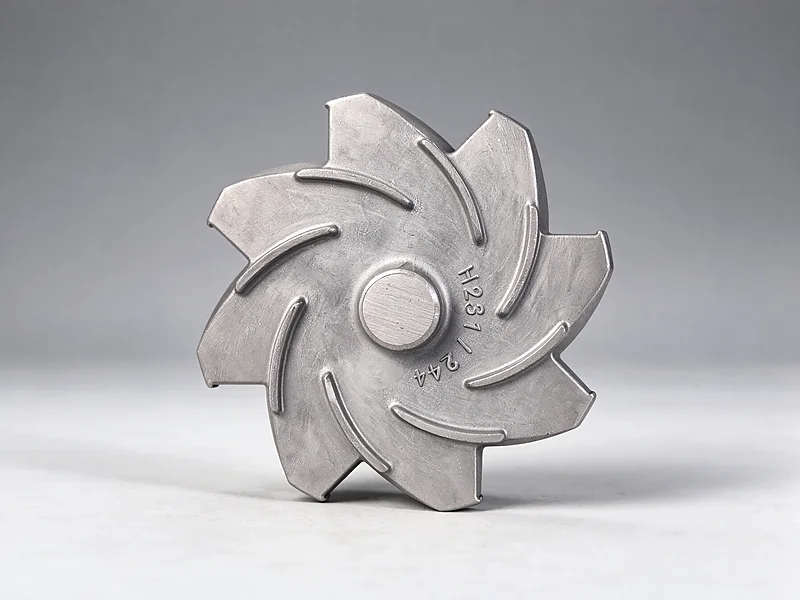
Investment cast closed impellers in CF8 and CF8M austenitic stainless for chemical, clean water and booster pumps, with hub bore, keyway and shroud faces machined to drawing.
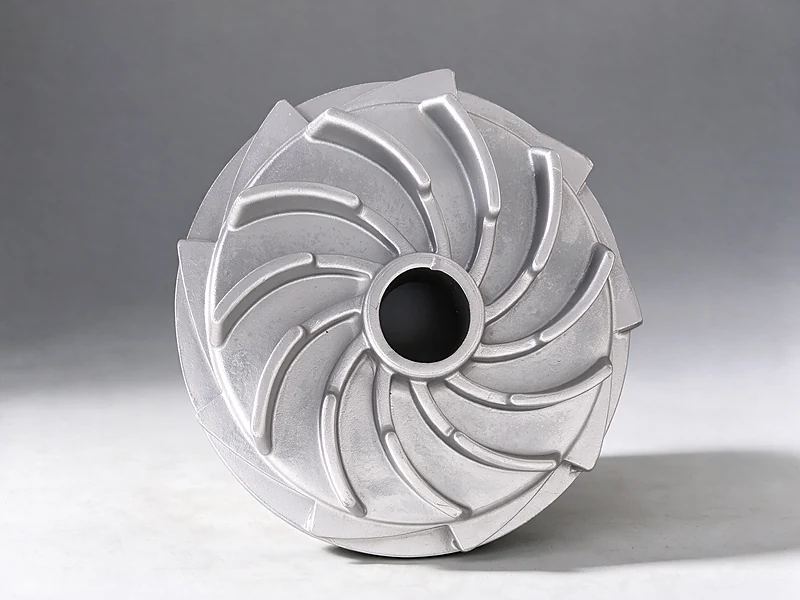
Centrifugal Pump Impeller Casting
This closed centrifugal pump impeller is cast in CF8 or CF8M austenitic stainless steel through precision investment casting, also called lost-wax casting. The front and back shrouds, the vanes and the hub are produced as one piece, so no welding is needed inside the flow passage. The hub bore, keyway, shroud faces and inlet eye are then machined to drawing, which keeps the rotor concentric with the pump shaft. Where bronze is preferred for seawater or marine duty, see our C95500 aluminium bronze centrifugal pump impeller.
Product Specifications
| Material Grades | CF8 / CF8M austenitic stainless; CF3M and duplex on request |
|---|---|
| Product Category | Centrifugal Pump Impeller / Closed Impeller / Pump Rotor Component |
| Casting Process | Investment Casting (Lost-Wax / Silica Sol Shell Stainless Steel Casting) |
| Machining Support | Machining support: hub bore, keyway, shroud faces, inlet eye and balance planes; operations arranged to approved drawings |
| Surface Finish | As-cast, shot blasted, machined stainless finish, passivated or polished as required |
| Tolerance | Casting tolerance typically ±0.2mm; bore, keyway and shroud runout controlled to drawing tolerance |
| Certification | Chemistry, dimensional and penetrant records can be arranged when required |
| Order Quantity | Reviewed after drawing and quantity confirmation |
| Lead Time | Confirmed after drawing review and scheduling; sample timing evaluated separately |
| Customization | Custom impeller diameter, vane number and passage geometry, hub bore and keyway, material grade and finish according to drawings or samples |
Need a Custom Pump Impeller?
Send us your drawings, samples or service conditions for a quotation after drawing or requirement review.
Get a Free Quote WhatsApp UsProduct Overview
The impeller is a custom investment casting supplied by Wuxi Huayong Metal Technology Co., Ltd. Vane number, vane angle, passage width and hub geometry are taken from the customer's drawing or 3D model, reproduced in the wax pattern and cast as a single piece; then the hub bore, keyway and shroud faces are machined to drawing.
Before tooling, shroud thickness, vane section, gating and feeding, shrinkage and machining allowance are reviewed, because uneven shrouds distort and a tapered passage can choke the flow. CF8 is the cast equivalent of 304 and covers clean water, booster and general chemical duty; CF8M adds molybdenum for chlorides and mildly aggressive media, and duplex grades follow where pitting resistance has to be higher.
Material Options
This page highlights CF8 and CF8M austenitic stainless steel, the two grades most often specified for closed impellers. Duplex and nickel grades follow where the pumped medium is more aggressive; the table below lists the families we cast most often for pump rotors.
| Material Family | Common Grades | Key Properties | Typical Applications |
|---|---|---|---|
| CF8 Cast Austenitic Stainless | 304 equivalent, 18-20% Cr / 8-11% Ni | General corrosion resistance for clean water and mild chemical duty | Booster and circulating pump impellers, water treatment rotors |
| CF8M Cast Austenitic Stainless | 316 equivalent; CF3M on request | Molybdenum-bearing resistance to chlorides and mildly aggressive media | Chemical process impellers, chloride-bearing water, process feed pumps |
| Duplex Stainless on request | 2205, CD4MCU | Higher pitting resistance and strength than austenitic grades | Aggressive chemical duty, brackish and chloride-rich media |
| Nickel Alloy on request | Inconel 625, Monel | Corrosion resistance where austenitic grades reach their limit | Severe chemical and seawater-adjacent duty |
Manufacturing Process
1. Pattern Making
High-precision wax patterns reproduce the vane profile, shroud contour, hub position and inlet eye before shell assembly, so the hydraulic passage stays consistent from one casting to the next.
2. Shell Building
The pattern tree is repeatedly dipped into ceramic slurry and coated with refractory sand. This process is repeated 6-8 times to build a strong, heat-resistant ceramic shell.
3. Dewaxing & Preheating
The ceramic shell is placed in an autoclave where steam melts the wax, which drains out. The empty shell is then preheated to 1000-1100°C to remove residual moisture.
4. Melting & Pouring
CF8 or CF8M charges are melted under controlled chemistry. Spectrometer checks confirm the grade before pouring, and CF8M heats are checked for molybdenum content because that element carries the chloride resistance.
5. Shell Removal & Cutting
After solidification and cooling, the ceramic shell is removed by mechanical vibration and blasting. The individual components are then cut from the sprue.
6. Heat Treatment
All castings receive the heat treatment specified for the grade, solution annealing for CF8 and CF8M before machining, so the austenitic structure and ductility are consistent.
7. Machining Support
Machining support can be arranged according to approved drawings. Critical operations include turning the hub bore and back face, cutting the keyway, facing the shrouds, trimming the inlet eye and preparing the balance planes.
8. Surface Treatment & Testing
Finished impellers may be shot blasted, machined, polished or passivated. Inspection covers dimensions, chemistry and penetrant testing on shroud surfaces, vane roots and hub fillets, with dynamic balancing arranged when the drawing or order calls for it.
Quality Control & Testing
Quality control follows the impeller from melt chemistry to final hub check:
- Chemical Analysis: Spectrometer verification of CF8 or CF8M heats, with molybdenum checked on CF8M and material records prepared by agreement when ordered.
- Mechanical and Hardness Check: Tensile, yield, elongation and hardness records as applicable to the selected stainless grade and inspection standard.
- Dimensional Check: Hub bore, keyway, shroud faces, inlet eye, overall height and runout checked against the drawing.
- Surface and Defect Inspection: Visual inspection, dye penetrant testing on shroud surfaces, vane roots and hub fillets and, when required, radiographic testing for internal soundness.
- Balancing and Performance Check: Dynamic balancing and a dimensional report arranged on request where the rotor balance grade and test method are specified.
- Documentation Traceability: Heat number, inspection records, material certificate, packing list and shipping documents can be organized with each batch.
Applications
A closed impeller is used for clean, low-solids media, and the grade has to match the pumped liquid:
- Chemical Process Pumps: Closed impellers for pumps handling clean or lightly contaminated corrosive liquids.
- Clean Water and Booster Pumps: End-suction and multistage rotors for potable and process water without solids.
- Water Treatment and RO Feed Pumps: Impellers for filtered feed water in treatment and membrane systems.
- HVAC Circulating Pumps: Closed impellers for chilled and hot water loops.
- Replacement and Rebuild Impellers: Spares cast and machined to sample or drawing for existing pump models.
- Multistage Pump Stages: Impellers matched to bowl and diffuser geometry in staged pumps.
- Prototype and Small-Batch Builds: Development impellers evaluated before series tooling is committed.
Why Choose Huayong for Your Centrifugal Pump Impeller Castings
- CF8 and CF8M Both Cast In-House: Two grades quoted side by side so the pumped medium picks the alloy.
- Casting and Machining Together: From wax pattern and ceramic shell to turned hub bore, cut keyway and faced shroud.
- Core and Vane Review: Vane passage, core split and shroud thickness reviewed before tooling.
- Hub and Bore Control: Bore tolerance, keyway and runout agreed on the drawing before machining.
- Balancing Support: Dynamic balancing and dimensional records arranged to drawing and order requirements.
- Quality Documentation: Chemistry, dimensional and penetrant records arranged to drawing and order requirements.
- Flexible Quantity: Prototypes, development batches and serial production can be quoted from drawings and annual demand.
- Factory Direct Response: Technical quotation prepared after drawing review from drawings, samples or duty conditions.
Ready to Start Your Project?
Send us your 2D/3D drawings, samples, or impeller requirements for a quotation after drawing or requirement review.
Request a Quote View All ProductsEngineering Design Tips for Closed Impellers
1. Alloy Selection: CF8 vs CF8M
Use CF8 for clean water, booster and circulating duty; use CF8M where the medium carries chlorides or mild chemical attack. If the chloride level or temperature goes beyond what CF8M tolerates, duplex or a nickel grade is worth reviewing instead of pushing CF8M harder.
2. Shroud Thickness and Vane Taper
Shroud thickness drives distortion. Keep front and back shroud sections as even as the hydraulic design allows, taper the vanes rather than leaving a heavy root, put generous fillets where vanes meet the shroud, and avoid isolated bosses that cool faster than the surrounding metal.
3. Hub, Bore and Keyway
The hub carries the shaft fit and the torque. Specify bore tolerance, keyway width and depth, hub length and the balance grade on the drawing, keep enough section around the bore so it does not shrink away from the keyway, and state whether the impeller is keyed, splined or clamped.
4. Vane Core and Passage Cleanliness
The vane passage is formed by a core that has to come out cleanly. Agree the number of vanes, passage width, core split and trailing edge thickness with the pattern shop before tooling, and leave machining allowance only where the drawing calls for a machined face.
5. Stainless Machining and Balancing Notes
CF8 and CF8M work-harden and smear rather than cut cleanly, and thin shrouds deflect under clamping. Rigid fixtures, sharp tooling, controlled feeds and generous coolant keep the hub bore concentric and the shroud faces parallel.
Frequently Asked Questions
Q: What is the difference between CF8 and CF8M?
A: CF8 is the cast austenitic equivalent of 304, with 18-20% Cr and 8-11% Ni, used for clean water, booster and general chemical duty. CF8M is the cast equivalent of 316, adding 2-3% molybdenum for better resistance to chlorides and mildly aggressive media; CF3M is the lower-carbon variant where weldability or heavier sections call for it.
Q: Can impellers be supplied machined and balanced?
A: Yes. Hub bore, keyway, shroud faces, inlet eye and balance planes can be machined after casting, and dynamic balancing and a dimensional report can be arranged when the drawing or order calls for it.
Q: Can you reverse-engineer an existing pump impeller?
A: Send a sample, worn impeller, old drawing or the pump model with its duty point. We can review the vane and passage geometry, propose a casting approach, make tooling, supply sample castings and machine to the approved drawing.
Q: Which grade for chemical versus clean water duty?
A: CF8 suits clean water and booster duty; CF8M suits chemical and chloride-bearing media. Selection follows the pumped liquid, chloride level, temperature and solids content rather than price alone.
Related Products
Request a Quote for Centrifugal Pump Impeller Investment Casting
Send us your requirements — we review the inquiry and prepare a quotation after drawing or requirement review.