
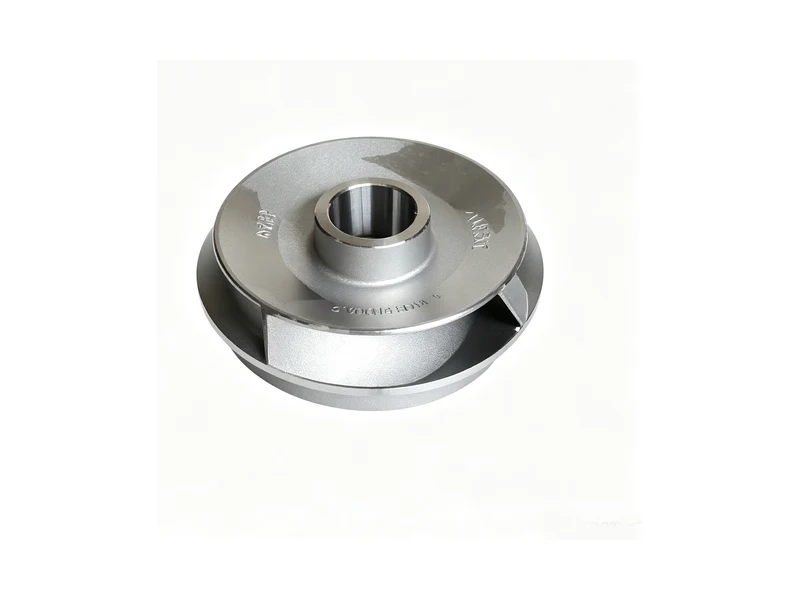
Open Impeller Investment Casting
Investment cast open impellers in 2205 duplex and 304/316 stainless steel for slurry, wastewater and chemical pumps, with bore, keyway and hub machined to drawing.
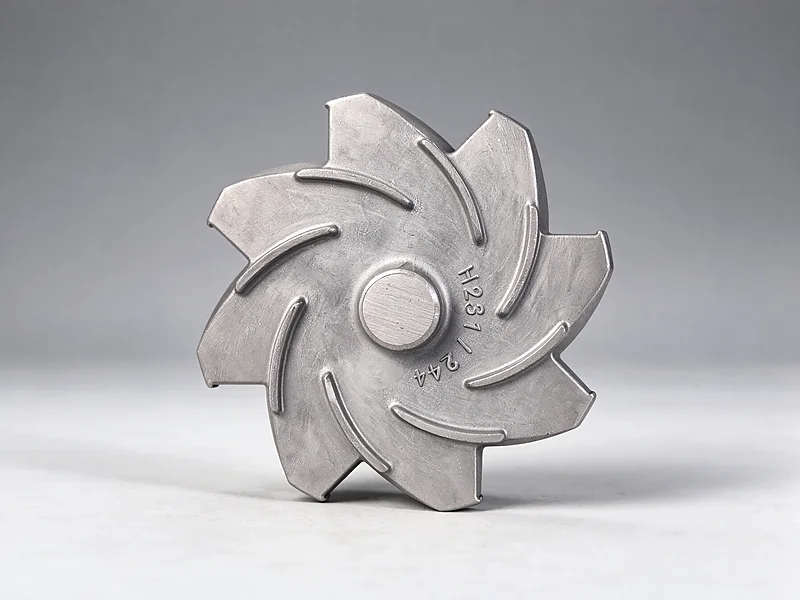
Open Impeller Casting
This open impeller is cast in 2205 duplex or 304/316 stainless steel through precision investment casting, also called lost-wax casting. Because the vanes stand open, with no front or back shroud, the part can be cast close to final profile, and the vane passages stay accessible for cleaning; that is why open impellers keep handling solids, fibres and viscous media when a closed impeller would clog.
Product Specifications
| Material Grades | 2205 duplex stainless (UNS S32205 / S31803); 304, 304L, 316, 316L and CF8/CF8M on request |
|---|---|
| Product Category | Open Impeller / Pump Component / Stainless Steel Machined Casting |
| Casting Process | Investment Casting (Lost-Wax / Silica Sol Shell Stainless Casting) |
| Machining Support | Machining support: boring shaft bore, keyway, hub face turning, vane tip turning and balance trim; operations arranged to approved drawings |
| Surface Finish | As-cast, shot blasted, machined stainless finish, polished or passivated as required |
| Tolerance | Casting tolerance typically ±0.2mm; bore, keyway and hub faces controlled to drawing tolerance |
| Certification | ISO 9001; chemistry, dimensional and balance records can be arranged when required |
| Order Quantity | Reviewed after drawing and quantity confirmation |
| Lead Time | Confirmed after drawing review and scheduling; sample timing evaluated separately |
| Customization | Custom impeller diameter, vane count and profile, bore and keyway size, hub dimensions, balance grade and finish according to drawings or samples |
Need a Custom Open Impeller?
Send us your drawings, samples or service conditions for a quotation after drawing or requirement review.
Get a Free Quote WhatsApp UsProduct Overview
The open impeller is a custom investment casting supplied by Wuxi Huayong Metal Technology Co., Ltd. The vane geometry is taken from the customer's drawing or 3D model, reproduced in the wax pattern and cast as one piece with hub, vanes and any balance pads; then the bore, keyway and hub faces are machined to drawing.
Before tooling, vane thickness, hub section, gating and feeding, shrinkage and machining allowance are reviewed, because open vanes are thin sections that must fill evenly. 2205 is normally chosen where chlorides, erosion or cavitation shorten the life of 304/316; 304/316 remain the cost-effective choice for moderate corrosion duty.
Material Options
This page highlights 2205 duplex and 304/316 austenitic stainless steel, the two families most often specified for open pump impellers. Other grades follow when the pumped medium, temperature or wear duty differs; the table below lists the families we cast most often for impellers and pump components.
| Material Family | Common Grades | Key Properties | Typical Applications |
|---|---|---|---|
| Duplex Stainless 2205 | UNS S32205 / S31803, 2205 dual-certified | About twice the yield strength of 304/316, with chloride stress-corrosion and erosion-corrosion resistance | Slurry, seawater, desalination, chemical process pumps |
| Austenitic Stainless | 304, 304L, 316, 316L | General corrosion resistance; 316 adds molybdenum for chloride pitting resistance | Water, food, pharmaceutical and mild chemical service |
| Cast Austenitic | CF8, CF8M, CF3M | Cast equivalents of 304/316, used for pump components and valve bodies | Pump casings, impellers, valve parts |
| Cast Duplex / Super Duplex | CD4MCu, CD3MN, 2507 on request | Higher strength and wear resistance in aggressive slurries | Mining slurry, phosphoric acid and severe service |
Manufacturing Process
1. Pattern Making
High-precision wax patterns reproduce the vane profile, hub, bore and keyway allowance and balance-pad positions before shell assembly.
2. Shell Building
The pattern tree is repeatedly dipped into ceramic slurry and coated with refractory sand. This process is repeated 6-8 times to build a strong, heat-resistant ceramic shell.
3. Dewaxing & Preheating
The ceramic shell is placed in an autoclave where steam melts the wax, which drains out. The empty shell is then preheated to 1000-1100°C to remove residual moisture.
4. Melting & Pouring
2205 duplex or 304/316 stainless charges are melted under controlled chemistry. Spectrometer checks confirm the grade before pouring, and duplex heats are poured with the ferrite balance in mind.
5. Shell Removal & Cutting
After solidification and cooling, the ceramic shell is removed by mechanical vibration and blasting. The individual components are then cut from the sprue.
6. Heat Treatment
All castings receive the heat treatment specified for the grade, solution annealing for 2205 duplex and the agreed condition for 304/316, before machining.
7. Machining Support
Machining support can be arranged according to approved drawings. Critical operations include boring and keying the shaft bore, facing the hub, turning the vane tip diameter where a clearance is specified, and trimming or balancing where the drawing allows it.
8. Surface Treatment & Testing
Finished impellers may be shot blasted, machined, polished or passivated. Inspection covers dimensions, chemistry and visual or penetrant checks on vane surfaces and hub sections.
Quality Control & Testing
Quality control follows the impeller from melt chemistry to final balance review:
- Chemical Analysis: Spectrometer verification of 2205 duplex or 304/316 heats, with material records prepared by agreement when ordered.
- Mechanical and Hardness Check: Tensile, yield, elongation and hardness records as applicable to the selected stainless grade and inspection standard.
- Dimensional Inspection: Hub diameter, bore and keyway, vane tip diameter, face run-out and overall height checked against the drawing.
- Surface and Defect Inspection: Visual inspection, dye penetrant testing on vane surfaces and, when required, radiographic or ultrasonic testing for the hub section.
- Balance Review: Static or dynamic balance arranged to the speed and grade specified, with trim allowance on vane edges where the drawing permits.
- Documentation Traceability: Heat number, inspection records, material certificate, packing list and shipping documents can be organized with each batch.
Applications
Open impellers handle media a closed impeller cannot: slurries, crystals, fibres and viscous products:
- Slurry and Solids Handling: Pumps moving sand, slurries, crystals and fibrous solids where an open impeller avoids clogging.
- Wastewater and Sewage: Transfer, lift and process pumps in municipal and industrial wastewater duty.
- Chemical Process Pumps: Acids, caustics and salt solutions where 2205 or 316 resists the medium.
- Desalination and Seawater: Intake, brine and circulation pumps exposed to chlorides.
- Food and Beverage: CIP, transfer and product pumps where 304/316 cleanliness matters.
- Mining and Mineral Processing: Mill discharge, tailings and concentrate transfer in abrasive duty.
- Pulp, Paper and Fibrous Media: Stock and process pumps where fibres would block a closed impeller.
Why Choose Huayong for Your Open Impeller Castings
- Open Impeller Casting Experience: Lost-wax process for thin curved vanes, hub sections and keyed bores.
- Stainless and Duplex Support: Practical support for 2205, 304, 316, CF8, CF8M and CD4MCu grades.
- Casting and Machining Together: From wax pattern and ceramic shell to finished bore, keyway and hub faces.
- Hydraulic Profile Focus: Vane geometry taken from customer drawings or 3D models and reviewed before tooling.
- Engineering Review Before Tooling: Vane thickness, gating, shrinkage, draft and machining allowance reviewed before the pattern is cut.
- Quality Documentation: Chemistry, dimensional and balance records arranged to drawing and order requirements.
- Flexible Quantity: Prototypes, development batches and serial production can be quoted from drawings and annual demand.
- Factory Direct Response: Technical quotation prepared after drawing review from drawings, samples or duty conditions.
Ready to Start Your Project?
Send us your 2D/3D drawings, samples, or impeller requirements for a quotation after drawing or requirement review.
Request a Quote View All ProductsEngineering Design Tips for Open Impellers
1. Alloy Selection: 2205 vs 304/316
Choose 2205 where chlorides, erosion or cavitation shorten the life of 304/316; keep 304/316 where the medium is mild and cost matters. For abrasive solids, a harder duplex or CD4MCu grade is worth reviewing.
2. Vane Thickness and Taper
Open vanes are thin sections. Keep vane thickness as uniform as the hydraulic design allows, avoid knife edges at the vane tips, and taper slightly from hub to tip so metal fills evenly.
3. Hub, Bore and Keyway
The hub carries shaft load and the keyway. Give the hub enough section around the bore and keyway, and specify the key standard, bore tolerance and face run-out on the drawing.
4. Balance and Trim Allowance
Unbalance shows up quickly at open-impeller speeds. Keep vane spacing symmetrical, allow trim allowance on vane edges, and state the balance grade so material is removed where intended.
5. Stainless and Duplex Machining Notes
Stainless and duplex grades work-harden and smear rather than cut cleanly. Rigid fixturing, sharp tooling, controlled feeds and generous coolant keep the bore and keyway within tolerance.
Frequently Asked Questions
Q: What is the difference between 2205 and 304/316 for impellers?
A: 2205 duplex gives roughly twice the yield strength of 304/316 with better chloride stress-corrosion and erosion-corrosion resistance, which suits slurry, seawater and chemical duty. 304/316 stay adequate for water, food and mild chemical service.
Q: Can the impeller be supplied fully machined and balanced?
A: Yes. The bore, keyway, hub faces and any specified vane tip diameter can be machined after casting, and trimming or balance correction can be arranged where the drawing permits.
Q: Can you reverse-engineer an existing impeller?
A: Send a sample, worn impeller, old drawing or the pump model with its duty point. We can review the vane geometry, propose a casting approach, make tooling, supply sample castings and machine to the approved drawing.
Q: Which grade should I choose for slurry or seawater duty?
A: 2205 is a duplex stainless with about 22% Cr, 3% Mo and 5-6% Ni; 304/316 are austenitic grades without that duplex strength. Selection follows the pumped medium, chloride level, solids and temperature rather than price alone.
Related Products
Request a Quote for Open Impeller Investment Casting
Send us your requirements — we review the inquiry and prepare a quotation after drawing or requirement review.