
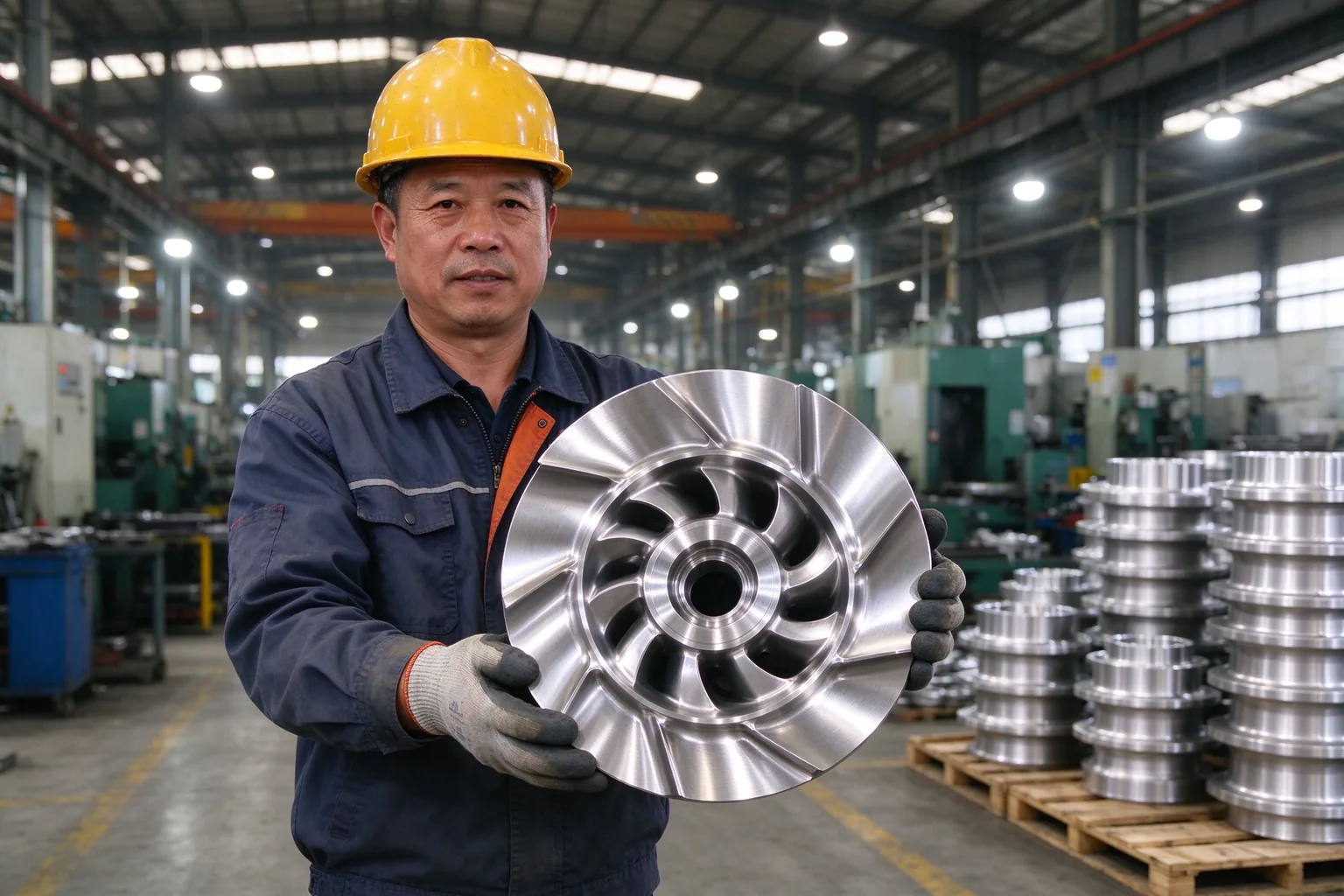
How Investment Casting Pricing Works
Investment casting (lost-wax casting) price is not a single number — it is a stack of cost elements: pattern tooling, wax, shell, melting, finishing, testing and logistics. Understanding the stack helps you see where money goes, and which factors you can control. For a typical stainless steel investment casting from a Chinese foundry, the largest variable is material cost, followed by tooling amortization and finishing labor.
Quotations for the same drawing can differ because material sourcing, inspection scope, finishing operations and packaging vary. The cheapest quote may not be the lowest total cost once inspection failures, rework and delivery risk are included.
The 6 Factors That Drive Casting Price
1. Material Grade
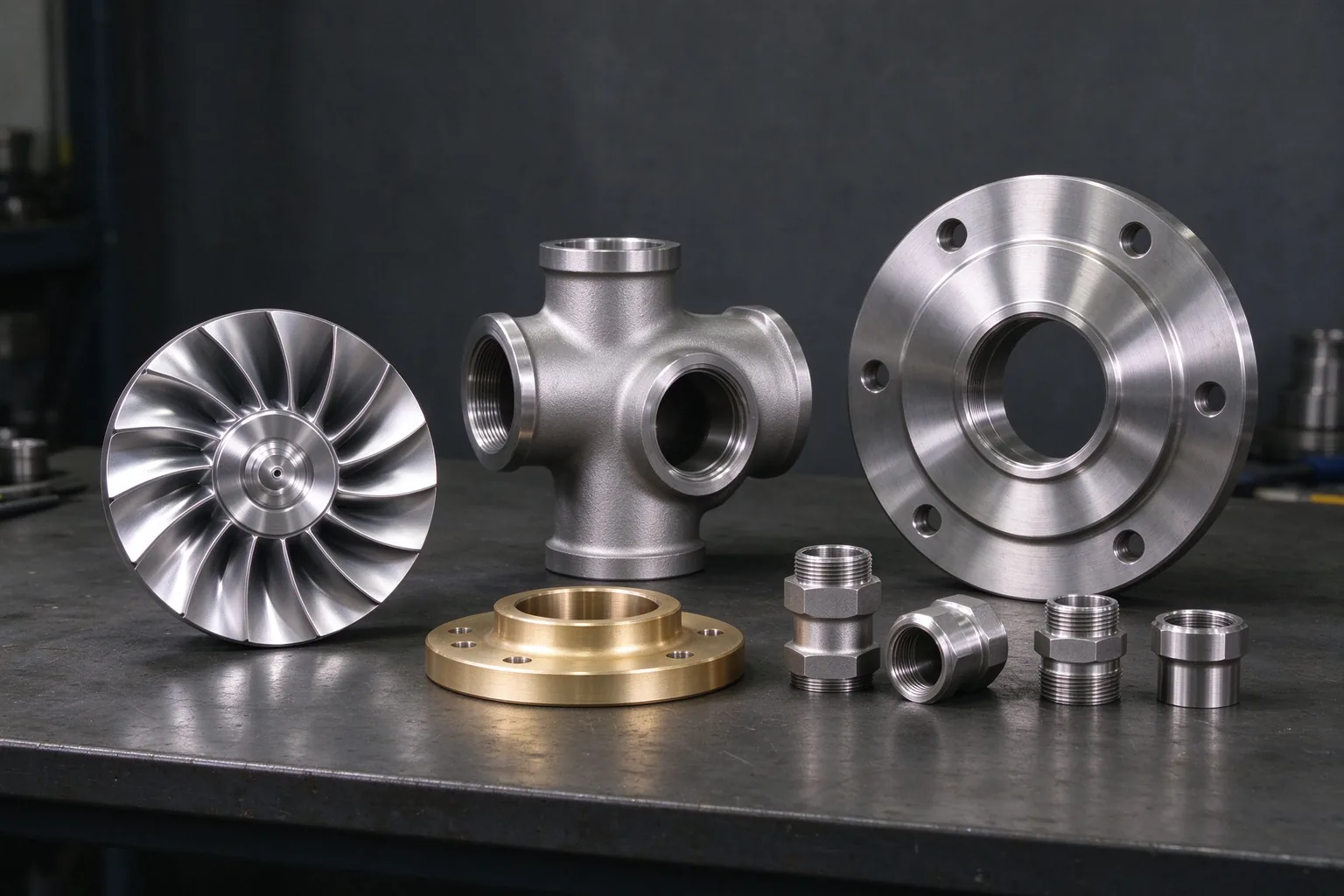
Material is often a major variable in final part cost. Price climbs steeply across the common grades:
- 304 / 316 / 316L — the everyday stainless baseline
- CF8 / CF8M / CF3M — casting equivalents of 304/316/316L (see our CF8M vs CF3M vs CF8 guide)
- Duplex 2205 — roughly 1.5–2× stainless for the extra strength and corrosion resistance
- Hastelloy / nickel alloys — the high end; expect a significant premium over stainless
- Copper alloys / bronze — mid-range, driven by copper market price
- Alloy / structural steel (4140, 45#) — the economical option
2. Part Weight and Size
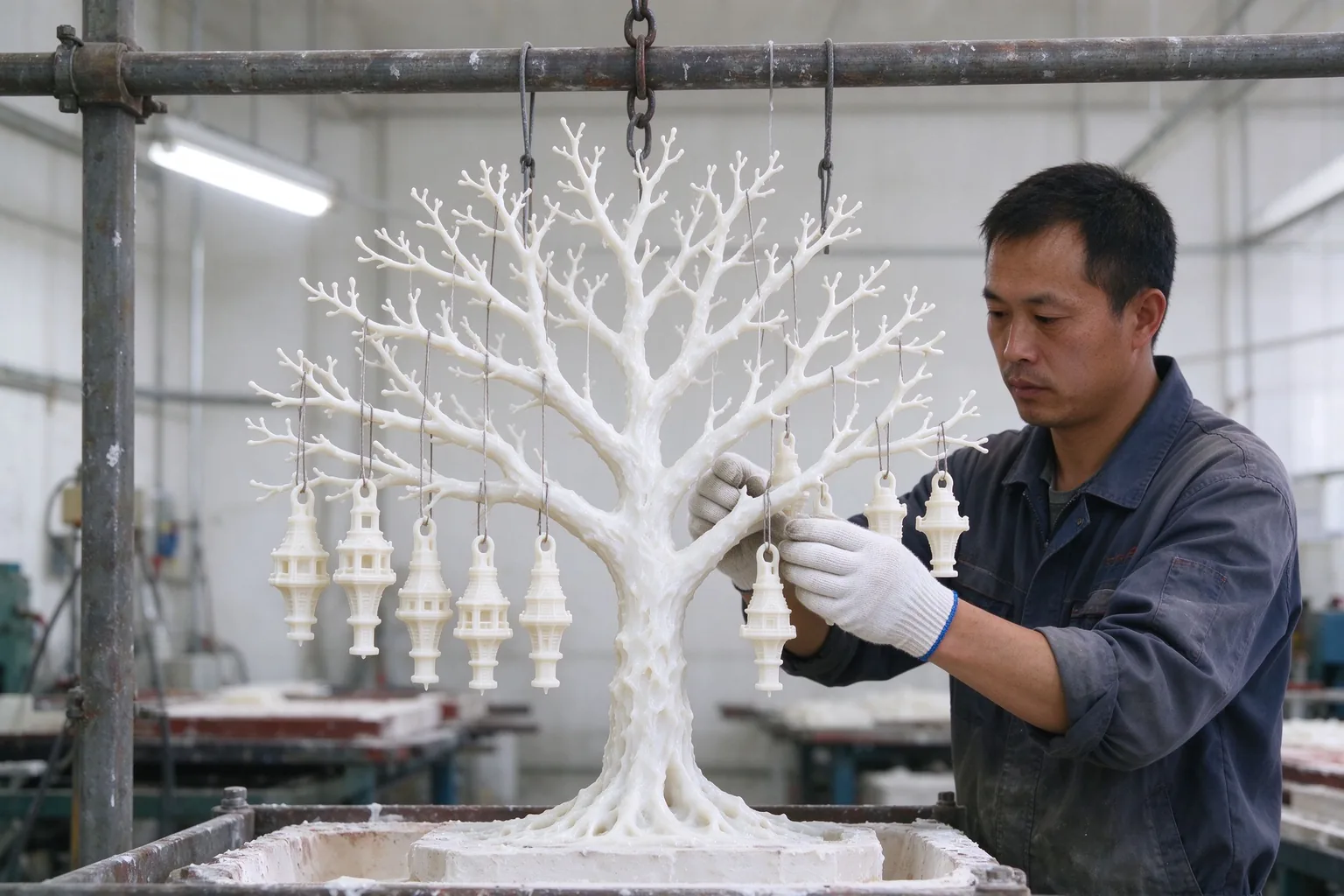
Weight drives both material volume and melting/pouring cost. Within investment casting, small parts (10 g–2 kg) are very competitive because many castings fit on one wax tree; very large parts (50–100 kg) need bigger shells and heavier handling, which raises per-kg cost.
3. Geometry Complexity
Complex cores, undercuts, thin walls and tight internal passages mean more intricate wax tooling and trickier shelling. Complexity shows up mainly in the tooling cost and first-article lead time, less in the per-piece casting cost — which is exactly why investment casting suits complex parts.
4. Tolerance and Surface Finish
Tighter tolerances and better surface finishes cost money because they shift work from the casting process into machining and finishing. A part quoted at CT6–CT7 tolerances is cheaper than the same part at CT4–CT5. Specify only what the function requires (see our tolerance guide for realistic classes).
5. Order Quantity and MOQ
Tooling is a fixed cost, so quantity amortizes it. A 10-piece order carries a lot of tooling cost per piece; 1,000 pieces spread the same tooling thinly. That said, a serious foundry should review small prototype, spare-part and order quantities fairly; the practical MOQ and price should be quoted against the drawing, material, quantity and requested finish.
6. Testing and Certification
Material test certificates (MTC/COA), spectrometer reports, PMI, dimensional reports and third-party inspection arranged through a nominated inspection company may add cost; the required record, test method and acceptance basis should be agreed with the supplier before production.
What Makes Up the Quote — a Real Cost Breakdown
| Cost Element | Typical Share | What It Covers |
|---|---|---|
| Material | 35–55% | Alloy, melting, pour loss |
| Tooling (amortized) | 5–20% | Wax injection die / pattern, amortized over order |
| Wax & shell | 10–15% | Pattern making, shell building, dewaxing |
| Casting & heat treatment | 10–15% | Pouring, knockout, cut-off, heat treat |
| Finishing & machining | 10–25% | Sand blasting, grinding, machining, surface passivation |
| Testing & docs | 2–8% | MTC, dimensional report, NDT, third-party inspection |
| Packaging & freight | 5–15% | Export wooden cases, inland + ocean freight (FOB/CIF/DDP) |
Tip: Ask for a line-by-line breakdown, not just a unit price. Suppliers who give you the stack are suppliers you can negotiate with; suppliers who give you one opaque number are hiding margin in material or QC.
Why Tooling and Patterns Are a One-Time Cost
For investment casting, the initial cost is the wax pattern tooling — the steel die that injects the wax pattern. It is a one-time investment, reusable for the life of the program. Tooling ownership, tooling cost and sampling iteration speed should be confirmed against the specific program.
How to Get the Best Quote (in 5 Steps)
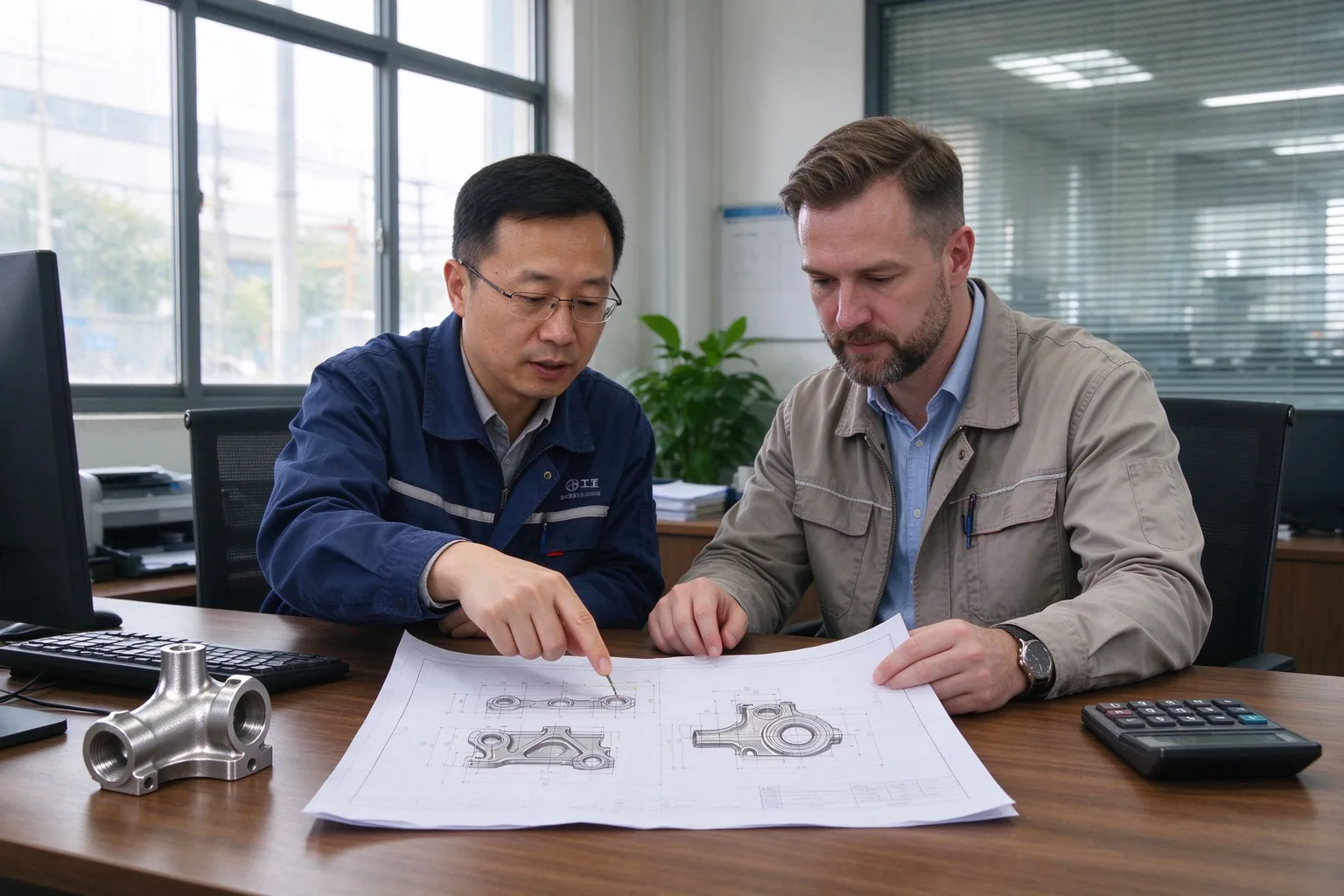
- Send a complete drawing — PDF or STEP, with material, tolerance, surface finish and application. Incomplete RFQs get defensive quotes.
- State realistic quantities — annual volume, plus any prototype or first-article quantity.
- Separate tooling from piece price — ask for tooling cost and per-piece price as two lines, so you can compare fairly.
- Ask for the cost drivers — "Which element is driving the price, and what would reduce it?" A good foundry will tell you (e.g. "relaxing CT6 to CT7 saves 8%").
- Compare apples to apples — same scope of testing, packaging and Incoterm. A lower FOB price with different QC scope is not comparable.
Realistic Price Expectations
- Simple stainless steel castings (CF8/CF8M), 0.5–5 kg — the most competitive price band from China; material swings drive most variance
- Duplex 2205 — expect ~1.5–2× the equivalent stainless price
- Hastelloy C-276 / nickel alloys — highest band; quote depends on the alloy market
- Small parts (10 g–500 g) — very low per-piece cost, but tooling and handling dominate small orders — which is why MOQ flexibility matters
These are planning ranges, not quotes — the only way to get a real number is to send the drawing.
Ready to Discuss Your Casting Project?
Send us your drawings or requirements for a quotation. Material, geometry, machining note and quantity help our team prepare a practical response. OEM/ODM welcome.
Get a Free Quote View Our Products