
How to Choose Casting Material: Stainless Steel vs Alloy Steel vs Hastelloy
Selecting the right casting material is the single most important decision in your project. This guide compares the most common investment casting alloys and their costs so you can make an informed choice.
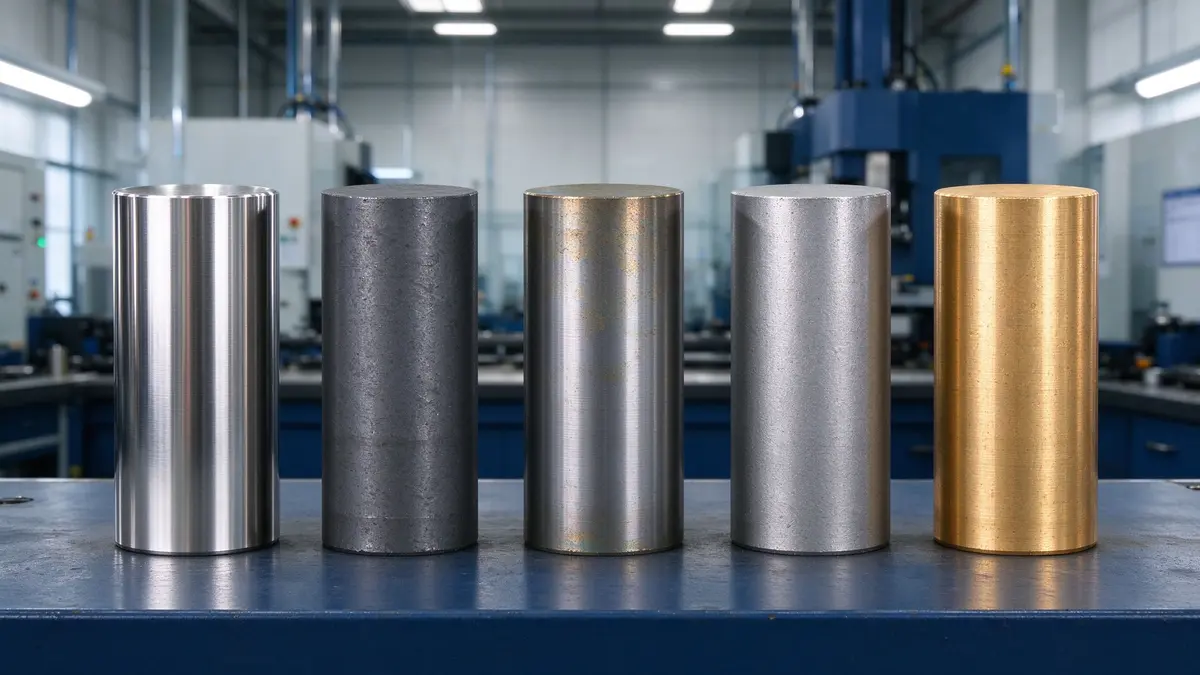
Five common investment casting material families — stainless steel, alloy steel, duplex 2205, nickel alloys and copper alloys
Why Material Selection Matters
The material you choose determines not only the performance of your part, but also its cost, lead time and manufacturability. A wrong material choice can lead to premature failure in service, corrosion problems, or unnecessary costs that could easily have been avoided.
For precision investment casting, the most commonly specified material families are stainless steel, alloy steel, duplex stainless steel, nickel-based alloys (Hastelloy) and copper alloys. Each family has distinct properties, price points and applications.
Quick Comparison Table
| Material | Typical Grades | Corrosion Resistance | Temperature Range | Relative Cost | Common Applications |
|---|---|---|---|---|---|
| Stainless Steel | 304, 316, CF8, CF8M, 316L | Good to Excellent | -196°C to 800°C | $ (Baseline) | Pumps, valves, food equipment |
| Alloy Steel | 4140, 42CrMo, 45# | Poor to Moderate | -40°C to 500°C | $ (Similar to SS) | Structural parts, gears, shafts |
| Duplex 2205 | 2205, S31803, S32205 | Excellent (pitting/crevice) | -50°C to 300°C | $$ (1.5-2x SS) | Offshore, chemical, marine |
| Hastelloy | C276, CW2M, N10276 | Superior (extreme media) | -196°C to 1000°C | $$$$ (5-8x SS) | Chemical processing, severe service |
| Copper Alloy | Brass, Bronze, CuNi | Good (specific media) | -200°C to 300°C | $$ (2-3x SS) | Marine fittings, electrical parts |
1. Stainless Steel Castings (304, 316, CF8M)
Stainless steel is the workhorse of investment casting. It offers an excellent balance of corrosion resistance, mechanical strength and cost. For investment casting, grades are typically specified in their cast equivalents: CF8 (304), CF8M (316) and CF3M (316L).
Best for:
- Pump impellers, casings and valve bodies
- Food and beverage processing equipment
- Pharmaceutical and sanitary applications
- General industrial machinery components
Tip: For applications involving chlorides or seawater, specify 316/CF8M over 304/CF8 — the molybdenum content makes a significant difference in pitting resistance.
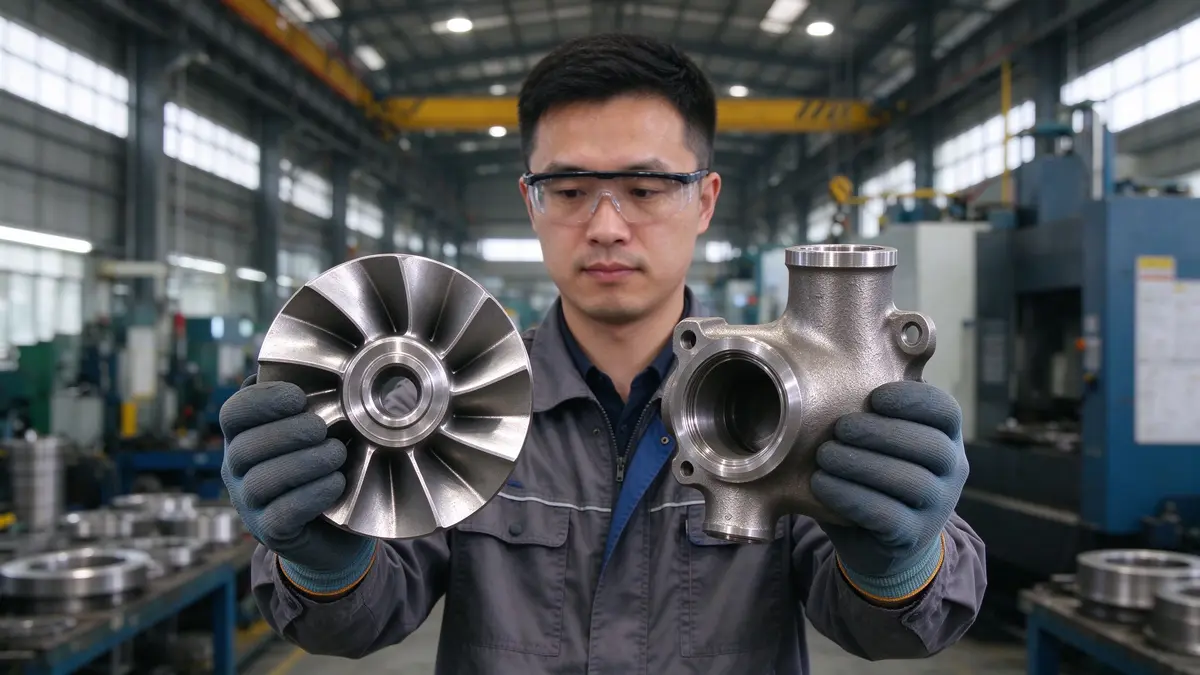
2. Alloy Steel Castings (4140, 42CrMo, 45#)
Alloy steels offer high strength and wear resistance at a very attractive cost. They are typically heat treated (quenched and tempered) to achieve the desired mechanical properties. However, they have limited corrosion resistance and usually require protective coating or plating for corrosive environments.
Best for:
- Structural and mechanical components
- Gears, sprockets and wear parts
- Automotive and agricultural machinery parts
- Applications where strength matters more than corrosion resistance
3. Duplex Stainless Steel 2205 Castings
Duplex 2205 combines high strength (roughly twice that of 316) with excellent corrosion resistance, particularly against chloride stress corrosion cracking. It is the material of choice for demanding offshore, chemical and marine applications.
Best for:
- Offshore and marine equipment
- Chemical processing vessels and piping
- Heat exchangers and seawater systems
- High-pressure applications with corrosive media
Note: Duplex 2205 casting requires careful process control during melting and heat treatment to maintain the correct ferrite/austenite balance. Always work with an experienced foundry.
4. Hastelloy Castings (C276, CW2M)
Nickel-based alloys like Hastelloy C276 offer the highest level of corrosion resistance available, particularly against strong acids, oxidizing and reducing media. They are expensive — often 5 to 8 times the cost of stainless steel — but indispensable for severe service conditions.
Best for:
- Chemical and petrochemical processing equipment
- Flue gas desulfurization systems
- Pollution control and waste treatment
- Pharmaceutical reactors and high-purity systems
5. Copper Alloy Castings (Brass, Bronze)
Copper alloys offer excellent thermal and electrical conductivity, natural lubricity, and good corrosion resistance in marine environments. They are commonly used for marine hardware, electrical components and wear parts.
Best for:
- Marine propellers and fittings
- Electrical and thermal components
- Bearing and wear surfaces
- Decorative and architectural hardware
How to Decide: A Step-by-Step Approach
- Identify the service environment — What media, temperature and pressure will the part face?
- Define required mechanical properties — Strength, hardness, wear resistance?
- Consider corrosion requirements — Is the part exposed to chlorides, acids or seawater?
- Check temperature range — Some alloys lose strength or become brittle outside their range.
- Evaluate cost vs. performance — The most expensive material is not always the best choice.
- Consult the foundry early — Experienced casters can suggest cost-saving alternatives with equivalent performance.
Cost Considerations
| Material Family | Relative Alloy Cost | Typical Use Case |
|---|---|---|
| Alloy Steel | 0.8x - 1.0x | Cost-sensitive structural parts |
| Stainless Steel | 1.0x (baseline) | General corrosion-resistant parts |
| Copper Alloy | 2x - 3x | Marine, electrical, wear parts |
| Duplex 2205 | 1.5x - 2x | Offshore, chemical, high-strength |
| Hastelloy C276 | 5x - 8x | Extreme corrosion service |
Not Sure Which Material to Choose?
Send us your drawing or specification. Our engineers will recommend the most cost-effective material for your application — free of charge.
Get a Free Material Recommendation →