
Rotary Valve Housing Investment Casting
Hastelloy C-276, 304 and 316 housings for rotary airlocks, rotary feeders and metering valves.
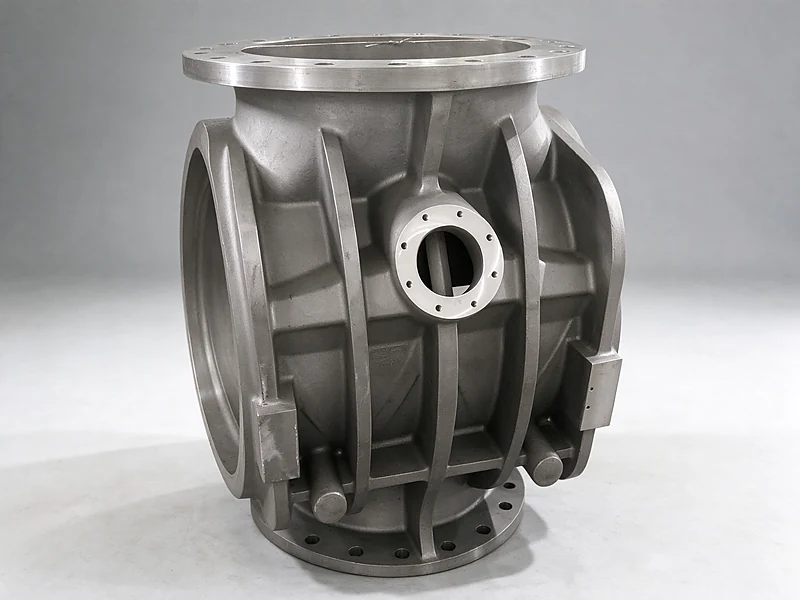
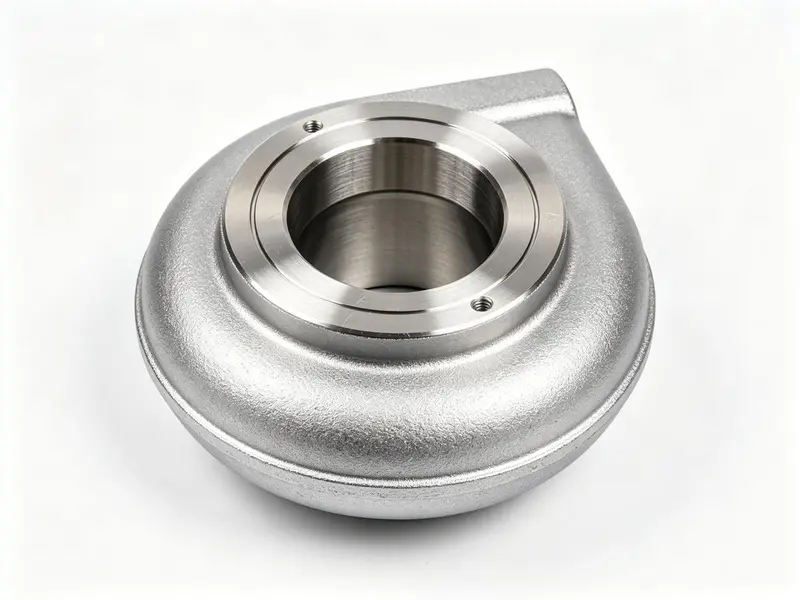
Rotary Valve Housing
Rotary valve housings cast in Hastelloy C-276, 304 and 316 stainless steel. The body is cast near net shape with integral ribs, sealed flange faces and a through bore; flange faces, rotor bore and mounting pads are then machined to approved drawings.
Product Specifications
| Material Grades | Hastelloy C-276 / C-22, 304 (CF8), 316 (CF8M) |
|---|---|
| Product Category | Valve Parts |
| Casting Process | Investment Casting (Lost-Wax) |
| Machining Support | Flange facing, boring, drilling, tapping and turning; operations arranged to approved drawings |
| Surface Finish | As-cast, sandblasted or polished finish as required; other finishing options discussed by drawing |
| Tolerance | ±0.2mm casting allowance; machining tolerance confirmed per drawing |
| Certification | ISO 9001; material records can be arranged by agreement |
| Order Quantity | Reviewed after drawing and quantity confirmation |
| Lead Time | Confirmed after drawing review and scheduling; sample timing evaluated separately |
| Customization | All castings custom made based on customer drawings |
Need a Custom Rotary Valve Housing?
Send us your drawings or specifications for a free quotation after drawing or requirement review.
Get a Free Quote WhatsApp UsProduct Overview
A rotary valve housing forms the dust-tight, pressure-tight chamber around the rotor of a rotary airlock, rotary feeder or metering valve. Wuxi Huayong Metal Technology Co., Ltd. casts these bodies by lost-wax investment casting: the shell, the integral reinforcing ribs, the flange pads and the side port come out of the mould near net shape, so the machine shop only has to bring the flange faces, rotor bore and mounting pads to size.
Every housing is custom made to the customer's drawing. Wall sections, rib layout and the position of the side port are reviewed for castability before tooling; sealing faces, bolt patterns and bore alignment are then machined and checked against the approved drawing. Documentation scope, inspection methods and surface condition follow the order requirement.
Material Options
Rotary valve housings are usually chosen by the medium they handle and by the cleaning regime they sit in, not by strength alone. The three grades below cover most powder, granule and slurry duties; the table after them lists the other material families we cast when a project calls for them.
| Grade | Where It Suits | Notes |
|---|---|---|
| Hastelloy C-276 (UNS N10276) |
Wet chlorine, chlorides, mixed acids, flue-gas desulfurization and other aggressive chemical duty | Nickel-molybdenum-chromium alloy; holds its corrosion resistance in both reducing and oxidising media. Higher alloy cost, so wall sections are kept as tight as stiffness allows. |
| 304 / CF8 | Dry powders, granules, food-contact and general bulk solids transfer | Austenitic stainless with good cleanability and weldability; not intended for chlorides or warm dilute acids. |
| 316 / CF8M | Chloride-bearing powders, brine, mild acids and washdown duty | Molybdenum addition raises pitting resistance over 304; the usual choice for CIP-washed chemical and food lines. |
| Material Family | Common Grades | Key Properties | Typical Applications |
|---|---|---|---|
| Stainless Steel | CF8M, CF8, CF3M, CF3, 316L, 304L | Good corrosion resistance, good mechanical properties | Chemical, food, marine, water treatment |
| Carbon Steel | WCB, WCC, LCC, LC2 | Good strength, weldability, cost-effective | Oil & gas, power, general industrial |
| Alloy Steel | WC6, WC9, C5, C12A, 42CrMo | High temperature strength, wear resistance | Power generation, high-temp service, automotive |
| Duplex Steel | CD4MCu, CD3MN, 2205 | High strength, good pitting resistance | Oil & gas, desalination, chemical |
| Copper Alloy | C95400, C93200, C83600, Tin Bronze | Good wear resistance, corrosion resistance | Bearings, gears, marine, decorative |
| Heat Resistant | HK30, HU31, 310S, 309S | High temperature oxidation resistance | Furnace parts, heat treatment, power |
Manufacturing Process
1. Pattern Making
We produce high-precision wax patterns using injection molding. The wax patterns are exact replicas of the final housing, including the chamber, side port, flange pads and external rib layout.
2. Shell Building
The pattern tree is repeatedly dipped into ceramic slurry and coated with refractory sand. This process is repeated 6-8 times to build a strong, heat-resistant ceramic shell.
3. Dewaxing & Preheating
The ceramic shell is placed in an autoclave where steam melts the wax, which drains out. The empty shell is then preheated to 1000-1100°C to remove residual moisture.
4. Melting & Pouring
Metal is melted in induction furnaces under carefully controlled conditions. The molten metal is poured into the preheated ceramic shells.
5. Shell Removal & Cutting
After solidification and cooling, the ceramic shell is removed by mechanical vibration and blasting. The individual components are then cut from the sprue.
6. Heat Treatment
All castings undergo proper heat treatment to achieve optimal mechanical properties and material structure.
7. Machining Support
Machining support can be arranged according to approved drawings: flange faces and the rotor bore are machined from a single datum, and critical dimensions are checked against the approved drawing.
8. Surface Treatment & Testing
Finished components may include surface finishing and arranged inspection such as dimensional review and chemistry records.
Quality Control & Testing
Quality review follows the agreed order process; final condition is checked against approved drawings and specifications:
- Chemical Analysis: Spectrometer analysis of every heat; material test records can be arranged by order requirement or agreement.
- Mechanical Testing: Mechanical or hardness checks can be arranged when specified on the order
- Dimensional Inspection: Critical dimensions checked against approved drawings
- Inspection Support: Selected penetrant, radiographic or ultrasonic methods can be arranged according to drawing, code or customer requirement
- Microstructure Examination: Metallographic review can be arranged when specified on the order
- Pressure Testing: Hydrostatic or pneumatic pressure tests can be arranged for pressure-containing components when specified
Applications
Rotary valve housings are used wherever bulk material has to move from one process stage to the next without losing containment:
- Bulk solids handling: Rotary airlocks, rotary feeders and rotary valves under hoppers, silos, cyclones and filters
- Chemical & Petrochemical: Acid, chloride and solvent duty where Hastelloy C-276 is specified
- Food & Beverage: Ingredient dosing, powder transfer and CIP-washed discharge lines
- Pharmaceutical: Contained powder metering and discharge
- Mining & Minerals: Abrasive dust and slurry transfer, mill and classifier circuits
- Power & Biomass: Fly ash, limestone, gypsum and fuel feed systems
- Water & Wastewater: Lime, polymer and coagulant dosing
- Pulp & Paper: Chip, filler and coating feed
- Marine & Offshore: Hold and deck discharge systems
- General machinery: OEM rotary valve assemblies and replacement bodies
Why Choose Huayong for Your Rotary Valve Housing Castings?
- Valve Housing Focus: Housings, bodies and covers cast with integral ribs and machined sealing faces
- Process Coverage: Investment casting support with machining, inspection and finishing coordination
- Material Expertise: Experienced in stainless steel, carbon steel, alloy steel, copper alloys, and specialty alloys
- ISO 9001 Quality System: Documentation and inspection records managed according to order requirements
- Custom Manufacturing: All parts made to your exact drawings and specifications
- Competitive Pricing: Factory-direct pricing with no middleman markup
- Fast Response: Quotation and technical support are arranged after requirement review.
- Application Support: Components reviewed for industrial, fluid, machinery and process-equipment applications.
- Order Review: Prototype and production quantities reviewed after drawing review
Ready to Start Your Project?
Send us your 2D/3D drawings, samples, or part requirements for a free custom quotation after drawing or requirement review.
Request a Quote View All ProductsEngineering Design Tips for Rotary Valve Housings
1. Wall Sections and Rib Layout
Keep the cast wall at roughly 6-8 mm for 304/316 housings in small and medium bore sizes, and carry stiffness with ribs rather than thicker sections. Ribs at 80-120 mm centres with R3-R5 fillets at the roots cast cleanly and resist distortion through dewaxing, preheating and pouring.
2. Machining Allowance and Datum
Leave 3-5 mm of stock on the flange faces and on the rotor bore. Plan the machining sequence so flange faces are cut first and the bore is then machined from one datum; this keeps bore-to-flange alignment inside the tolerance the rotor seal needs.
3. Draft, Corners and Heavy Sections
Allow 1-2 degrees of draft on the outer wall and radius the internal corners of the chamber. Where the side port meets the main shell, taper the transition instead of leaving a sharp step, or feed the section properly to avoid shrinkage porosity.
4. Material Selection
Match the grade to the medium: 304 for dry, non-chloride powders; 316 where chlorides, brine or washdown chemicals appear; Hastelloy C-276 for wet chlorine, mixed acids and flue-gas desulfurization. Wall thickness and alloy cost move together, so confirm the grade before the pattern is cut.
5. Cleanability and Containment
For food and pharmaceutical duty, avoid ledges and dead pockets inside the chamber, radius the internal corners and provide a drainable lower face so wash liquid leaves the body. Confirm the gasket and flange standard before casting the bolt pattern.
Frequently Asked Questions
Q: What materials are rotary valve housings cast in?
A: Most housings are cast in Hastelloy C-276 or C-22 for aggressive chemical duty, 304 (CF8) for dry bulk solids and food contact, and 316 (CF8M) where chlorides or mild acids are present.
Q: Can you machine the flange faces and rotor bore?
A: Yes. Machining support can include flange facing, boring, turning, drilling, tapping and grinding; bore alignment and final tolerance are confirmed against approved drawings.
Q: How is wall soundness checked on a pressure-tight housing?
A: Wall condition is reviewed against the drawing; penetrant or radiographic inspection and hydrostatic or pneumatic pressure testing can be arranged when the order or the applicable code calls for them.
Q: What documentation is available?
A: Chemistry records, dimensional reports and the inspection methods agreed on the order can be prepared under the ISO 9001 quality system.
Related Products
Request a Quote for Rotary Valve Housing Casting
Send us your requirements — we review the inquiry and prepare a quotation after drawing or requirement review.