
The 30-Second Summary
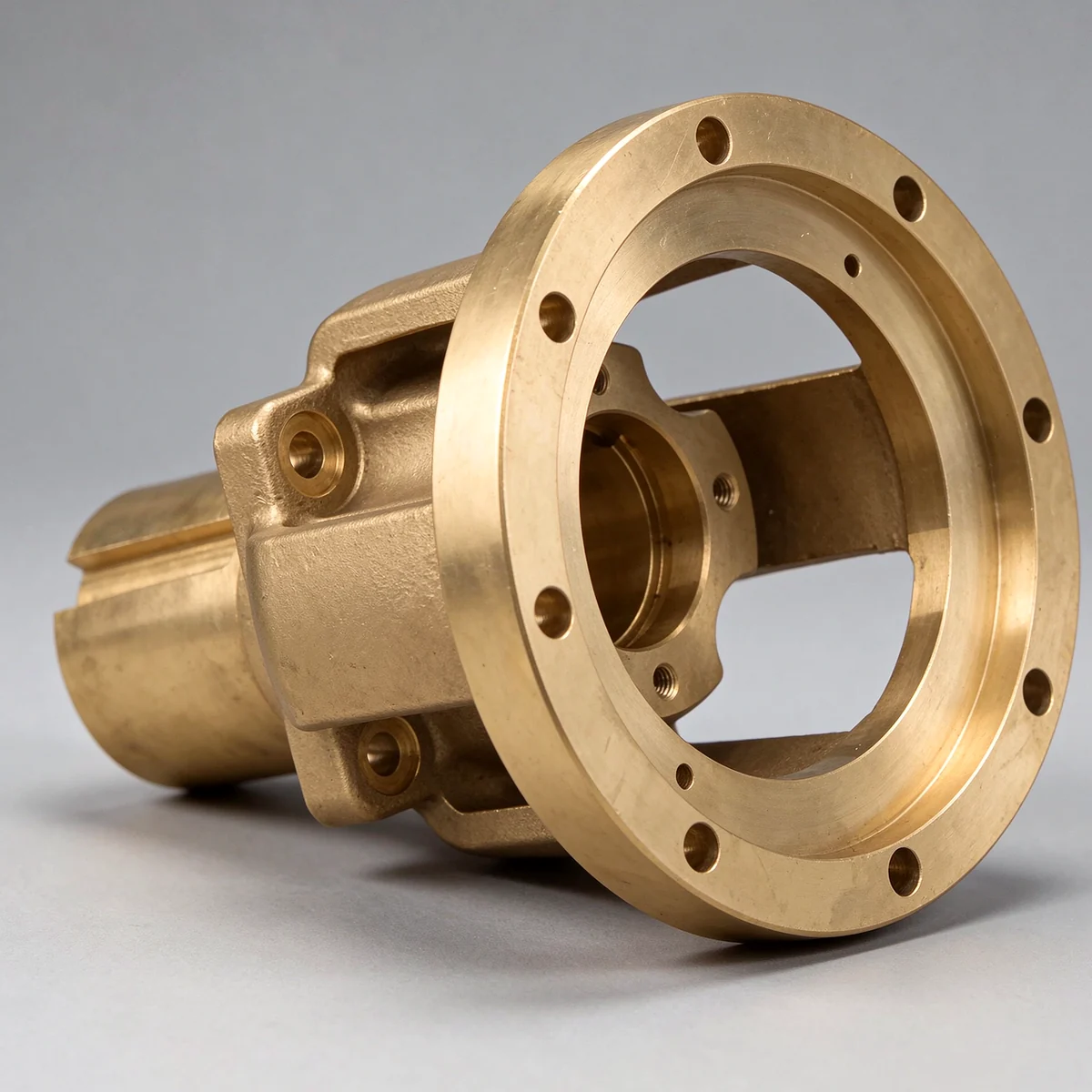
Aluminum bronze casting uses copper-aluminum alloys for components exposed to marine water, chloride-rich brine, sliding wear and assembly contact. In precision investment casting, or lost-wax casting, the foundry reproduces pump covers, brackets, bushings and selected impeller-adjacent components with near-net shapes, then finish-machines sealing faces, bores and bolt holes. C95500 is commonly specified for marine pump covers and wear-resistant housings, while C95800 nickel-aluminum bronze is often evaluated for higher-strength seawater duties such as certain pump impellers and heavy-duty marine castings.
What Is Aluminum Bronze Casting?
Aluminum bronze casting refers to copper-based alloys where aluminum is the principal alloying element. Iron, nickel, manganese or tin may be added depending on the grade and service requirement. For a marine pump component, the foundry controls alloy chemistry, shell quality, solidification, post-casting heat treatment and CNC machining so that the final part meets both corrosion expectations and dimensional requirements.
Investment casting is suitable when the part contains flanges, ribs, bores, bolt-hole patterns or flow-adjacent contours that would be difficult or expensive to make as separate welded pieces. A bronze casting can preserve the structural body, while critical sealing and mating surfaces are machined to drawing tolerances.
Why Aluminum Bronze Works for Seawater Pumps
1. Seawater and chloride resistance
Seawater contains chlorides and variable dissolved oxygen. Aluminum bronze can perform well in coastal splash zones, seawater transfer systems and brine-handling equipment when the grade and heat treatment match the application. Final material selection should still be based on medium, velocity, temperature, stress, galvanic coupling and exposure condition.
2. Wear and galling resistance
Pump covers, bearing supports, bushings and sleeves repeatedly contact mating metal surfaces. Bronze grades can reduce galling and wear in lubricated or lightly lubricated assemblies, making them useful for bearing-adjacent components and removable wear parts.
3. Cavitation-prone flow surfaces
Cavitation appears when local pressure changes form and collapse vapor bubbles near impellers, diffusers and high-velocity passages. No alloy eliminates cavitation by itself; pump speed, flow velocity, inlet pressure and internal geometry remain decisive. A dense, well-finished bronze casting can help resist erosion where the hydraulic design already limits severe cavitation conditions.
4. Machinable sealing and assembly features
A bronze pump end cover must align gaskets, bolt circles, bearing bores and mating flanges. Investment casting provides the body shape, while finish machining controls flange flatness, bore diameter, sealing grooves and assembly clearance.
Common Bronze Pump Components
| Pump part | Function | Typical bronze benefit |
|---|---|---|
| Pump end cover | Closes the casing, supports seals or bearings and connects flanges | Corrosion-resistant body with machined sealing faces and bolt holes, such as the C95500 aluminum bronze pump end cover |
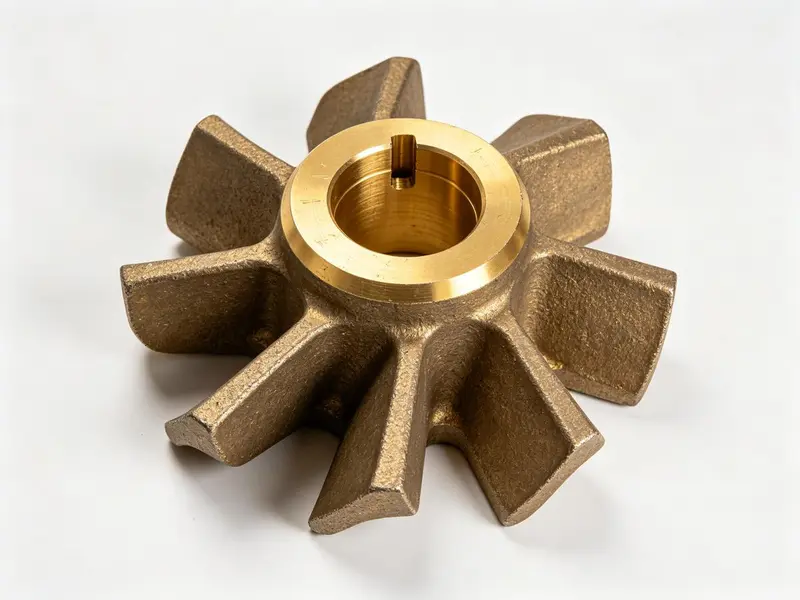
| Bronze impeller | Converts shaft energy into fluid flow | Seawater-compatible bronze for selected hydraulic components; see the C95800 bronze pump impeller |
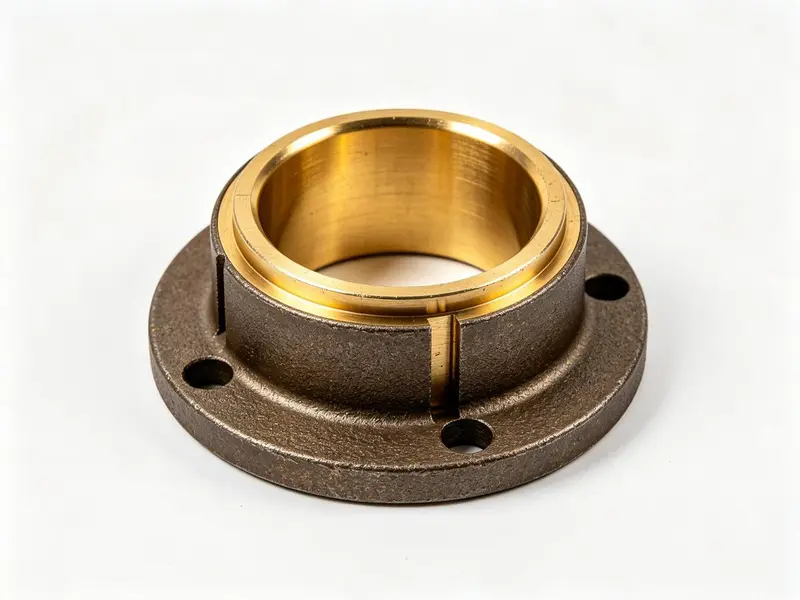
| Bushing or sleeve | Supports or wears around a rotating shaft | Good sliding behavior and galling resistance; see the bronze bushing and sleeve casting |
| Bearing housing or bracket | Maintains shaft alignment and bearing position | Rigid cast structure with machined bores and corrosion-resistant exterior |
| Valve or manifold component | Controls or distributes seawater and brine flow | Compatibility with marine hardware and wear-prone seat or joint surfaces |
C95500 vs C95800 vs Related Bronze Grades
| Grade | General character | Best service focus | Common components |
|---|---|---|---|
| C95500 aluminum bronze | Strong aluminum bronze with wear and corrosion balance | Marine pump covers, housings, support brackets and general wear parts | Pump end covers, bearing supports, adapters, corrosion-resistant castings |
| C95800 nickel-aluminum bronze | Nickel- and iron-bearing bronze selected for demanding wet service | Higher-strength seawater components and impact-prone marine parts | Selected impellers, valve components and heavy-duty bronze castings |
| C95400 aluminum bronze | High-strength, wear-oriented aluminum bronze | Heavy loads and wear where corrosion resistance remains important | Brackets, bearing supports and industrial wear components |
| C93200 / C93700 tin bronze | Bearing-oriented bronze with sliding compatibility | Lubricated bushings, sleeves and wear inserts | Bronze bushings, sleeves and wear surfaces |
Selection rule: Choose C95500 for a pump cover, housing or support component that needs seawater compatibility and stable machining. Choose C95800 when higher load, impact or continuous immersion demands a nickel-aluminum bronze grade. Choose tin bronze when the main requirement is bearing behavior rather than pressure-boundary strength.
Bronze vs Stainless Steel for Pump Parts
Aluminum bronze is not automatically better for every pump part. Stainless steel, CF8M/CF3M and duplex 2205 remain important for pressure-boundary casings, many impellers and structural hydraulic components. The site article on 2205 duplex stainless steel casting explains when duplex grades fit chloride and offshore service. In practice, assemblies may combine materials: a bronze bushing inside a stainless housing, a bronze end cover matched with a corrosion-resistant casing, or a C95800 component paired with carefully selected fasteners to control galvanic contact.
For an overview of pump components made by precision casting, also read investment casting pump parts: impellers, casings and volutes.
Bronze Investment Casting Workflow
- Wax pattern and shell assembly: Wax patterns reproduce flanges, ribs, bores and mounting features; patterns are assembled on gating and coated with ceramic shell.
- Melting and chemistry control: Bronze is melted under controlled practice and checked before pouring. Chemistry records support material traceability.
- Pouring and solidification: Molten bronze fills the preheated shell; gating and risering help avoid shrinkage in heavy flanges and thick sections.
- Knockout and cleaning: Ceramic shell is removed, gates are cut and surfaces are cleaned for inspection and heat treatment.
- Finish machining: CNC operations machine flange faces, bores, bolt holes, threaded features and seal grooves after casting.
- Inspection and documentation: Dimensional, visual, chemistry, hardness, penetrant or pressure tests are applied according to the drawing and customer specification.
Design Tips for Better Bronze Pump Castings
- Review wall thickness early. Very thin sections may not fill completely; isolated heavy sections can increase shrinkage risk. Use gradual transitions between ribs and flanges.
- Reserve machining allowance on sealing surfaces. Flange faces, bores, seal grooves and bolt holes should be planned for finish machining after casting.
- Specify surface finish by location. Flow-adjacent surfaces should be smooth to reduce turbulence; external structural surfaces may remain as-cast or shot-blasted.
- Define bolt circles and gasket faces clearly. Pump cover assembly depends on accurate hole spacing, gasket width and flange flatness.
- Avoid sharp internal corners. Smooth fillets help stress distribution and solidification while reducing local concentration.
- Separate casting geometry from final precision. Bearing bores, mating faces and threaded features usually require machining rather than relying on as-cast dimensions.
- Plan inspection before quotation. State whether pressure testing, penetrant testing, material certificates or dimensional reports are required.
- Keep material traceability. Heat number, chemistry report, inspection record and packing list help buyers meet procurement audit requirements.
Main Applications
- Marine and shipbuilding pumps: seawater circulation pumps, auxiliary pumps, deck pump components and bronze support parts.
- Seawater transfer and intake systems: pumps handling coastal water, brine and continuous wet service.
- Desalination equipment: chloride-resistant pump covers, wear parts and bronze components where bronze practice is specified.
- Offshore and coastal equipment: pump packages, utility water systems and splash-exposed machinery.
- Chemical and brine process pumps: components exposed to chloride-bearing or chemically aggressive media.
- OEM spares and replacement parts: custom bronze castings produced from drawings, samples or obsolete equipment measurements.
Buyer Checklist Before Requesting a Quote
- Drawings in PDF, DWG, STEP or IGES format, including dimensions and tolerances
- Required alloy: C95500, C95800, C95400, C93200 or C93700
- Pump type and pumped medium: seawater, brine, clean water or chemical fluid
- Pressure, temperature, flow velocity and whether the part contains pressure boundaries
- Sample quantity and annual target quantity
- Required certificates, NDT method, hardness test or pressure test requirement
- Machined dimensions, sealing surfaces and surface finish requirements
- Existing sample or reference part if the new casting replaces an obsolete component
Frequently Asked Questions
Is C95500 aluminum bronze suitable for seawater?
C95500 aluminum bronze is commonly considered for seawater and marine pump components where corrosion resistance, wear resistance and machining stability are required. Final suitability depends on immersion condition, velocity, temperature, stress, galvanic coupling and the selected grade.
What is the difference between C95500 and C95800?
C95500 is an aluminum bronze widely used for general marine covers, housings and wear-resistant components. C95800 is a nickel-aluminum bronze generally selected for higher-strength, more demanding seawater parts. Confirm chemistry and mechanical requirements on the drawing.
Can bronze be produced by investment casting?
Yes. Bronze can be investment cast when the foundry controls melting chemistry, shell quality, solidification, heat treatment, finish machining and documentation. Complex pump covers, flanges, brackets and wear components are common candidates.
Why do marine pumps use bronze components?
Bronze can offer useful seawater corrosion resistance, wear resistance, galling resistance and compatibility with sliding or bearing-adjacent surfaces. It is often specified for covers, bushings, sleeves and selected hydraulic components rather than replacing every stainless pressure boundary part.
Does bronze prevent cavitation damage?
Bronze can help resist cavitation erosion, but it does not remove the root cause. Pump design, flow velocity, inlet pressure, internal flow geometry and surface finish must also be controlled.
What information should I send for a custom bronze pump cover?
Send drawings, alloy requirement, pumped medium, pressure and temperature, annual quantity, certificate or inspection requirements, machined features and any sample photos. Include whether hydrostatic testing or non-destructive testing is required.
Conclusion
Aluminum bronze casting serves marine and seawater pumps where corrosion resistance, wear behavior, machinability and durable assembly details matter. C95500 fits many pump end covers, housings and support components; C95800 should be evaluated for higher-strength seawater duties. The best result comes from matching the alloy to the actual service condition, planning casting geometry and machining allowance carefully, and choosing a foundry that can support chemistry control, inspection and finish machining.
Ready to Discuss Your Casting Project?
Send us your drawings or requirements for a quotation. Material, geometry, machining note and quantity help our team prepare a practical response. OEM/ODM welcome.
Get a Free Quote View Our Products