
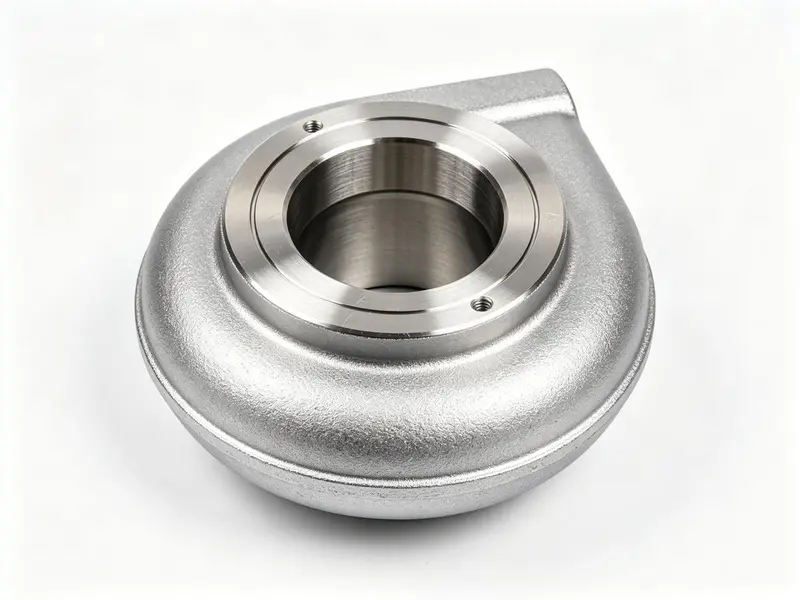
310S / 2205 Casting Impeller Investment Casting
Custom lost-wax casting impellers in 310S heat-resistant stainless steel and 2205 duplex stainless steel for centrifugal pumps, fans, blowers, furnace equipment and corrosive process systems.
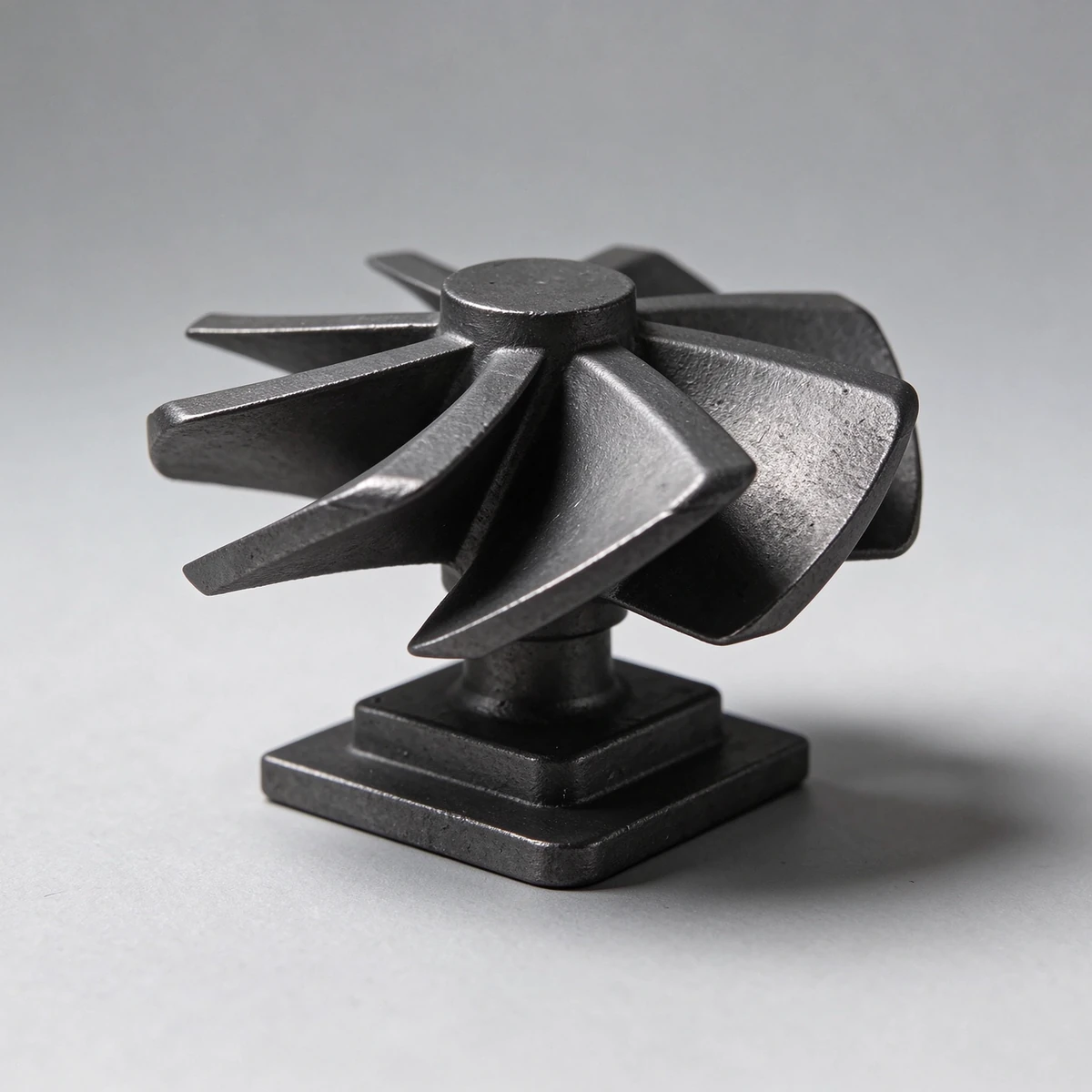
310S / 2205 Casting Impeller
This custom casting impeller is manufactured by precision investment casting, also called lost-wax casting. 310S supports high-temperature oxidation resistance for furnace exhaust and high-heat fans, while 2205 duplex stainless steel offers high strength plus chloride and pitting resistance for seawater pumps, chemical pumps and wastewater equipment. Blades, hub, bore, keyway and mounting features can be finished with machining support to your drawings.
Product Specifications
| Material Grades | 310S (25Cr-20Ni), 2205 Duplex (S31803 / S32205); CF8, CF8M, 304, 316 and other stainless grades on request |
|---|---|
| Product Category | Pump, Fan & Blower Impeller Castings |
| Casting Process | Investment Casting (Lost-Wax / Silica Sol Shell) |
| Machining Support | Machining support: turning, milling, drilling, boring, hub bore finishing, keyway machining, blade profile finish; operations arranged to approved drawings |
| Surface Finish | As-cast, shot blasted, machined, pickled and passivated as required |
| Tolerance | Casting tolerance typically ±0.2mm; machined critical features controlled to drawing tolerance |
| Certification | ISO 9001; chemical analysis and dimensional records can be arranged by agreement |
| Order Quantity | Reviewed after drawing and quantity confirmation |
| Lead Time | Confirmed after drawing review and scheduling; sample timing evaluated separately |
| Customization | Custom impeller profile, blade count, hub bore, keyway, flange, balance allowances and finish according to drawings or samples |
Need a Custom 310S / 2205 Casting Impeller?
Send us your drawings or sample requirements for a free quotation after drawing or requirement review.
Get a Free Quote WhatsApp UsProduct Overview
The 310S / 2205 casting impeller is a custom precision investment casting component supplied by Wuxi Huayong Metal Technology Co., Ltd. Using the lost-wax silica-sol shell process, Huayong produces near-net-shape impellers with controlled blade geometry, clean casting surfaces and reduced machining allowance, suitable for centrifugal pumps, industrial fans, blowers, furnace exhaust equipment and corrosive process fluid systems.
Each stainless steel casting impeller is made to customer drawings or approved samples. Our engineering team reviews blade thickness, hub bore, keyway, balance allowances, gate location and feed path before tooling, helping reduce porosity, support dimensional consistency and improve the efficiency of subsequent finish machining and assembly work.
Material Options
This custom impeller highlights 310S heat-resistant stainless steel and 2205 duplex stainless steel. We also support other stainless, alloy and carbon grades when the operating medium, temperature and strength requirements require a different composition.
| Material Family | Common Grades | Key Properties | Typical Impeller Applications |
|---|---|---|---|
| Heat-Resistant Stainless Steel | 310S, 309S, HK30 | High oxidation resistance and strength at elevated service temperatures | Furnace exhaust fans, kiln blowers, high-temperature exhaust systems, heat treatment equipment |
| Duplex Stainless Steel | 2205, S31803, S32205, CD4MCu | High strength, good chloride pitting and crevice corrosion resistance | Seawater pumps, desalination pumps, chemical pumps, wastewater and marine fluid equipment |
| Austenitic Stainless Steel | CF8, CF8M, CF3M, 304, 316, 316L | Good corrosion resistance, machinability and general mechanical balance | Water treatment pumps, food and beverage pumps, general industrial pumps and fluid machinery |
| Other Custom Alloys | Alloy steel, carbon steel, copper alloy as required | Selected for wear, strength, bearing compatibility or special service conditions | Custom rotating components, wear sleeves, special pump and fan components |
Manufacturing Process
1. Pattern Making
High-precision wax patterns are produced from durable metal dies. Each pattern reproduces the impeller blade profile, hub contour, bore allowance and external mounting features for later shell assembly.
2. Shell Building
The wax pattern tree is repeatedly dipped into ceramic slurry and coated with refractory sand. Multiple silica-sol shell layers are dried and consolidated to resist metal pouring pressure and thermal shock.
3. Dewaxing and Preheating
Wax is removed in an autoclave, and the ceramic shell is preheated to provide a stable pouring temperature and good metal flow into thin blade sections.
4. Melting and Pouring
310S and 2205 charges are melted under controlled chemistry. Spectrometer checks support grade verification before the molten stainless steel is poured into preheated ceramic shells.
5. Shell Removal and Cutting
After solidification and controlled cooling, shells are removed by shakeout and shot blasting. Individual impellers are separated from the gating system, and residual ceramic is cleaned from blade surfaces and internal passages.
6. Heat Treatment
Heat-resistant and duplex grades receive the required annealing or solution treatment when specified, helping stabilize microstructure and service properties after casting.
7. Machining Support
Machining support can be arranged according to approved drawings. Critical operations include hub boring, keyway cutting, bore runout control, sealing face machining and selective blade profile finishing.
8. Surface Treatment and Testing
Finished parts may be shot blasted, pickled, passivated or machined to the specified finish. Inspection includes dimensional checks, visual inspection, dye penetrant testing when required, chemical analysis, MTC preparation and balancing support per customer requirements.
Quality Control and Testing
Quality control covers every stage from incoming alloy chemistry to finished rotating components:
- Chemical Analysis: Spectrometer verification of every heat; material records and certificates are arranged by drawing, order or agreement.
- Mechanical Verification: Tensile strength, yield strength, elongation and hardness records according to the applicable material standard.
- Dimensional Inspection: Drawing-based checks of blade profile, hub diameter, bore tolerance, keyway width and runout features.
- Surface and Defect Inspection: Visual inspection, dye penetrant testing and, when required, radiographic or ultrasonic testing for critical sections.
- Balance and Runout Preparation: Machined bores and mounting faces are prepared to support customer dynamic balancing and assembly procedures.
- Documentation Traceability: Heat number, inspection records, packing list and material certificate can be organized together with each shipment.
Applications
Our investment casting impellers serve a broad range of fluid-moving and thermal-process equipment:
- Centrifugal Pumps: Clean water pumps, process pumps, chemical pumps and transfer pump impellers.
- Seawater and Marine Equipment: Seawater circulation pumps, desalination components and corrosive-water rotating parts.
- Industrial Fans and Blowers: Induced draft fans, exhaust fans, ventilation blowers and dust-collection fan impellers.
- Furnace and High-Temperature Equipment: High-temperature exhaust fans, heat treatment circulation fans and oxidizing atmosphere components in 310S.
- Wastewater and Environmental Equipment: Wastewater treatment, pump stations and scrubber components requiring corrosion-resistant stainless steel.
- Food, Beverage and Pharmaceutical Systems: Sanitary pump components where 316 or 316L corrosion resistance and smooth surfaces are required.
- Power and General Machinery: Boiler auxiliaries, condensate systems, cooling systems and general custom rotating machinery.
Why Choose Huayong for Your Casting Impeller
- Investment Casting Specialist: Lost-wax process suitable for complex blade shapes, thin sections and good surface finish.
- Material Experience: Practical support for 310S, 2205 duplex, 316, 316L, CF8M and other stainless grades.
- Casting and Machining Together: From wax pattern to finished hub bore, keyway and critical surface in a coordinated workflow.
- Engineering Review: Early review of castability, gating, shrinkage risk and machining allowance before production.
- Quality Documentation: Material chemistry, dimensional records and agreed inspection documents are arranged according to drawing, code and order requirements.
- Flexible Order Quantity: Prototype impellers, small development batches and serial production can be quoted separately.
- Factory Direct Response: Technical quotation is prepared after drawing review based on drawings, samples or basic part requirements.
- Application Support: Custom casting support for fluid, valve, pump, machinery and process-equipment components.
Ready to Start Your Impeller Project?
Send your 2D/3D drawings, samples or impeller specifications for a free custom quotation after drawing or requirement review.
Request a Quote View All ProductsEngineering Design Tips for Precision Impeller Castings
1. Uniform Blade Wall Thickness
Keep blade and vane thickness as uniform as possible to reduce hot tearing, shrinkage porosity and uneven cooling between thin blades and the hub. Use gradual section transitions where the blade meets the hub.
2. Hub Bore and Keyway Design
Provide sufficient machining allowance for hub boring and keyway finishing. Avoid placing the final bore directly on the as-cast skin, and state tolerance, concentricity and surface finish requirements on the drawing.
3. Blade-Root Fillets
Use generous fillets at the blade-to-hub and blade-to-shroud transitions. Sharp internal corners increase stress concentration and casting defect risk during solidification.
4. Machining Allowance
Reserve allowance for critical bores, sealing faces and register diameters. Investment casting provides a near-net-shape blade contour, but precision rotating parts usually require finish machining before balancing and assembly.
5. Surface Finish and Balance Preparation
Specify shot blasting, pickling, passivation or polishing according to the application. If the impeller must be dynamically balanced, define the balance grade, allowed residual vibration and machining stock on the drawing.
Frequently Asked Questions
Q: Can you cast both 310S and 2205 impellers?
A: Yes. 310S is selected for higher-temperature oxidation resistance, while 2205 duplex is selected for high strength and chloride pitting resistance. Other stainless grades can also be quoted when drawings specify them.
Q: Do you supply raw castings or fully finished impellers?
A: Both are available. We can supply as-cast or shot-blasted cast impellers, or fully machined parts with hub bore, keyway, sealing faces and surface treatment completed according to requirements.
Q: What information is needed for an impeller quotation?
A: Provide material grade, annual quantity, part drawings or samples, required bore/keyway dimensions, tolerance, balance requirement, surface finish and target delivery schedule. Basic sketches can be refined during engineering review.
Q: Can you provide third-party inspection certificates?
A: Material chemistry and inspection records can be supplied by agreement. Third-party inspection through a nominated inspection company can be arranged when requested.
Q: What is the typical lead time?
A: Prototype timing depends on drawing review and tooling requirements; serial production lead time is confirmed after scheduling. Complex tooling, special material approval or balancing requirements may affect timing and will be stated in the quotation.
Related Products
Request a Quote for 310S / 2205 Casting Impeller Investment Casting
Send us your requirements — we review the inquiry and prepare a quotation after drawing or requirement review.