
Heat-Resistant Steel Furnace Tray & Basket Casting
Cast grid trays, baskets and loading fixtures in 310S and ZG40Cr25Ni20 (2520) heat-resistant steel for heat treatment, carburising, quenching and furnace service.
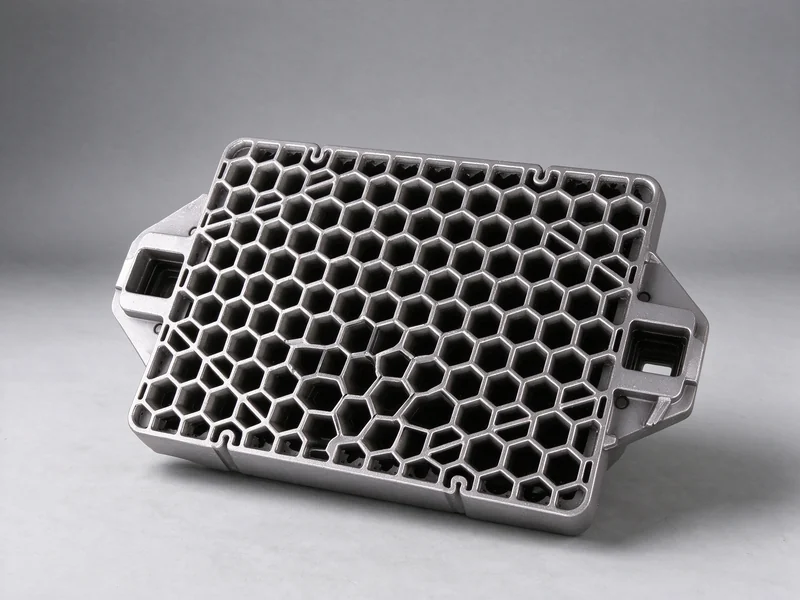
Heat-Resistant Steel Furnace Tray
Custom cast heat-resistant steel furnace trays, baskets and loading fixtures for heat treatment, carburising and quenching furnaces. Hexagonal grid tray body cast in 310S or ZG40Cr25Ni20 (2520), custom made to customer drawings.
Product Specifications
| Material Grades | 310S (25Cr-20Ni austenitic), ZG40Cr25Ni20 (2520) cast heat-resistant steel, Custom |
|---|---|
| Product Category | Heat Resistant Castings |
| Casting Process | Investment Casting (Lost-Wax) |
| Machining Support | Machining support: Drilling, Tapping, Milling, Turning; operations arranged to approved drawings |
| Surface Finish | As-cast, sandblasted or polished finish as required; other finishing options discussed by drawing |
| Tolerance | ±0.2mm casting allowance; machining tolerance confirmed per drawing |
| Certification | ISO 9001; material records can be arranged by agreement |
| Order Quantity | Reviewed after drawing and quantity confirmation |
| Lead Time | Confirmed after drawing review and scheduling; sample timing evaluated separately |
| Customization | All castings custom made based on customer drawings |
Need a Custom Heat-Resistant Steel Tray?
Send us your drawings or specifications for a free quotation after drawing or requirement review.
Get a Free Quote WhatsApp UsProduct Overview
Heat-resistant steel furnace trays and baskets are cast loading fixtures used to carry workpieces through heat treatment, carburising, quenching and other high-temperature furnace operations. A one-piece cast grid body keeps the tray stiff under load while allowing gas flow and quench medium access around the parts. Trays are produced by Wuxi Huayong Metal Technology Co., Ltd. by investment casting, in 310S austenitic heat-resistant stainless steel or ZG40Cr25Ni20 (2520) cast heat-resistant steel; alloy choice, wall section and grid layout are reviewed against the furnace temperature, load and cycling pattern.
All trays are custom manufactured from customer drawings or samples: outline, grid pitch, rib thickness, lifting lugs and stacking features are cast to the drawing rather than to a catalogue size. Designs are reviewed for castability, section uniformity and distortion risk before tooling. Quality review may include chemistry records, dimensional checks and selected test methods arranged by drawing, code or order requirement.
Material Options
Furnace trays are normally specified in heat-resistant grades. The two most common options are 310S (austenitic 25Cr-20Ni stainless) and ZG40Cr25Ni20 (2520) cast heat-resistant steel; other grades such as 309S, HK30 and HU31 can be reviewed against your furnace data. Materials are sourced from established suppliers and verified with spectrometer analysis.
| Material Family | Common Grades | Key Properties | Typical Applications |
|---|---|---|---|
| Stainless Steel | CF8M, CF8, CF3M, CF3, 316L, 304L | Good corrosion resistance, good mechanical properties | Chemical, food, marine, water treatment |
| Carbon Steel | WCB, WCC, LCC, LC2 | Good strength, weldability, cost-effective | Oil & gas, power, general industrial |
| Alloy Steel | WC6, WC9, C5, C12A, 42CrMo | High temperature strength, wear resistance | Power generation, high-temp service, automotive |
| Duplex Steel | CD4MCu, CD3MN, 2205 | High strength, good pitting resistance | Oil & gas, desalination, chemical |
| Copper Alloy | C95400, C93200, C83600, Tin Bronze | Good wear resistance, corrosion resistance | Bearings, gears, marine, decorative |
| Heat Resistant | 310S, 309S, ZG40Cr25Ni20 (2520), HK30, HU31 | High temperature oxidation resistance | Furnace parts, heat treatment, power |
Manufacturing Process
1. Pattern Making
We produce high-precision wax patterns using injection molding. The wax patterns are exact replicas of the final tray, including the full hexagonal grid, lifting lugs and stacking steps.
2. Shell Building
The pattern tree is repeatedly dipped into ceramic slurry and coated with refractory sand. This process is repeated 6-8 times to build a strong, heat-resistant ceramic shell.
3. Dewaxing & Preheating
The ceramic shell is placed in an autoclave where steam melts the wax, which drains out. The empty shell is then preheated to 1000-1100°C to remove residual moisture.
4. Melting & Pouring
Metal is melted in induction furnaces under carefully controlled conditions. The molten metal is poured into the preheated ceramic shells.
5. Shell Removal & Cutting
After solidification and cooling, the ceramic shell is removed by mechanical vibration and blasting. The individual components are then cut from the sprue.
6. Heat Treatment
All castings undergo proper heat treatment to achieve optimal mechanical properties and material structure.
7. Machining Support
Machining support can be arranged according to approved drawings. Critical dimensions are checked against approved drawings.
8. Surface Treatment & Testing
Finished components may include surface finishing and arranged inspection such as dimensional review and chemistry records.
Quality Control & Testing
Quality review follows the agreed order process; final condition is checked against approved drawings and specifications:
- Chemical Analysis: Spectrometer analysis of every heat; material test records can be arranged by order requirement or agreement.
- Mechanical Testing: Mechanical or hardness checks can be arranged when specified on the order
- Dimensional Inspection: Critical dimensions checked against approved drawings
- Inspection Support: Selected penetrant, radiographic or ultrasonic methods can be arranged according to drawing, code or customer requirement
- Microstructure Examination: Metallographic review can be arranged when specified on the order
- Pressure Testing: Hydrostatic or pneumatic pressure tests can be arranged for pressure-containing components when specified
Applications
Heat-resistant trays and baskets are used wherever parts must be carried through a hot zone:
- Heat Treatment: Annealing, normalising, hardening, tempering and solution-treatment trays and baskets
- Case Hardening: Carburising, carbonitriding and nitriding fixtures and grids
- Quenching: Oil, water and polymer quench baskets, grids and loading frames
- Sintering & Brazing: Powder metallurgy, vacuum sintering and brazing fixtures
- Continuous Furnaces: Roller hearth, pusher and mesh-belt furnace trays
- Foundry Operations: Pre-heat, post-cast and pre-machining handling trays
- Glass & Ceramics: Kiln furniture and high-temperature carrier grids
- Power & Cement: High-temperature handling fixtures and wear-resistant carrier plates
Why Choose Huayong for Your Heat-Resistant Steel Trays?
- Process Coverage: Investment casting support with machining, inspection and finishing coordination
- Material Expertise: Experienced in 310S, ZG40Cr25Ni20 (2520), 309S, HK30/HU31 heat-resistant grades plus stainless, carbon, alloy and copper alloys
- ISO 9001 Quality System: Documentation and inspection records managed according to order requirements
- Custom Manufacturing: All parts made to your exact drawings and specifications
- Competitive Pricing: Factory-direct pricing with no middleman markup
- Fast Response: Quotation and technical support are arranged after requirement review.
- Application Support: Components reviewed for industrial, fluid, machinery and process-equipment applications.
- Order Review: Prototype and production quantities reviewed after drawing review
Ready to Start Your Project?
Send us your 2D/3D drawings, samples, or part requirements for a free custom quotation after drawing or requirement review.
Request a Quote View All ProductsEngineering Design Tips for Heat-Resistant Furnace Trays
1. Alloy Selection
310S (austenitic 25Cr-20Ni stainless) is usually chosen where oxidation resistance and weldability matter, and ZG40Cr25Ni20 (2520) where a cast heat-resistant grade with higher creep strength suits a one-piece grid. Final selection follows the furnace atmosphere, peak temperature, load and number of thermal cycles.
2. Grid and Wall Section
A hexagonal or square cell grid carries load with a comparatively thin wall. Keep rib sections as uniform as the strength calculation allows; abrupt changes between heavy lugs and thin ribs are the usual source of hot tearing and premature cracking. Cast wall thickness below roughly 5 mm becomes difficult to fill reliably over a full grid area.
3. Thermal Fatigue Considerations
Repeated heating and cooling generates thermal stress wherever sections change. Use generous fillets at rib-to-rim junctions, avoid sharp inside corners, and keep the layout as symmetrical as possible so expansion is not restrained by one side of the fixture.
4. Distortion Control
A long tray spanning a furnace hearth will sag once the alloy softens at temperature. Add integral support ribs or legs where the span is large, and specify the flatness or bow limit that matters on your furnace so it can be checked after casting.
5. Surface Condition and Scale
Shot blasting after casting removes shell residue and gives a uniform surface; a clean, scale-free surface helps the protective oxide form evenly during first heat-up. Where the tray runs in a controlled atmosphere, confirm whether any surface treatment is acceptable before shipping.
Frequently Asked Questions
Q: What service temperature can these trays handle?
A: 310S and ZG40Cr25Ni20 (2520) type alloys are typically used in continuous furnace service around 1000-1150 °C, depending on load, atmosphere and cycle frequency. The actual limit is reviewed against your furnace data and the expected number of cycles.
Q: Can the grid pitch, outline and lifting lugs be changed?
A: Yes. Outline, cell size, rib thickness, lifting lugs and stacking steps are all cast to the customer drawing; there is no fixed catalogue size.
Q: Is the tray cast as one piece?
A: The standard design is a single-piece casting with integral lugs and legs. Welded or assembled constructions can be discussed if the size exceeds a practical single casting.
Q: How is dimensional accuracy controlled?
A: Casting allowance is normally ±0.2 mm on drawn dimensions; flatness, bow and critical locating features are checked against the approved drawing.
Q: Can chemistry and inspection records be supplied?
A: Material chemistry and dimensional records can be prepared according to order requirements under the ISO 9001 quality system.
Q: What is the minimum order quantity?
A: Order quantity is project-dependent: a new tray pattern is tooled once, then production quantities are agreed after drawing review.
Related Products
Request a Quote for Heat-Resistant Steel Furnace Tray Casting
Send us your requirements — we review the inquiry and prepare a quotation after drawing or requirement review.