
Stainless Steel Bracket Kit Investment Casting
Investment cast brackets, base plates and latch parts in 304 and 2205 duplex for machine building and equipment assembly.
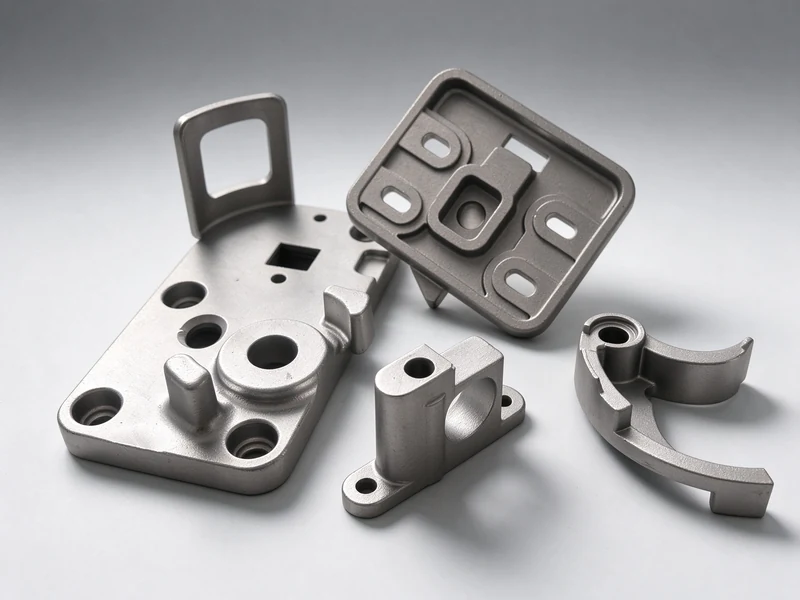
Stainless Steel Bracket Kit
Investment cast stainless steel bracket kits in 304 and 2205 duplex. Mounting holes, bosses and locating faces machined where assembly or alignment requires it. Brackets, plates and latch parts custom made to customer drawings.
Product Specifications
| Material Grades | 304, 2205 Duplex |
|---|---|
| Typical Parts | Mounting brackets, base plates, latch and hinge parts, clevis mounts, clamp forks |
| Product Category | Mechanical Parts |
| Casting Process | Investment Casting (Lost-Wax) |
| Machining Support | Machining support: Drilling, Tapping, Milling, Turning; operations arranged to approved drawings |
| Surface Finish | As-cast, shot blasted; machined mounting faces; passivation on request |
| Tolerance | ±0.2mm casting allowance; machined hole position and flatness to drawing |
| Records | Material and dimensional records arranged by order agreement |
| Order Quantity | Reviewed after drawing and quantity confirmation |
| Lead Time | Confirmed after drawing review and scheduling; sample timing evaluated separately |
| Customization | All castings custom made based on customer drawings |
Need a Custom Stainless Steel Bracket Kit?
Send us your drawings or specifications for a free quotation after drawing or requirement review.
Get a Free Quote WhatsApp UsProduct Overview
Stainless steel bracket kit is a set of precision investment castings produced by Wuxi Huayong Metal Technology Co., Ltd. Each part — mounting bracket, base plate, latch bracket, clevis mount or clamp fork — is cast close to final shape in 304 or 2205 duplex, then machined on mounting holes, bosses and locating faces where assembly, alignment or fastening requires it. Casting allowance, finish and inspection scope are agreed against approved drawings and order requirements.
All parts are custom manufactured to customer drawings or samples, and several bracket types can be supplied as a matched kit for one assembly. We review the design for castability — wall thickness, fillets, bosses, machining stock and dimensional control — before quoting, and confirm the inspection scope with the buyer at order review.
Material Options
Brackets are normally specified in 304 for general machinery, clean rooms and equipment assembly, and in 2205 duplex where chloride exposure, washdown or higher strength is involved. Other families in the table below are available on request.
| Material Family | Common Grades | Key Properties | Typical Applications |
|---|---|---|---|
| Stainless Steel | CF8M, CF8, CF3M, CF3, 316L, 304L | Good corrosion resistance, good mechanical properties | Chemical, food, marine, water treatment |
| Carbon Steel | WCB, WCC, LCC, LC2 | Good strength, weldability, cost-effective | Oil & gas, power, general industrial |
| Alloy Steel | WC6, WC9, C5, C12A, 42CrMo | High temperature strength, wear resistance | Power generation, high-temp service, automotive |
| Duplex Steel | CD4MCu, CD3MN, 2205 | High strength, good pitting resistance | Oil & gas, desalination, chemical |
| Copper Alloy | C95400, C93200, C83600, Tin Bronze | Good wear resistance, corrosion resistance | Bearings, gears, marine, decorative |
| Heat Resistant | HK30, HU31, 310S, 309S | High temperature oxidation resistance | Furnace parts, heat treatment, power |
Manufacturing Process
1. Pattern Making
We produce high-precision wax patterns using injection molding. The wax patterns are exact replicas of the final stainless steel bracket kit, including all internal passages and external features.
2. Shell Building
The pattern tree is repeatedly dipped into ceramic slurry and coated with refractory sand. This process is repeated 6-8 times to build a strong, heat-resistant ceramic shell.
3. Dewaxing & Preheating
The ceramic shell is placed in an autoclave where steam melts the wax, which drains out. The empty shell is then preheated to 1000-1100°C to remove residual moisture.
4. Melting & Pouring
Metal is melted in induction furnaces under carefully controlled conditions. The molten metal is poured into the preheated ceramic shells.
5. Shell Removal & Cutting
After solidification and cooling, the ceramic shell is removed by mechanical vibration and blasting. The individual components are then cut from the sprue.
6. Heat Treatment
All castings undergo proper heat treatment to achieve optimal mechanical properties and material structure.
7. Machining Support
Machining support can be arranged according to approved drawings. Critical dimensions are checked against approved drawings.
8. Surface Treatment & Testing
Finished components may include surface finishing and arranged inspection such as dimensional review and chemistry records.
Quality Control & Testing
Quality review follows the agreed order process; final condition is checked against approved drawings and specifications:
- Chemical Analysis: Spectrometer analysis of every heat; material test records can be arranged by order requirement or agreement.
- Mechanical Testing: Mechanical or hardness checks can be arranged when specified on the order
- Dimensional Inspection: Critical dimensions checked against approved drawings
- Inspection Support: Selected penetrant, radiographic or ultrasonic methods can be arranged according to drawing, code or customer requirement
- Microstructure Examination: Metallographic review can be arranged when specified on the order
- Pressure Testing: Hydrostatic or pneumatic pressure tests can be arranged for pressure-containing components when specified
Applications
These brackets are used where a component has to be located, clamped or fastened to a frame:
- Machinery & Equipment: Frame brackets, motor and gearbox mounts, guards, sensor and cable supports
- Automation & Tooling: Fixture base plates, gripper and actuator mounts, locating blocks, robot end-effector brackets
- Medical Equipment: Bed and cart frame brackets, imaging equipment mounts, arm and rail supports
- Rolling Stock: Interior fittings, equipment and cabinet mounts, latch and hinge parts, door hardware
- Valve & Actuator Assembly: Actuator and positioner mounting brackets, gearbox pads, valve group support plates
Why Choose Huayong for Stainless Steel Bracket Kits?
- Process Coverage: Investment casting support with machining, inspection and finishing coordination
- Material Expertise: Experienced in stainless steel, carbon steel, alloy steel, copper alloys, and specialty alloys
- Records & Inspection: Material and dimensional records arranged by order agreement
- Custom Manufacturing: All parts made to your exact drawings and specifications
- Competitive Pricing: Factory-direct pricing with no middleman markup
- Fast Response: Quotation and technical support are arranged after requirement review.
- Assembly Support: Multiple bracket types reviewed together so a kit fits one assembly.
- Order Review: Prototype and production quantities reviewed after drawing review
Ready to Start Your Project?
Send us your 2D/3D drawings, samples, or part requirements for a free custom quotation after drawing or requirement review.
Request a Quote View All ProductsEngineering Notes for Stainless Bracket Castings
1. Wall Thickness and Fillets
Cast walls of 3 mm and above pour reliably in 304 and 2205. Keep fillets of R3–R5 at section changes and avoid sharp internal corners, where both shrinkage and service stress concentrate.
2. Mounting Holes and Machined Faces
Cast pilot holes with 1.5–2 mm stock and machine them after casting. Specify the hole pattern, datum and bolt seating faces on the drawing so cast and machined features stay consistent from the first sample onward.
3. Bosses, Ribs and Locating Features
Cast bosses where a bolt needs thickness; ribs add stiffness without heavy sections. Locating steps, edges and slots can be cast within the ±0.2 mm allowance and finish-machined only where alignment is critical.
4. Flatness, Fixturing and Distortion
Thin plates can distort during machining, so fixtures are built on the cast datum and light cuts are used. Where flatness matters, stress relief is scheduled before finish machining and the requirement is stated on the drawing.
5. Grade Choice: 304 or 2205
304 covers general machinery, food-area and clean service; 2205 duplex is chosen for chloride exposure, washdown, or where higher yield strength allows a lighter bracket. Both are welded and machined routinely.
Frequently Asked Questions
Q: Which grade should I choose for a bracket?
A: 304 for general machinery, equipment frames and clean environments; 2205 duplex where chlorides, washdown or higher strength apply. The final grade follows the end user's specification and the service conditions.
Q: Can you cast several different brackets as one kit?
A: Yes. A kit can combine brackets, base plates, clevis mounts and latch parts for one assembly, cast from the same heat where the grade matches, then machined and packed as a set.
Q: Do you machine the mounting holes and faces?
A: Drilling, boring, facing, tapping and milling can be included. Hole position, diameter and flatness are machined to the tolerances stated on the approved drawing.
Q: What tolerance can you hold?
A: ±0.2 mm casting allowance on cast features; machined hole position and face flatness are confirmed against the drawing, with critical dimensions checked at inspection.
Q: What do you need in order to quote?
A: A 2D drawing (PDF/DWG) or 3D model (STEP/IGES), the grade, the quantity, and any machining, surface or assembly notes. Sampling and production quantities are reviewed after drawing review.
Related Products
Request a Quote for Stainless Steel Bracket Kit Investment Casting
Send us your requirements — we review the inquiry and prepare a quotation after drawing or requirement review.