
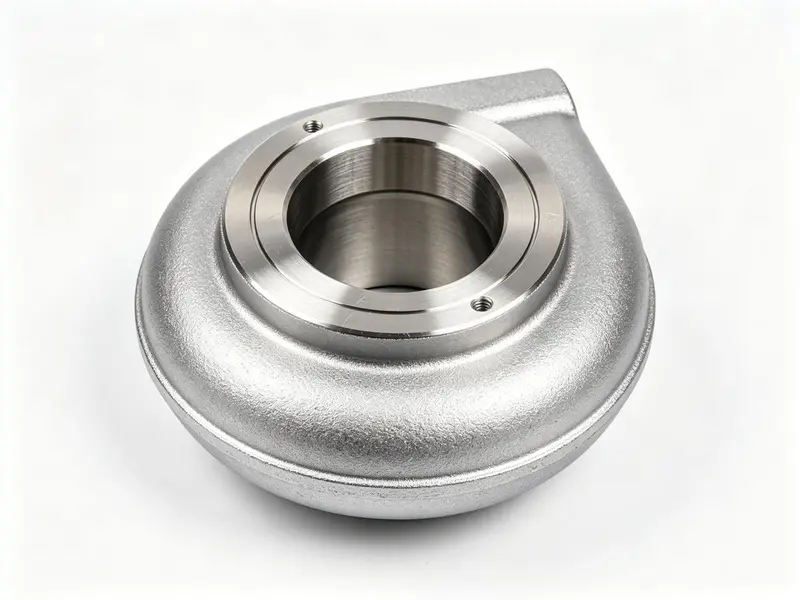
Stainless Steel Intake Manifold Investment Casting
304 / 316 / 316L stainless steel investment cast intake manifolds for automotive and performance applications. Precision cast with machined flanges and smooth internal flow paths.
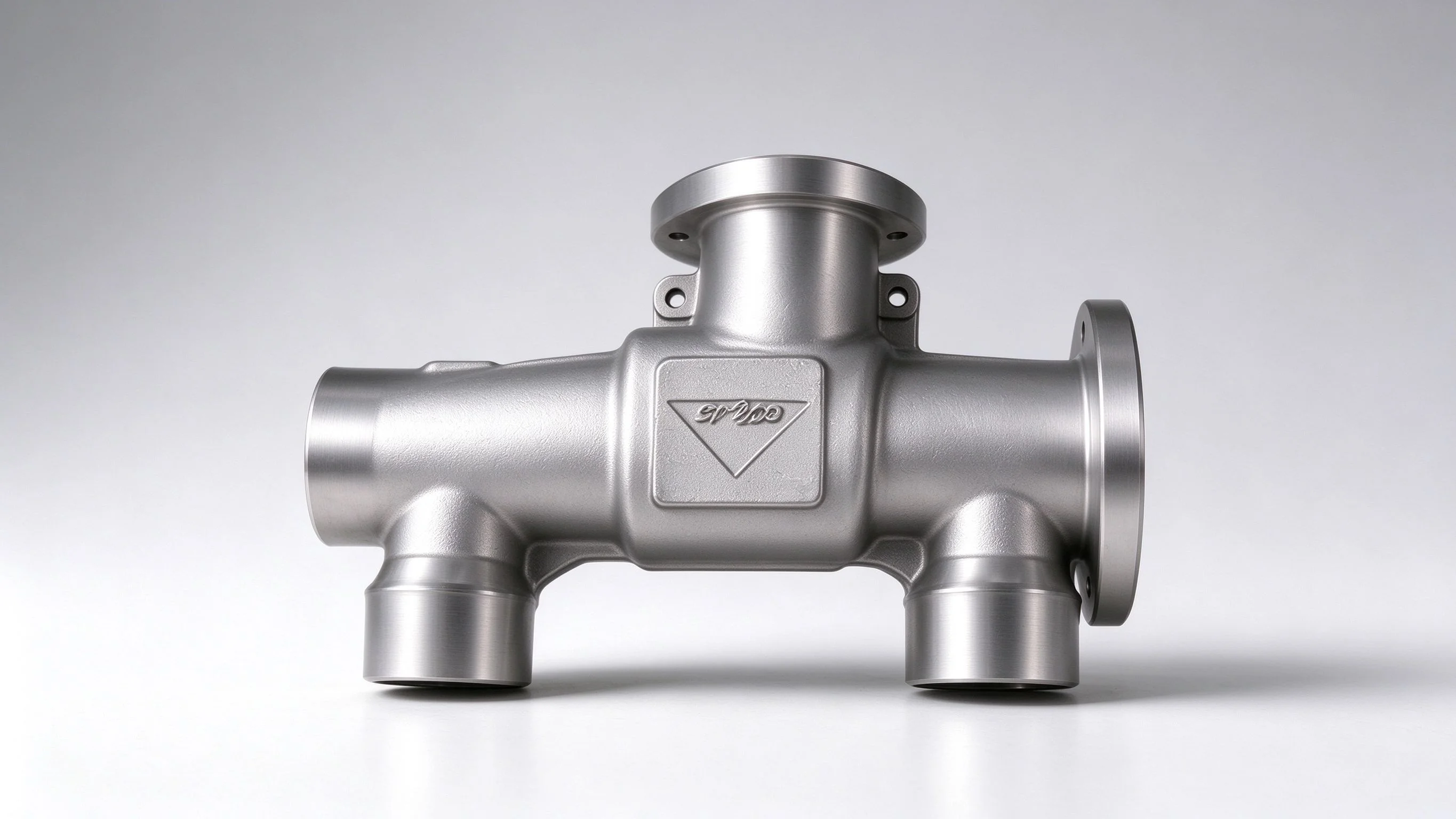
Stainless Steel Intake Manifold
304, 316 and 316L stainless steel investment cast intake manifolds for automotive and performance applications. Precision cast with machined flanges, mounting brackets and smooth internal flow paths. Good corrosion resistance and high strength for engine intake systems.
Product Specifications
| Material Grades | 304 / 316 / 316L Stainless Steel |
|---|---|
| Product Category | Automotive Parts |
| Casting Process | Investment Casting (Lost-Wax) |
| Machining Support | Machining support: Drilling, Tapping, Milling, Turning; operations arranged to approved drawings |
| Surface Finish | As-cast, sandblasted or polished finish as required; other finishing options discussed by drawing |
| Tolerance | ±0.2mm casting allowance; machining tolerance confirmed per drawing |
| Certification | ISO 9001; material records can be arranged by agreement |
| Order Quantity | Reviewed after drawing and quantity confirmation |
| Lead Time | Confirmed after drawing review and scheduling; sample timing evaluated separately |
| Customization | All castings custom made based on customer drawings |
Need a Custom Intake Manifold?
Send us your drawings or specifications for a free quotation after drawing or requirement review.
Get a Free Quote WhatsApp UsProduct Overview
Stainless Steel Intake Manifold is a precision investment casting component manufactured by Wuxi Huayong Metal Technology Co., Ltd. Investment casting can produce near-net-shape components; finish and mechanical condition are reviewed against approved requirements. Machining allowance, finish and schedule are reviewed against approved drawings and order requirements.
304, 316 and 316L stainless steel offer good corrosion resistance, high strength and good forming characteristics — making them ideal for automotive intake manifolds, performance intake systems and engine components. All our intake manifold castings are custom manufactured based on customer drawings or samples. Quality review may include chemistry records, dimensional checks and selected test methods arranged by drawing, code or order requirement.
Material Options
We offer a wide range of materials for exhaust manifold castings, including stainless steel, carbon steel, alloy steel, copper alloys, and heat-resistant alloys. All materials are sourced from certified suppliers and verified with spectrometer analysis.
| Material Family | Common Grades | Key Properties | Typical Applications |
|---|---|---|---|
| Stainless Steel | CF8M, CF8, CF3M, CF3, 316L, 304L | Good corrosion resistance, good mechanical properties | Chemical, food, marine, water treatment |
| Carbon Steel | WCB, WCC, LCC, LC2 | Good strength, weldability, cost-effective | Oil & gas, power, general industrial |
| Alloy Steel | WC6, WC9, C5, C12A, 42CrMo | High temperature strength, wear resistance | Power generation, high-temp service, automotive |
| Duplex Steel | CD4MCu, CD3MN, 2205 | High strength, good pitting resistance | Oil & gas, desalination, chemical |
| Copper Alloy | C95400, C93200, C83600, Tin Bronze | Good wear resistance, corrosion resistance | Bearings, gears, marine, decorative |
| Heat Resistant | HK30, HU31, 310S, 309S | High temperature oxidation resistance | Furnace parts, heat treatment, power |
Manufacturing Process
1. Pattern Making
We produce high-precision wax patterns using injection molding. The wax patterns are exact replicas of the final exhaust manifold, including all internal passages and external features.
2. Shell Building
The pattern tree is repeatedly dipped into ceramic slurry and coated with refractory sand. This process is repeated 6-8 times to build a strong, heat-resistant ceramic shell.
3. Dewaxing & Preheating
The ceramic shell is placed in an autoclave where steam melts the wax, which drains out. The empty shell is then preheated to 1000-1100°C to remove residual moisture.
4. Melting & Pouring
Metal is melted in induction furnaces under carefully controlled conditions. The molten metal is poured into the preheated ceramic shells.
5. Shell Removal & Cutting
After solidification and cooling, the ceramic shell is removed by mechanical vibration and blasting. The individual components are then cut from the sprue.
6. Heat Treatment
All castings undergo proper heat treatment to achieve optimal mechanical properties and material structure.
7. Machining Support
Machining support can be arranged according to approved drawings. Critical dimensions are checked against approved drawings.
8. Surface Treatment & Testing
Finished components may include surface finishing and arranged inspection such as dimensional review and chemistry records.
Quality Control & Testing
Quality review follows the agreed order process; final condition is checked against approved drawings and specifications:
- Chemical Analysis: Spectrometer analysis of every heat; material test records can be arranged by order requirement or agreement.
- Mechanical Testing: Mechanical or hardness checks can be arranged when specified on the order
- Dimensional Inspection: Critical dimensions checked against approved drawings
- Inspection Support: Selected penetrant, radiographic or ultrasonic methods can be arranged according to drawing, code or customer requirement
- Microstructure Examination: Metallographic review can be arranged when specified on the order
- Pressure Testing: Hydrostatic or pneumatic pressure tests can be arranged for pressure-containing components when specified
Applications
Our stainless steel intake manifold castings are used in a wide range of automotive and performance applications:
- Passenger Cars: Intake manifolds, intake runners, throttle bodies
- Performance & Racing: Aftermarket intake systems, turbo intake manifolds
- Trucks & Commercial Vehicles: Diesel intake manifolds, engine intake components
- Motorcycles: Motorcycle intake manifolds, carburetor bodies
- Marine Engines: Marine intake manifolds, boat engine components
- Industrial Engines: Generator intake, industrial engine manifolds
- Agricultural Equipment: Tractor intake, farm machinery components
- Construction Equipment: Excavator intake, construction machinery parts
Why Choose Huayong for Your Intake Manifold Castings?
- Process Coverage: Investment casting support with machining, inspection and finishing coordination
- Material Expertise: Experienced in stainless steel, carbon steel, alloy steel, copper alloys, and specialty alloys
- ISO 9001 Quality System: Documentation and inspection records managed according to order requirements
- Custom Manufacturing: All parts made to your exact drawings and specifications
- Competitive Pricing: Factory-direct pricing with no middleman markup
- Fast Response: Quotation and technical support are arranged after requirement review.
- Application Support: Components reviewed for industrial, fluid, machinery and process-equipment applications.
- Order Review: Prototype and production quantities reviewed after drawing review
Frequently Asked Questions
What materials are available for intake manifold castings?
We offer 304, 316, 316L stainless steel as standard grades for intake manifolds. We can also produce in 347SS, 17-4PH, duplex stainless steel and other specialty alloys based on your specific application requirements.
What is your minimum order quantity?
Order quantity is project-dependent. Prototype development and production volumes can be discussed after your design review.
How long is your production lead time?
Sample and production timing are confirmed after drawing review, material, quantity and scheduling review. Urgent orders can be evaluated separately.
Do you provide material test certificates?
Material records, including chemistry and agreed inspection data, can be prepared by agreement. ISO 9001 documents the quality-management system; heat/lot identification and document handling follow order requirements.
Can you do machining support beyond the casting?
Yes, post-machining support can include milling, turning, drilling, tapping and grinding, reviewed against approved drawings. We can machine intake manifold flanges, mounting surfaces, bolt holes and internal passages to approved drawing requirements.
How do I request a quote?
Simply fill out the inquiry form below or send us an email with your 2D drawings (PDF/DWG) and 3D models (STEP/IGES). We will respond after drawing or requirement review with a detailed quotation including material, process, price and lead time.
Share this article
Ready to Start Your Project?
Send us your 2D/3D drawings, samples, or part requirements for a free custom quotation after drawing or requirement review.
Request a Quote View All ProductsEngineering Design Tips for Automotive Castings
1. Heat-Resistant Alloy Selection
For exhaust components and turbocharger parts, select heat-resistant alloys such as HK30, HH30, or custom nickel-based alloys. These materials maintain strength at operating temperatures up to 1000°C+.
2. Weight Optimization
Investment casting allows for complex lightweight designs with internal rib structures. Use topology-optimized geometries to reduce weight while maintaining structural rigidity. Minimum wall thickness: 2.5mm for steel alloys.
3. Mounting Bracket Design
For engine and suspension brackets, design with generous fillet radii (minimum R3) at stress concentration points. Consider directional solidification patterns to ensure soundness in load-bearing areas.
4. Surface Treatment Options
Automotive castings often require specific surface treatments: shot blasting for uniform finish, glass bead blasting for cosmetic parts, ceramic coating for heat management, or painting/powder coating for corrosion protection.
Frequently Asked Questions
Q: What automotive components do you cast?
A: We cast turbocharger housings, exhaust manifolds, engine brackets, suspension components, brake caliper bodies, steering knuckles, connecting rods, and custom automotive parts.
Q: Can you meet automotive industry quality standards?
A: Our quality system follows ISO 9001 documentation practice. Customer-specific automotive documentation can be discussed for approved programs.
Q: What materials are used for high-temperature automotive parts?
A: For exhaust and turbo components, we use HK30, HH30, HF30 heat-resistant steels, and nickel-based alloys like Inconel 713C. For structural parts, we use alloy steels and stainless steels.
Q: Can you support prototype to production transitions?
A: Yes, we support rapid prototyping (3D printed wax patterns for low volumes) through to full production with hard tooling. This allows for design iteration before committing to production tooling.
Related Products
Request a Quote for Stainless Steel Intake Manifold
Send us your requirements — we review the inquiry and prepare a quotation after drawing or requirement review.